Sri Lanka in October - The Weather Is Changing and That Changes Everything
October is the month that confuses everyone. The guidebooks say the southwest monsoon ends in September. The forums say the northeast monsoon starts in November. So what happens in October? The answer is more interesting than most travellers expect.
October sits in Sri Lanka’s inter-monsoon period — a transitional weather window between the two main monsoon systems. What this means in practice is unpredictable but not unmanageable. You get mixed weather across the island: brief heavy showers that clear to sunshine, humid mornings that give way to afternoon thunderstorms, and some genuinely spectacular conditions when you get the timing right.
The travellers who love October are the ones who treat it as an adventure rather than a beach holiday. The ones who hate it are the ones who book a fixed-resort south-coast itinerary and wonder why it rains. This guide tells you exactly where to go and what to expect, region by region, so you can make October work for the kind of trip you want.
So which coast actually works in October? Skip to the answer: which coast is dry late September–early October, the September weather guide if your trip straddles the change, or November if the south coast at its best is what you are really after. Still picking a month entirely? The month-by-month data ranking settles it. Surfing? Arugam Bay’s last call for the season.
The inter-monsoon reality — Sri Lanka in October
October is the crossover. The southwest monsoon (which drenches the south and west coasts from May to September) is fading. The northeast monsoon (which brings rain to the north and east from November to February) hasn’t properly begun. Between them sits October — a month where the weather patterns are in flux and the island experiences what meteorologists call “convective rainfall.”
Translation: October brings short, intense downpours — often in the afternoon or evening — followed by clear skies. The rain doesn’t last all day. The challenge is that it can rain anywhere on the island during October, so no single region is reliably dry for a full week.
But here is what most sources don’t tell you: October’s rain is brief. A typical October shower lasts 30 minutes to an hour, then the sun comes out, the humidity drops, and the landscape is at its most vividly green. If you plan around this — morning sightseeing, afternoon flexibility, good rain gear — you can have an exceptional trip.
The one hard rule: the east coast (Trincomalee, Nilaveli, Arugam Bay) is still navigating the tail end of its dry season in early October, but by mid-October the northeast monsoon starts creeping in, bringing increasing rain to the east. The south coast, meanwhile, is emerging from the southwest monsoon and actually improving throughout the month. This reversal is the key to planning an October itinerary - and our east coast vs south coast by month guide maps the same switch across the whole year.
Where the weather works in October
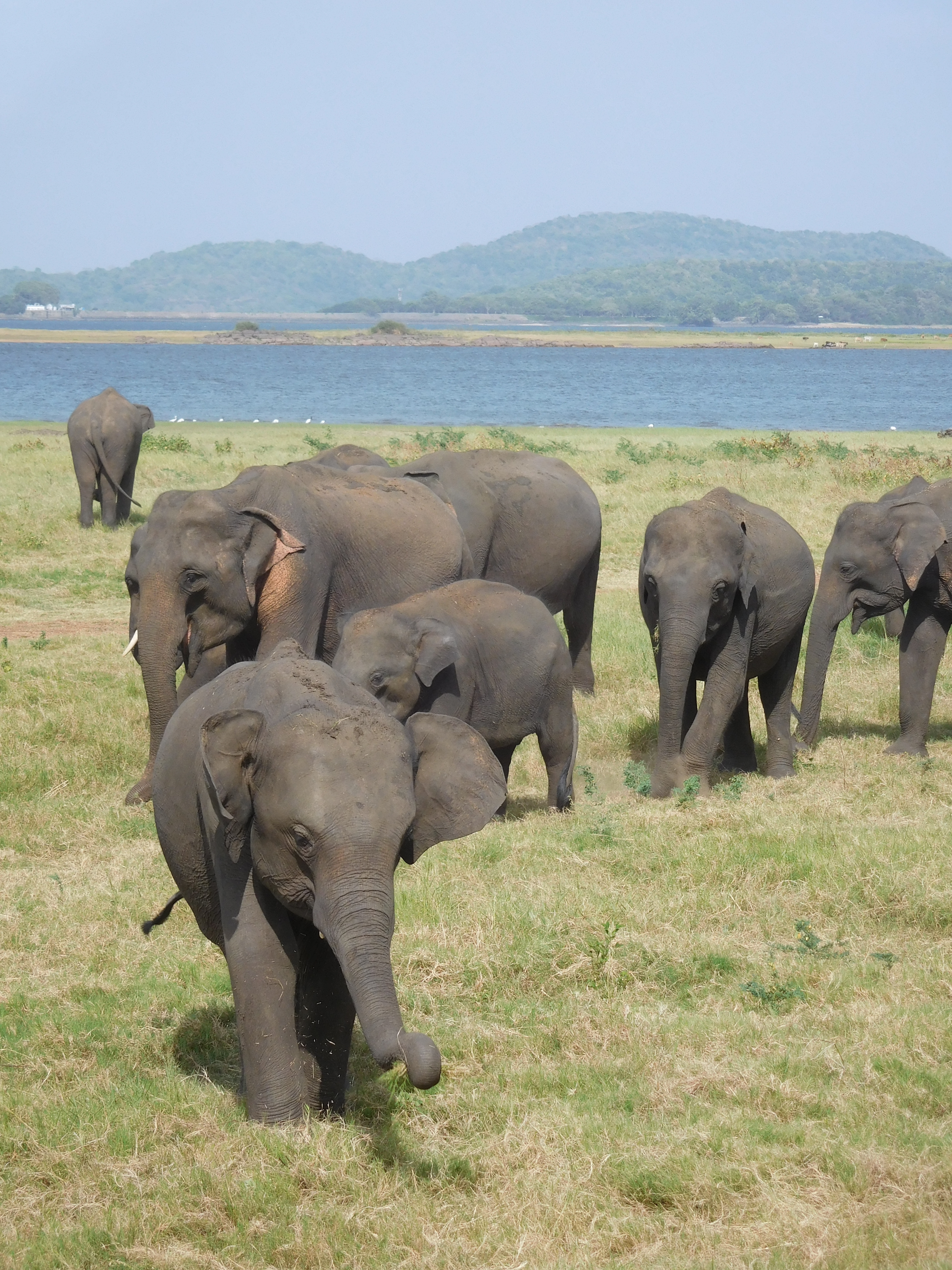
The Cultural Triangle (Sigiriya, Dambulla, Polonnaruwa, Anuradhapura). This is your best bet for reliable weather in October. The Cultural Triangle lies in Sri Lanka’s dry zone, and even during the inter-monsoon period, it receives less rainfall than the coasts. Morning skies are typically clear — perfect for the Sigiriya Rock climb at dawn or exploring Polonnaruwa’s ancient ruins before the heat builds. Afternoon showers are possible but brief. The landscape is at its most spectacular after the preceding rains: green, lush, and dramatic. The Sigiriya climb in October offers views that rival any month of the year, with the surrounding plains a vivid tapestry of green. Minneriya National Park still hosts the Elephant Gathering in early October — the dry-season spectacle of hundreds of elephants around the Minneriya Tank continues through October, making this one of the best wildlife months of the year. See our Sigiriya booking guide for climb timing advice.
The south coast in late October. This is the month when the south coast starts waking up after the monsoon. Galle, Mirissa, Weligama, and Tangalle see improving weather as October progresses. Early October can still bring heavy showers, but by the third week, the pattern shifts: clearer mornings, calmer seas, and the first signs of the high season that runs November through April. The whale-watching season in Mirissa begins in November, but late October is when the first sightings are reported. Galle Fort is wonderful in October — the rain keeps the crowds thin, and the historic streets take on a moody, atmospheric quality during the showers. Restaurants and cafes are operating but at relaxed paces. If you want the south coast with fewer tourists and lower prices, late October is your window - our south coast towns comparison helps you pick which base suits you. Check what to know before booking in Galle for property advice.
Arugam Bay — last call for surf. October is the final month of the east coast surf season. The reliable right-hand swells that make Arugam Bay famous are still running in early October, but the consistency drops as the month progresses. By November, the surf season is effectively over until April. If you want to catch the last of the Arugam Bay waves, the first two weeks of October are your window. The town is quieter than peak season (June–August), which means better accommodation availability and lower prices. The water is warm — around 27–28°C — and the sunset views over the bay are spectacular as the monsoon haze clears. Many surf shops and restaurants start winding down by late October, so check what’s open if you’re visiting in the second half of the month. See our September & October surf guide for both coasts’ windows. Read our Arugam Bay guide for surf season context.
Yala National Park reopens October 16. This is one of October’s biggest events for wildlife travellers. Yala closes every year from September 1 to October 15 for the annual dry-season maintenance and wildlife recovery period. When it reopens on October 16, the park is at its most pristine — fresh vegetation, active wildlife, and significantly fewer tourists than during peak season (February–July). The leopard sightings in the first weeks after reopening are often excellent because the animals haven’t been disturbed by jeep traffic for six weeks. October is one of the best-kept-secret months for a Yala safari. Combine it with Udawalawe (reliable elephant viewing year-round) for a short wildlife loop from the south coast. See our Yala booking guide for safari timing.
Kandy and the Hill Country. October is a good month for the hill country. The heaviest rain of the southwest monsoon has passed, and the landscape is stunningly green. The Kandy–Ella train route operates in October with misty morning departures and spectacular valley views. The Kandy lake is at its prettiest in the soft October light. Nuwara Eliya sees less rain than in August or September, though temperatures remain cool (15–20°C during the day, dropping to 10–12°C at night). The tea plantations are vivid green against the grey October skies, making for dramatic photography conditions. Ella continues to be popular but with thinner crowds than the European summer peak. Check what to know before booking in Kandy for accommodation advice.
Colombo. October is not Colombo’s finest month — expect afternoon thunderstorms and high humidity. But the city’s indoor attractions — the National Museum, the Gangaramaya Temple, the shopping malls — are perfect for rainy days. The restaurant scene is at its most relaxed, with fewer tourists competing for tables. If you only need a transit day through Colombo, October is fine. If you’re planning a city break, December–March offers better weather.
What to skip in October
The east coast after mid-October. Trincomalee, Nilaveli, and Passikudah are still good in early October, but by mid-month the northeast monsoon starts bringing rain. The calm, glassy waters that made these beaches perfect in July through September become choppier. Pigeon Island snorkelling visibility drops. If the east coast is your priority, visit in the first half of October or, better yet, aim for June–September.
Beach-focused itineraries without flexibility. October is not the month to book a single beach resort on one coast for a week and expect daily sunshine. The inter-monsoon weather requires a flexible itinerary — a mix of cultural sightseeing, wildlife, and beach time that can adjust to where the weather is best on any given day. The travellers who have disappointing October trips are almost always the ones who stay in one place and get unlucky with afternoon rain.
Deep-sea fishing and water sports on the south coast. The sea conditions on the south coast are still settling in October — the post-monsoon period means some days are calm and others are still choppy. If water sports are your priority, November offers more reliable conditions on the south coast.
Overnight trains without flexibility. October’s convective rainfall can cause minor delays — typically 15–30 minutes rather than hours. The Kandy–Badulla train, the most scenic route, runs on schedule most days but can be delayed by minor track issues. Have a backup plan if you have a tight connection.
WATCH OUT FOR
October thunderstorms can disrupt power. The afternoon thunderstorms that characterise October’s inter-monsoon weather are usually brief, but they can cause localised power cuts, especially in rural areas and smaller guesthouses. If you are staying somewhere remote, check recent reviews specifically about power reliability. A portable power bank for your phone and a headlamp are smart additions to your packing list.
Yala booking rush after reopening. Yala’s October 16 reopening creates a surge in bookings. If you want a safari in the first week after reopening, book your jeep and accommodation at least two weeks in advance. The best guides get booked quickly, and properties near the Tissamaharama and Kataragama gates fill up. Tissamaharama is the busiest entry point — consider the Kataragama gate for a quieter experience.
Mosquitoes remain active across the island. October’s rain-and-sunshine pattern creates ideal breeding conditions for mosquitoes. They are active throughout the day, not just at dusk. DEET-based repellent and mosquito nets (for budget accommodation) are essential. Several travellers in inter-monsoon months report that even beachfront properties can have mosquito issues — portable plug-in repellents are worth packing. Our mosquito and dengue guide covers the practical precautions.
Arugam Bay services winding down. If you visit Arugam Bay in late October, some restaurants and surf shops may already be closed for the off-season. Check social media pages or contact properties directly to confirm they are open. The main surf schools and popular cafes usually run through October, but the selection narrows significantly after mid-month.
Road conditions after heavy rain. October’s thunderstorms can cause localised flooding on some routes, particularly the Colombo–Kandy road through the Kadugannawa pass and the roads around Galle. Allow extra time for inter-city travel. The Southern Expressway (Colombo–Galle–Matara) is well-drained and usually fine, but secondary roads can be affected. Hiring a private driver with a reliable vehicle becomes especially valuable in October.
GOOD TO KNOW
October is the cheapest month for flights to Sri Lanka. The combination of ended European summer demand and not-yet-started winter peak season means October regularly has the lowest flight prices of the year. If you are flexible with dates, you can find significantly better deals than July–August or November–December. This saving offsets the unpredictability of the weather.
Shoulder-season accommodation pricing applies. Most of the island operates on off-peak pricing in October. The east coast is transitioning out of high season, the south coast hasn’t entered high season yet, and the Cultural Triangle and hill country are consistently affordable. You can find excellent properties at 30–50% less than peak-season rates. The catch is that some properties close for maintenance during this period — always confirm availability before planning around a specific hotel.
Minneriya’s Elephant Gathering continues into early October. If wildlife is your priority, the first two weeks of October are a golden window. The Elephant Gathering at Minneriya National Park still draws large herds. Combined with Yala reopening mid-month, October offers some of the best safari value of the year — fewer tourists, lower prices, and active wildlife.
The Diwali festival often falls in October. Diwali (the Hindu festival of lights) typically occurs in October or November. When it falls in October, the Hindu communities across Sri Lanka celebrate with illuminated homes, temples, and public spaces. Jaffna, Trincomalee, and Colombo’s Hindu neighbourhoods (including the Pettah area) are particularly vibrant. It is a genuinely beautiful time to visit these areas, with the night markets and festive atmosphere adding a dimension that tourists rarely see.
Poya dates in October. Full moon days (Poya) in October bring alcohol sales restrictions and some business closures, but also a unique cultural experience. Most temples and cultural sites remain open. The October Poya is the start of the Kathina season — a month when Buddhist monks receive new robes, and temples across the island hold ceremonies. If you are in a temple town on Poya day, the atmosphere is special.
Packing for both worlds. October requires a wardrobe that handles morning sunshine and afternoon downpours. A lightweight, packable rain jacket is essential. Quick-dry clothing and sandals that handle water are hugely helpful. A dry bag for electronics (phone, camera, passport) is smart given the sudden, intense nature of October showers. Light layers work for the hill country, where temperatures can drop quickly when the rain arrives. Sunscreen remains essential — the UV index is still high when the sun breaks through.
WHERE TO STAY
Aliya Resort & Spa (Sigiriya) — The perfect base for an October Cultural Triangle itinerary. Set among the jungle with an infinity pool overlooking the forest, this property offers a reliable experience in the dry zone where October weather is most dependable. Guests consistently mention the wildlife on the grounds — monitor lizards, monkeys, peacocks — and the five-minute drive to Sigiriya Rock makes the dawn climb effortless. The restaurant serves excellent Sri Lankan buffets.
Kandalama Hotel (Dambulla) — A Geoffrey Bawa masterpiece carved into the rock face overlooking the Kandalama Reservoir. This is genuinely one of the most architecturally significant hotels in Sri Lanka, and October’s green landscape makes the setting even more spectacular. Guests describe the infinity pool that seems to merge with the lake as unforgettable. The guided nature walks and proximity to Sigiriya (20 minutes) and Dambulla Cave Temple (15 minutes) make it an ideal base.
Jetwing Surf (Arugam Bay) — If you are chasing the last waves of the surf season, this is the best property in Arugam Bay. Modern rooms, an excellent pool, and a restaurant that serves the best food in town. The upstairs sea-view rooms offer the breeze and the view that makes Arugam Bay special. Book for early October — by late October, the town starts quieting down.
Fort Bazaar (Galle) — A stunning boutique hotel inside Galle Fort that is perfect for October’s rainy-day charm. The colonial architecture, the courtyard restaurant, and the spa create a property that actually feels more atmospheric in moody weather. Guests describe it as “a lovely colonial hotel of the best quality” with superb staff and food. Walking distance to all of Galle Fort’s galleries, cafes, and boutiques.
Jetwing Yala (Yala) — A tented safari lodge near Yala National Park that offers a genuinely luxurious glamping experience. The canvas tents have proper beds, en-suite bathrooms, and private verandas overlooking the bush. The all-inclusive package (meals, safari, guide) “expensive but worth it” according to guests. Ideal for the Yala post-reopening period from October 16 onward. Book the first morning safari after the park reopens for the best wildlife viewing.
The bottom line
October is not the easiest month to visit Sri Lanka, but it is one of the most rewarding for the right traveller. The weather is unpredictable but manageable — brief showers punctuating otherwise beautiful days. The prices are the lowest of the year. The crowds are thin. The wildlife is spectacular, especially for travellers who time Yala’s reopening or catch the tail end of Minneriya’s Elephant Gathering. The Cultural Triangle delivers its finest conditions, and the south coast starts its transition into high season.
The travellers who love October are the ones who treat the trip as an active, exploratory experience rather than a predictable beach holiday.
And which beach, specifically? If October has you looking at the west and south-west coast, we compared the four towns travellers most often confuse — Bentota vs Beruwala vs Kosgoda vs Wadduwa — using 22,674 guest reviews. Short version: the two quietest beaches (Beruwala 9.13, Kosgoda 9.13) out-score the famous one (Bentota 8.59).
If that sounds like you, October might be your favourite month to visit Sri Lanka.Still deciding which month? October is the quiet, low-price shoulder — the September guide shows how the island eases into it, and November is when the south coast and hill country properly wake up toward the peak. If you have flexibility, our month-by-month data ranking settles the whole year at a glance — including December’s premium high-season crowds if you’re weighing an earlier bird against the beaches at their best.
Planning an October trip and not sure where to start? Ask BYC at byc.lk — Free and honest. Some links are affiliate links and never change our advice.
Have a specific question about your Sri Lanka trip?
Ask BYC at byc.lk — Free and honest. Some links are affiliate links and never change our advice.
Ask BYC Your Question →