Sri Lanka Roadside Drinks: Kola Kanda, Thambili, Wood Apple, and More — A Traveller's Guide
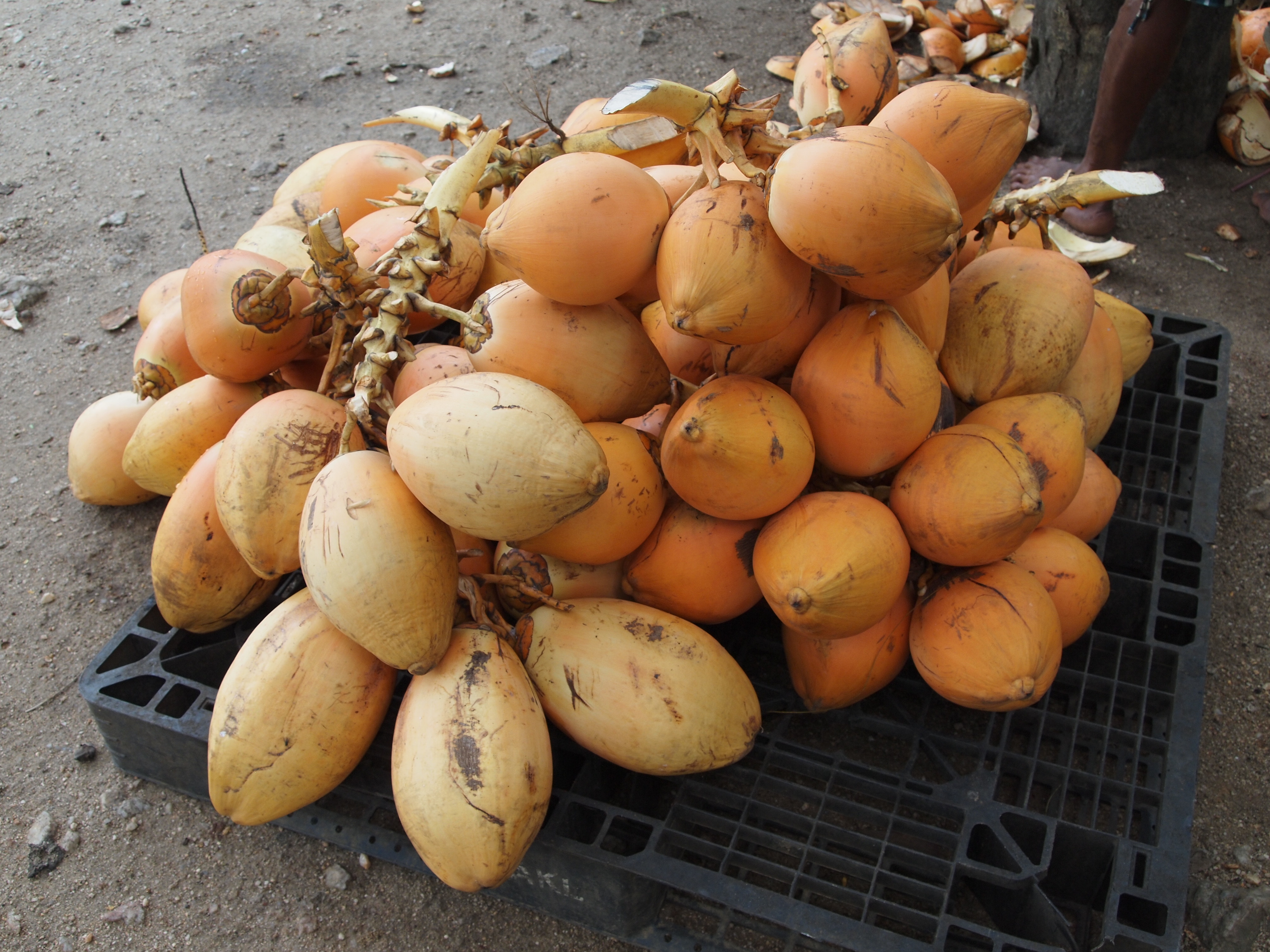
You are driving through the Sri Lankan countryside. The road curves through paddy fields and palm groves, past small villages where buffaloes wallow in muddy ponds. The heat presses in through the open window. Then you see it — a small roadside stall with a pile of bright orange coconuts, a handwritten sign, and a man with a machete who slices the top off one with a single practised swing.
This is the Sri Lankan roadside drink scene. It is one of the most authentic, affordable, and genuinely useful travel experiences the country offers. And almost nobody writes about it.
Here is everything you need to know about the drinks you will find on Sri Lanka's roadsides — what they are, what they taste like, what they should cost, and which ones are worth stopping for.
Thambili — The King Coconut (Must-Stop)
The bright orange king coconut — thambili in Sinhala — is Sri Lanka's signature roadside drink. The fruit itself is indigenous to the island and unrelated to the green coconuts you find across the rest of Asia. The water inside is sweeter, less acidic, and packed with potassium, vitamin C, and antioxidants. Travellers who drink thambili regularly report better heat tolerance, fewer cramps, and none of the sugar crash that comes with packaged sports drinks.
The ritual is always the same. You pull up beside a stall — often just a wooden cart under a tarpaulin — and the vendor picks a coconut from the pile, slices the top off with a few expert hacks of a machete, and hands it to you with a plastic straw or a spoon for the soft flesh inside. The water is clear, slightly milky, and tastes like coconut water but milder and subtly floral.
Thambili stalls are everywhere. The Colombo–Kandy road (A1 highway) has dozens between Kadawatha and Mawanella. The Galle Road (A2) is lined with them from Mount Lavinia down to Matara. The Kurunegala–Dambulla stretch on the A6 is another reliable corridor. Any route that passes through rural lowlands will have thambili stalls every few kilometres.
Fair price: LKR 80–120 (roughly USD $0.30–$0.40). If a vendor quotes LKR 200 or more, you are at a tourist-heavy spot. Walk 50 metres further and find a stall serving locals.
When to drink it: Any time you are hot and thirsty. Thambili is nature's electrolyte drink. It is especially good after a long walk, a beach session, or a spicy meal. Avoid drinking it and immediately getting into an air-conditioned vehicle — the temperature shock can upset some stomachs.
Kola Kanda — The Herbal Energy Drink
Kola kanda is the drink that surprises most travellers because it does not look like something you would buy from a roadside vendor. It is a thick, pale green porridge-like beverage made from raw rice flour, coconut milk, and finely chopped medicinal greens. The greens vary by vendor and season but commonly include gotukola (centella asiatica), welpenela (cardiospermum), kathurumurunga (sesbania grandiflora), and polpala (ayurvedic herb blend).
The taste is earthy, slightly grassy, and subtly sweet from the coconut milk. It is not a gulp-down drink — you sip it slowly, and the texture is closer to a thin smoothie than a juice. Locals drink it in the morning as a breakfast substitute or after a heavy night as a hangover remedy. Farmers drink it before heading to the fields for sustained energy without a sugar spike.
Kola kanda is harder to find than thambili. It appears at roadside stalls in the morning hours (6 AM to 10 AM) and is most common in the central and southern regions — the Colombo suburbs, the Galle–Matara belt, and the tea country roads around Ratnapura and Kegalle. Look for the same stalls that sell string hoppers and roti in the morning. They nearly always have kola kanda too.
Fair price: LKR 50–100 (USD $0.15–$0.35) for a medium cup.
When to drink it: First thing in the morning, especially before a long travel day. Kola kanda settles the stomach, provides steady energy for hours, and is one of the healthiest things you will eat or drink in Sri Lanka.
Wood Apple Juice (Divul)
The wood apple — divul in Sinhala — looks like a small brown coconut that has been left out in the sun too long. The shell is rock-hard, and inside is a dark brown pulp that smells slightly fermented. Do not let any of that put you off. Wood apple juice is one of Sri Lanka's great unsung refreshments.
The pulp is scooped out, mixed with water, sugar or palm jaggery, and a pinch of salt, then strained into a glass. The resulting drink is dark brown, thick, and tangy — somewhere between tamarind, dates, and molasses, with a distinct sour edge that makes it incredibly refreshing in hot weather. Some vendors add a splash of coconut milk to soften the sourness. Others serve it with crushed ice and lime.
Wood apple juice is most common in the dry zone — the Anuradhapura, Polonnaruwa, and Trincomalee regions — where the tree grows naturally. You will also find it at fruit juice stalls in city markets (Pettah Market in Colombo, Kandy Market Hall) and along highways in the north-central province.
Fair price: LKR 80–150 (USD $0.25–$0.50) per glass.
When to drink it: After a heavy meal — wood apple is a traditional digestive aid. Also excellent on hot afternoons in the Cultural Triangle when you are dehydrated from temple-hopping.
Belimal (Bael Fruit Drink)
Belimal — made from the bael fruit (Aegle marmelos) — is a summer cooler that Sri Lankans have been drinking for centuries. The bael fruit is yellow-green, about the size of a grapefruit, with a hard outer shell and a soft, aromatic pulp inside. The drink is made by mashing the pulp with water, adding palm jaggery or sugar, and straining out the fibres.
The flavour is difficult to describe to someone who has not tried it. It is sweet, mildly tangy, and carries an aroma reminiscent of a very mild mango crossed with honey and citrus peel. The texture is slightly pulpy even after straining, which gives it a more substantial feel than a typical fruit juice.
Belimal is seasonal — the fruit ripens between May and August, which aligns perfectly with the dry season in the northern and eastern parts of the country. Look for it in Jaffna, Mannar, and along the east coast (Trincomalee, Batticaloa) during these months. It is less common on the western side of the island.
Fair price: LKR 100–180 (USD $0.30–$0.60) per glass.
When to drink it: Midday during the dry season in the north or east. Belimal is both thirst-quenching and filling, making it a good alternative to a heavy lunch.
Nelli Juice (Indian Gooseberry)
Nelli — the Indian gooseberry or amla — produces a juice that is aggressively sour. This is not a sweet drink. Vendors mix nelli juice with water, salt, and a touch of sugar or chilli powder to balance the intensity, but the primary note is still a mouth-puckering tartness that makes your salivary glands activate instantly.
The health benefits are the real draw. Nelli is one of the richest natural sources of vitamin C — a single fruit contains roughly 20 times the vitamin C of an orange. Locals drink it during the monsoon season to ward off colds, after heavy meals to aid digestion, and daily as a general immune booster. Travellers who try it once often seek it out again for the energy lift it provides without caffeine.
Nelli juice is available year-round at fruit stalls and health-focused juice vendors in most Sri Lankan towns. The Pettah Market in Colombo has several vendors who specialise in it. It also appears at temple fairs and festivals. Bottled nelli juice is available in supermarkets (brands like Dilmah and Ceylon Biscuits produce versions) but the fresh-squeezed version at a roadside stall is a different experience entirely.
Fair price: LKR 100–150 (USD $0.30–$0.50) per glass.
When to drink it: First thing in the morning on an empty stomach for the health benefit, or after a rich meal as a digestive. Not recommended for anyone with a sensitive stomach or acid reflux.
Passion Fruit Juice
Passion fruit grows abundantly in the hill country — Nuwara Eliya, Bandarawela, and the Badulla district produce some of the best on the island. Roadside stalls in these regions serve fresh passion fruit juice that spoils you for any other version you will have elsewhere.
Vendors scoop the pulp straight from the fruit, mix it with water and a little sugar, and serve it over ice. The seeds are left in, which adds a pleasant crunch and visual appeal. The flavour is intensely tropical — floral, tart, and sweet all at once — and nothing like the diluted or artificial versions sold in packages abroad.
Passion fruit juice is a hill country specialty. The best stalls are along the Nuwara Eliya–Bandarawela road (A5), the Ella–Wellawaya stretch, and the roads around Haputale. It is common year-round but peaks between June and September when the main harvest season runs.
Fair price: LKR 120–200 (USD $0.40–$0.65) per glass.
When to drink it: Anytime in the hill country. Passion fruit juice is the perfect companion to a scenic train ride or a cool afternoon in Nuwara Eliya.
Street-Side Faluda
Faluda is Sri Lanka's answer to a dessert drink — layered rose syrup, milk, jelly cubes, basil seeds, and vanilla ice cream in a tall glass. It is more indulgence than refreshment, but you will see it at roadside stalls, bus stands, and market stalls across the country, especially in the hotter months.
The Sri Lankan version differs from the Indian and Pakistani faluda in one key way: Sri Lankans use local palm treacle (kitul pani) or wood apple pulp as flavour bases instead of the standard rose syrup. The result is less aggressively sweet and more complex. Some vendors also add a scoop of local vanilla ice cream made from buffalo milk, which gives the drink a rich, slightly gamey undertone.
Faluda stalls cluster around crowded transport hubs — the Pettah bus stand, Kandy bus station, Galle Fort area, and the main junctions of most regional towns. It is a drink for when you are sitting still, not walking, because the glass is loaded with layers that need to be stirred and eaten with a spoon.
Fair price: LKR 150–300 (USD $0.50–$1.00) depending on how elaborate the glass is.
When to drink it: Late afternoon or early evening, as a treat rather than a thirst-quencher. Best shared between two people — a full faluda is a serious commitment.
How to Find the Best Stalls
The best roadside drink stalls share a few common signs. Look for a collection of empty bottles or glasses arranged neatly on a table — this signals a regular stop where the vendor has regular customers. A busy stall at 8 AM or 4 PM (the two peak travel hours on any Sri Lankan road) is almost always worth stopping at. A clean stall with fresh fruit displayed prominently signals pride in the product.
Avoid stalls that advertise in English first or have laminated price lists in large font. These are tourist-oriented and will charge double or triple the local price. The stalls that serve mainly locals often have no visible price list at all — the price is understood and consistent.
High-density routes with reliable stalls include:
- Colombo–Kandy (A1): Thambili and kola kanda from Kadawatha to Mawanella
- Galle Road (A2): Thambili, passion fruit, nelli juice from Mount Lavinia to Matara
- Nuwara Eliya–Bandarawela (A5): Passion fruit and fresh fruit juice stalls
- Anuradhapura–Trincomalee (A12): Wood apple juice in the dry zone sections
- Kurunegala–Dambulla (A6): Thambili and belimal in season
- Jaffna Peninsula: Belimal and nelli juice during the May–August window
Carrying small change in LKR 50 and LKR 100 notes helps enormously. Most roadside vendors cannot break large notes, and the awkwardness of paying a LKR 100 drink with a LKR 1,000 note is best avoided.
The Bottom Line
Sri Lanka's roadside drinks are not just refreshments — they are a window into a food culture that predates packaged beverages by centuries. Thambili is the everyday hero, kola kanda is the health hack, wood apple is the unexpected surprise, and faluda is the indulgence. Together they make road travel in Sri Lanka something to look forward to rather than endure.
Pull over. Try them all. Your body — and your taste buds — will thank you.
Planning a Sri Lanka road trip? Ask BYC at byc.lk — free, honest, no upsell. Ever.
Have a specific question about your Sri Lanka trip?
Ask BYC at byc.lk — free, honest, no upsell. Ever.
Ask BYC Your Question →