What to Know Before Booking in Kurunegala: 824 Reviews
You are standing at a bus junction in the middle of Sri Lanka's Cultural Triangle, trying to decide where to go next. Most travellers pass through Kurunegala without a second thought - it is the kind of place you change buses in, not the kind of place you book a hotel in. But the ones who stop often discover something unexpected: a base camp for some of the country's most fascinating historical sites, surrounded by enormous granite rocks and coconut plantations that stretch as far as the eye can see.
The honest truth is that Kurunegala will not be the most beautiful place you visit in Sri Lanka. It is a working city - busy, dusty, traffic-heavy in places - and it does not have the coastal charm of Mirissa or the hill-country romance of Ella. But if you know what to expect and where to stay, it can be one of the most practical and rewarding stops on your itinerary.
The short answer
Yes, Kurunegala is worth a stop, but only as a strategic base - not as a destination in itself. Spend one or two nights here if you are travelling between Colombo, Kandy, Anuradhapura, and Dambulla. Use it as a launching point for Yapahuwa, the forest monastery of Arankele, and the ancient ruins of Panduwas Nuwara. Choose your accommodation carefully: the gap between the best properties and the worst ones in Kurunegala is enormous, and the wrong choice can turn a convenient stopover into a genuinely frustrating experience. Book a guesthouse or cottage outside the city centre if you want peace, or pick a hotel in town if convenience matters more. Do not assume that a higher price tag means a better experience.
What's worth doing
Kurunegala's appeal is not in its own attractions but in what surrounds it. Still, there are a few things within the city worth your time:
- Ethagala (Elephant Rock) and the Buddha statue - This enormous granite outcrop looms over the city, shaped unmistakably like an elephant. A road winds to the top where a giant Samadhi Buddha statue overlooks Kurunegala and the lake. Go at sunset when the rocks catch the gold light. The hike up the stairs is manageable for most fitness levels.
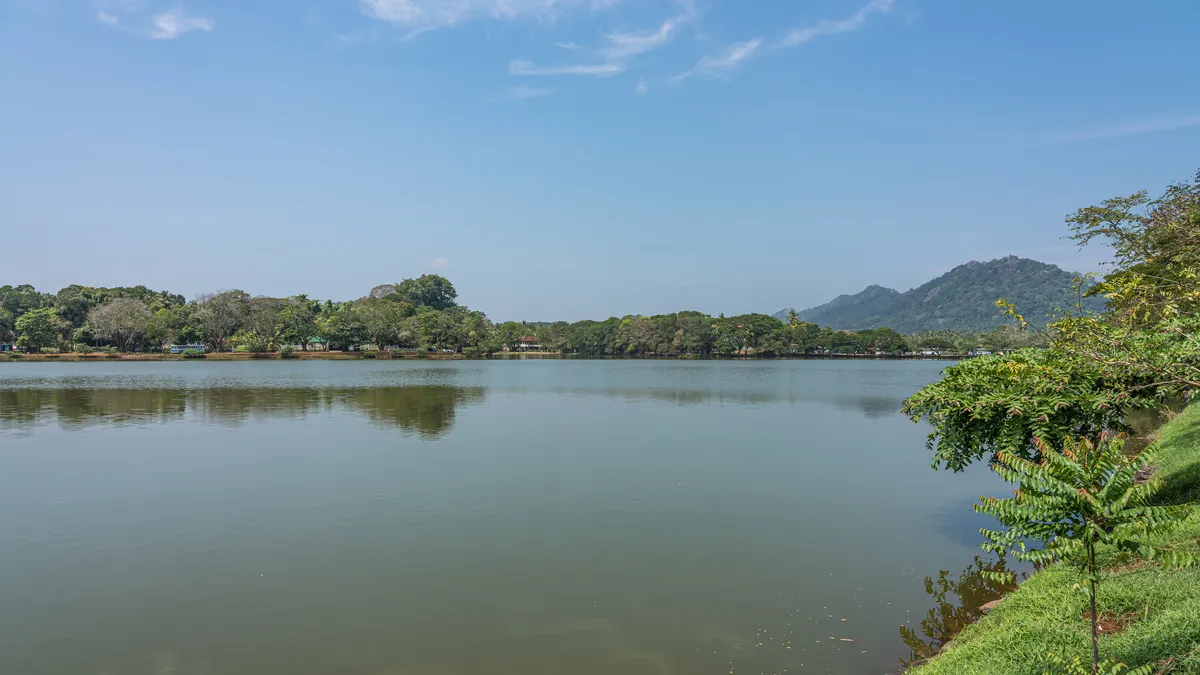
- Kurunegala Lake - The town tank stretches along the northern edge of the city, fringed by palm trees and - depending on the season - full of water birds. It is not a destination in itself but makes for a pleasant evening walk. The colonial-era clock tower nearby adds an old-world touch.
- Yapahuwa Rock Fortress - About 45 kilometres north, this is arguably the most underrated historical site in Sri Lanka. A granite rock rises almost 100 metres above the plains, topped by the remains of a 13th-century palace that once housed the Sacred Tooth Relic. The staircase carved into the rock is dramatic - it rivals Sigiriya but gets a fraction of the crowds. Entry is about 5 USD.
- Arankele Forest Monastery - An ancient meditation hermitage spread across a hillside plateau with hundreds of cave dwellings, stone pathways, and meditation platforms. The atmosphere is genuinely peaceful, and you will likely have the entire place to yourself. The access road is rough, so take a tuk-tuk or hire a driver for the day.
- Ridi Vihara (Silver Temple) - Set in a quiet valley about 30 kilometres from Kurunegala, this Kandyan-era temple is built around natural caves where silver ore was once mined. The wood carvings, murals, and reclining Buddha are among the finest in the region. The temple is active, so you will hear chanting and smell incense - it feels alive in a way that museum-style temples do not.
- Rambodagalla Samadhi Buddha Statue - Carved from a single granite boulder, this 67-foot seated Buddha sits in a serene forest setting. The drive through coconut estates is beautiful. No entry fee.
Getting around
Kurunegala sits at a major road junction where the Colombo-Kandy, Colombo-Anuradhapura, and Dambulla roads all meet. This makes it one of the easiest places in Sri Lanka to arrive at and one of the trickiest to navigate once you are there.
The city bus station is chaotic but functional. Buses run frequently to Colombo (3 hours, about 2 USD), Kandy (1.5 hours, 1 USD), Anuradhapura (2 hours, 1.50 USD), and Dambulla (1.5 hours, 1 USD). For Yapahuwa or Arankele, take a bus towards Anuradhapura and ask to be dropped at the turnoff, then hire a tuk-tuk for the last few kilometres. A full-day tuk-tuk hire for the surrounding sights should cost around 20 to 30 USD - negotiate before you set off.
For the more remote attractions like Rivendell Twisted Tree or Silver Hill Ecovillage, you absolutely need a vehicle with some ground clearance. The access roads to these properties are unpaved and can be impassable after rain in a standard car. Several guests have reported being stranded or forced to walk the last stretch with luggage. If you do not have your own transport, arrange pickup with your accommodation in advance and confirm what vehicle type they use.
Avoid the three-wheelers that loiter around the bus station and major hotels - they typically quote double the fair rate. Instead, ask your accommodation to call a trusted driver, or use the PickMe app if you have a local SIM. Tuk-tuk rides within the city should cost between 1 and 2 USD.
What to budget
Kurunegala is cheaper than the tourist hubs but more expensive than the rural north. Here is a daily breakdown:
- Accommodation: 15 to 40 USD per night for a decent double room. Budget covers guesthouses near the bus station. Mid-range includes properties like Mangala Lodge or Kandyan Reach Hotel. The higher end (30 to 40 USD) gets you into nature properties like Rivendell Twisted Tree - but note those prices often exclude dinner, and the remote locations leave you captive to the on-site restaurant.
- Meals: 5 to 15 USD per day. A rice and curry plate at a local restaurant costs about 2 USD. Western food at hotel restaurants starts at around 6 USD per dish. Breakfast is usually included at guesthouses. Dinner at a nature property's restaurant will set you back 5 to 8 USD per person.
- Transport: 2 to 5 USD for local buses. A full-day tuk-tuk hire runs 20 to 30 USD. If you hire a private car and driver for the day to visit Yapahuwa, Arankele, and Ridi Vihara, expect to pay 40 to 50 USD including fuel.
- Activities: 0 to 5 USD per site. Yapahuwa costs about 5 USD entry. Arankele, Ridi Vihara, and Rambodagalla are free or accept donations. The Ethagala climb is free.
- Total daily budget: Budget travellers can get by on 25 to 35 USD per day. Mid-range travellers with private transport and hotel restaurants should budget 50 to 70 USD per day.
WATCH OUT FOR
Guest reviews reveal several patterns that can derail a Kurunegala stay if you do not plan ahead:
Access roads that are worse than advertised. Multiple properties in the area are set in beautiful jungle locations with appalling access roads. Guests describe arriving in the dark on roads that require a farm tractor or abandoning rental cars to walk through mud. Check recent reviews about road access before booking anything outside the city centre - and confirm whether a standard car can manage it.
Event noise from function halls. Several hotels double as wedding and event venues. Guests have complained about loud music continuing past midnight with no warning at booking. Ask specifically whether any events are booked during your stay, and request a room away from function areas.
Misleading photographs. A recurring complaint is that promotional photos do not match reality. Some hotels look grand in pictures but are described as "very rundown." One review noted the main image was a digital rendering, not an actual photo. Cross-reference with recent guest photos and pay attention to comments about cleanliness.
Room quality inconsistency. Rooms vary wildly within the same property. One group found their room comfortable while their friend's room in the same hotel had broken fixtures, a leaking shower, and no refrigerator. If booking mid-range, ask for a specific room type and confirm it has recent positive reviews.
No staffing after hours. Several budget properties operate with minimal staff. Guests report arriving to find no one at reception, no phone in the room, and no way to get dinner. If arriving late, confirm check-in hours and that a contact person is available after dark.
GOOD TO KNOW
Kurunegala is one of the best places in Sri Lanka for spotting pied kingfishers along the lake. The city is also the centre of the coconut industry - fresh king coconut is available everywhere for about 0.50 USD and is the most refreshing drink after climbing Ethagala.
The best time to visit is during the dry season from May to September. The road conditions to remote properties degrade significantly in the wet season (October to January), and some access roads become genuinely difficult even for tuk-tuks. Book accommodation with cancellation flexibility during rainy months.
Kurunegala has limited options for Western food - most good restaurants are inside hotels. For authentic Sri Lankan food, look for rice and curry shops near the bus station: cheap, fast, and excellent.
If you are travelling between Colombo and Anuradhapura or Dambulla, Kurunegala makes a natural halfway stop. Break your journey here for lunch or an overnight stay rather than pushing through in one go. The drive from Colombo takes about 3 hours depending on traffic.
Mobile reception is good in the city but patchy at nature properties outside town. Download offline maps before heading out.
WHERE TO STAY
Based on thousands of guest reviews, here are the properties that consistently deliver a positive experience:
- Rivendell Twisted Tree - Set along a river with abundant birdlife and a pool surrounded by jungle. Guests consistently describe the staff as exceptionally attentive, and the food receives near-universal praise - several guests called the dinner the best meal of their entire Sri Lanka trip.
- Cottage 23 - A private apartment-style stay in the heart of Kurunegala, close to supermarkets and restaurants. The host is frequently described as exceptionally helpful and honest. Guests appreciate the spacious rooms, full kitchen facilities, washing machine, and quiet atmosphere - at a price that reviewers regularly call "unbeatable value."
- Silver Hill Ecovillage - A jungle retreat for travellers who want complete immersion in nature. The setting is genuinely stunning, with views over the forest canopy and a natural pool. Guests who loved it describe it as "paradise in the middle of the jungle." The owners are warm and hospitable, giving tours of the surrounding plants and spices. Note that the access road is rough, and there is no air conditioning.
- Mangala Lodge - Run by a host named Mangala, consistently described as one of the warmest in Sri Lanka. The property has a lovely garden, clean rooms, and a quiet location. Guests praise the breakfast and the host's genuine care - he advises on local hikes, arranges tuk-tuks, and genuinely seems to care about every guest's experience.
- Kandyan Reach Hotel - The most reliable conventional hotel in town. Rooms are spacious and clean, the pool is well-maintained, and staff regularly receive mentions for going above and beyond. The restaurant serves one of the best rice and curry meals in the area.
The bottom line
Kurunegala will not steal your heart the way Ella or Mirissa might. It is a practical stop and a base for exploring the overlooked corners of the Cultural Triangle. But travellers who approach it with the right expectations - who choose accommodation carefully, who venture out to Yapahuwa and Arankele, who climb Ethagala at sunset - often leave surprised by how much they enjoyed it. Do not skip Kurunegala. Just be smart about how you stay.
Have a specific question about your Sri Lanka trip?
Ask BYC at byc.lk — free, honest, no upsell. Ever.
Ask BYC Your Question →