Is Sri Lanka Good for Nightlife? The Short Answer and Where to Go
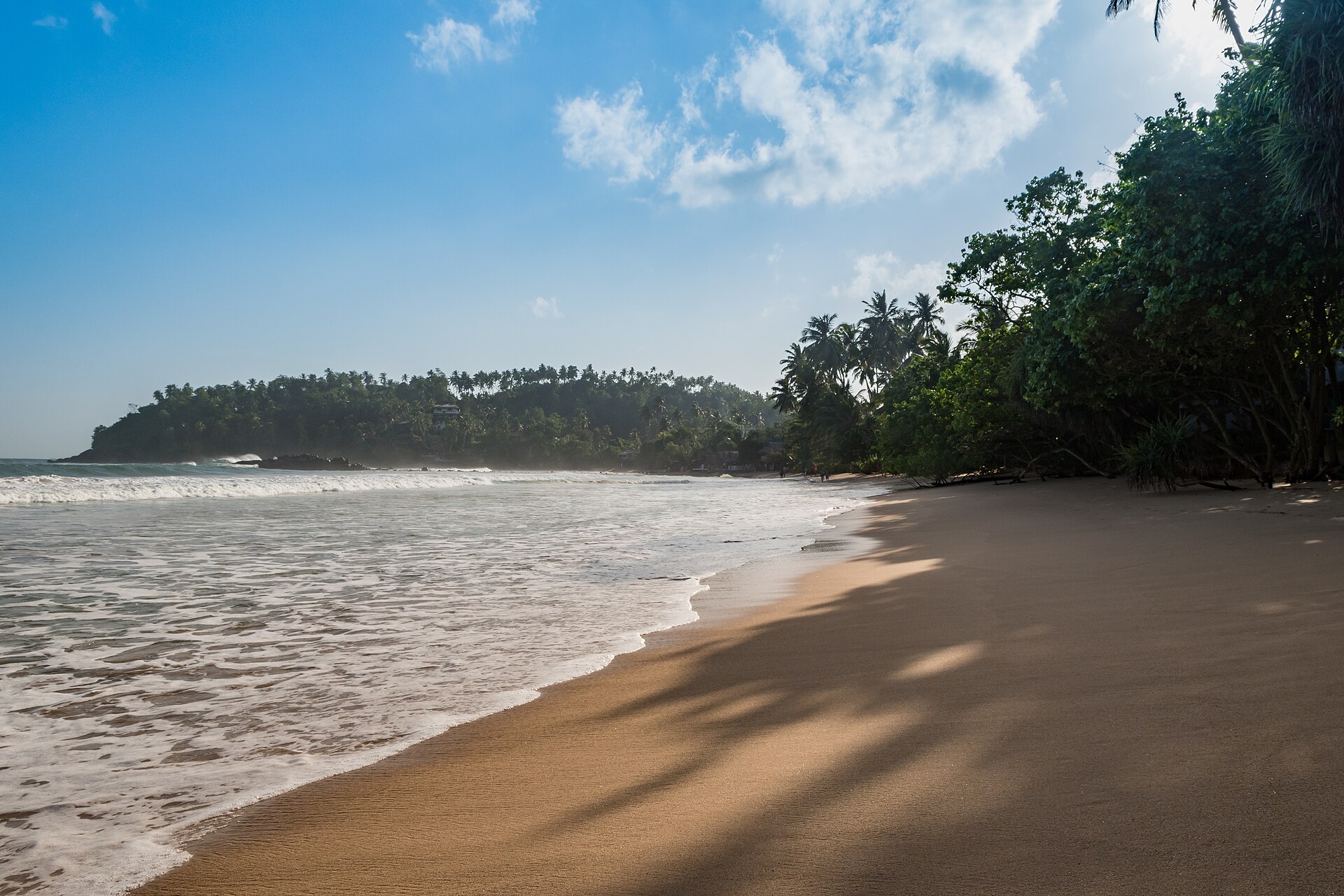
It is nine in the evening on Sri Lanka's south coast and the question has already answered itself. Somewhere behind you a beach club is turning the volume up, a lantern-lit lane in an old fort is filling with the sound of a live band, and a tuk-tuk driver is negotiating the price of a ride home. Sri Lanka is not a country that sleeps early — but it is also not a country that behaves like its neighbours, and that mismatch is exactly what trips people up. So: is Sri Lanka actually good for nightlife? Yes, genuinely — so long as you understand one rule that decides your entire trip.
The short version: Sri Lanka's nightlife is excellent, seasonal, and coast-dependent, and if you show up on the wrong side of the island in the wrong month you will find shuttered bars and empty sands. The island has two coasts with opposite seasons. Roughly November to April belongs to the south and west — Hikkaduwa, Unawatuna, Mirissa, Galle — while May to September shifts the whole scene east to Arugam Bay. Above it all, Colombo runs all year as the polished, air-conditioned capital of rooftop cocktails and city clubs. Pick the right coast for your dates and Sri Lanka delivers one of the most relaxed, friendly and inexpensive nights out in Asia. Pick the wrong one and you will be drinking alone.
What's worth doing
There is no single "nightlife district" here the way there is in other Asian cities. The scene is a chain of coastal towns, each with its own personality, and the pleasure is moving between them.
- Colombo rooftops and city clubs (year-round). The capital is where Sri Lanka's nightlife is most polished, concentrated around Colombo 3 (Kollupitiya) and Colombo 7 (Cinnamon Gardens). Expect industrial-chic techno and deep-house rooms with international DJs at weekends, Bollywood and EDM nights with a dressier crowd, and skyline rooftop bars with signature cocktails that are at their best at sunset, before the clubs fill up. Nothing gets going before about 10pm — arriving at 8pm means an empty room.
- Hikkaduwa's beach-party strip. The biggest and most consistent weekly crowds on the west-south coast: open-air clubs on the sand, cocktails at beach-club prices, fire dancers at sunset, and a Saturday pool-party scene at the beachfront hotels. Most venues have no cover charge midweek, which makes it the easiest place in the country to start a night cheaply.
- Unawatuna's sand-floor bars. A compact bay where reggae rules the daytime and the sound switches to house and EDM after dark, with full-moon beach parties on the calendar. More relaxed than rowdy, and walkable end to end.
- Mirissa's sundowners and bonfire nights. Weligama, Ahangama, Midigama and Mirissa form one long stretch where the evening leans towards long seafood dinners, live music, cocktails at Coconut Tree Hill for the sunset, and low-key bonfire gatherings that cost little or nothing to walk into. This is the stretch to pick if clubs are not your thing but you still want atmosphere.
- Galle Fort after dark. Not a party destination, but arguably the most atmospheric evening on the island: the ramparts at dusk, lantern-lit cobbled lanes, jazz bars inside centuries-old walls, and rooftop terraces that catch the last of the light over the Indian Ocean. Come here for the evening you will actually remember.
- Arugam Bay (May–September). The east-coast surf town is the island's seasonal counterweight: beach fires, acoustic sets, monthly full-moon parties, and a friendly crowd drawn by the waves rather than the bars. Nights end early because everyone is paddling out at dawn.
- Organised pub crawls. For solo travellers in particular, group crawls in Colombo run through about five bars in an evening for roughly $20–$30 per person including some drinks — an easy way to have company and skip the planning entirely.
Getting around
Getting to the nightlife is straightforward; getting home is where people overpay. Here is what things actually cost, in US dollars.
- Ride-hailing apps: PickMe (the local favourite) and Uber both work in Colombo, Galle, Kandy and most larger tourist towns. Fares are metered, which kills the late-night haggling problem entirely. A short hop home is typically $2–$4. Download both before you fly; Grab does not operate in Sri Lanka.
- Street tuk-tuks: Roughly 70–120 LKR per kilometre (about $0.25–$0.40/km) is the honest 2026 rate. Outside the big towns there is no meter, so agree the fare before you get in — this single habit prevents most of the arguments travellers report.
- Airport to the coast: Pre-book a taxi rather than taking a tuk-tuk with luggage. The airport–Colombo run and airport–Negombo hops are cheap; going straight to Hikkaduwa or Galle is a couple of hours on the expressway and costs meaningfully more than a short city transfer.
- Between coastal towns: The beach belt is short. Hikkaduwa to Unawatuna, and Unawatuna to Mirissa, are easy daytime hops by bus, tuk-tuk or private car — budget $10–$25 depending on distance and comfort. Trains run the coastal line too, and the Colombo–Galle stretch is slow but scenic.
- What to avoid: Do not take an unmetered tuk-tuk on a long intercity ride late at night, and do not assume apps will work in small towns after midnight. Ask your guesthouse to call a known driver for the ride home.
What to budget
Nightlife here is dramatically cheaper than most of Asia's party destinations, partly because the drinks are local and partly because there is often no cover charge at all. Typical 2026 foreign-visitor prices:
- Entry fees: $10–$20 in Colombo at weekends; $3–$8 at beach venues; often free midweek on the coast.
- Local beer: $4–$8 in Colombo, $2–$4 at beach bars.
- Cocktails: $5–$12 in the capital, $3–$6 on the coast.
- Bottle service: $40–$100 in the city, $25–$50 at beach clubs.
- Food: A rice-and-curry or seafood dinner is $5–$15 on the coast; hotel buffets are higher.
- Ride home: $1–$4 for a short hop.
As a working figure, a full night out — entry, several drinks, food and the ride home — runs roughly $25–$40 in Colombo and $15–$25 on the coast. Add your accommodation on top. If you are chasing the nightlife for several evenings, base yourself on the coast and treat Colombo as a single night at the start or end of the trip, where you can spend more freely.
WATCH OUT FOR
These are the patterns that quietly ruin nights, and almost all of them are avoidable:
- Full moon (Poya) days are dry days. Every full moon is a public holiday and the sale of alcohol is prohibited nationwide. Bars close, liquor shops shut, and most restaurants stop serving. Larger hotels sometimes serve registered in-house guests, but the streets go quiet. Check a Poya calendar before you plan a big night out — this catches more visitors than anything else on this list.
- Seasonal closures. Bars and beach clubs on the south and west coast wind down for the monsoon, and much of Arugam Bay closes outside its May–September season. Turning up to the wrong coast out of season means locked shutters, not quiet charm.
- Dress codes in Colombo. Upmarket clubs and rooftop bars enforce smart casual — no beachwear, no flip-flops, closed shoes for men. On the coast, barefoot and boardshorts is completely normal. Getting turned away at the door is a wasted taxi fare.
- Cash-only beach bars. Many coastal venues take cash only, and change for large notes is scarce after midnight. Carry small denominations.
- Late-night beach stretches. Beaches that are busy at 9pm can be completely empty by 1am. Stick to lit, populated stretches, and never walk an unlit beach alone.
- Drink safety. As anywhere, watch your drink and stick to sealed bottles or drinks poured in front of you.
- Fare inflation after midnight. The number one complaint pattern is a quoted price that triples once the bars close. Use an app, or agree the fare before you sit down in the tuk-tuk.
GOOD TO KNOW
- Plan around the calendar. The single biggest improvement to a Sri Lanka nightlife trip is choosing the correct coast for your dates: south and west from November to April, east from May to September, Colombo year-round.
- Nights start late. Venues that look dead at 9pm are full by 11pm. There is no rush.
- Carry ID. The legal drinking age is 21, and venues may ask for identification. A photo of your passport is usually enough; keep the original secure.
- Book your ride home before midnight. In smaller towns, ride apps thin out dramatically after the bars close. Save a driver's number, or ask your guesthouse to arrange the return trip in advance.
- Pair mornings with nights. The coast rewards early starts — surf, reef snorkelling, whale-watching — so most travellers find two or three big nights a week is the natural rhythm. Do not schedule a dawn activity the morning after a full-moon party.
- Respect local expectations. Sri Lanka is a socially conservative country away from the tourist strips. Loud, drunk behaviour in temple towns or villages is genuinely offensive. On the tourist beach belt, behave as you would anywhere you are a guest.
- December and New Year are peak. The coast's biggest parties, festive dinners and hotel new-year events fill up weeks in advance. Book both your room and your plans early if you are travelling over the holidays.
WHERE TO STAY
Because the nightlife is spread along the coast, where you sleep decides which evenings are easy. These properties are consistently praised by guests in our database, and each one is here for a specific, review-backed reason.
- Riff Hikkaduwa (Hikkaduwa). Guests repeatedly single out the rooftop bar and restaurant — one reviewer describes it as the perfect spot "at sunset", and another simply lists "the rooftop" as the reason the stay worked. If you want Hikkaduwa's beach-party strip but a calm, ocean-view base to return to, this is the pattern that keeps working.
- The Residence Hikkaduwa (Hikkaduwa). Reviewers constantly praise the host by name and the fact that, despite a pool and rooftop, the rooms are set inside a private residence — one guest describes it as "quiet, private and relaxing" with "silence at night". That is the ideal combination for a party coast: close to the bars, insulated from them.
- Seagreen Guesthouse (Galle Fort). Guest after guest mentions the rooftop bar as a place to "watch the sunset over the ramparts". For a night built around Galle's atmospheric lanes rather than clubs, a guesthouse whose best feature is its own sunset terrace is exactly the right shape.
- The Bungalow Galle Fort (Galle Fort). Reviewers specifically note that "the restaurant & bar was super buzzy in the evening" alongside a comfy bed and well-stocked minibar. If you want to walk out of your room straight into the evening, this is the review-backed reason to pick it.
- The Charleston (Galle Fort). Guests describe the rooftop bar and pool as "delightful", noting the location is by the lighthouse yet "far enough away that noise was no issue". A stylish, quiet-footed base minutes from Galle Fort's live-music venues.
The bottom line
Sri Lanka is a genuinely good nightlife destination — not because it competes with Bangkok or Bali on scale, but because it offers something both cheaper and more relaxed: beach clubs on the sand, rooftop bars above a fort, live music in colonial lanes, and a full night out for the price of a single round in many other countries. Do one thing right and the rest follows. Match your coast to your month, keep an eye on the Poya calendar, and let the island's evenings unfold at their own unhurried pace. Get the season right and Sri Lanka's nights will be one of the best-value, most welcoming surprises of your whole trip.
Have a specific question about your Sri Lanka trip?
Ask BYC at byc.lk — free, honest, no upsell. Ever.
Ask BYC Your Question →