Is Horton Plains Worth Visiting? Yes, if You Start Before Dawn
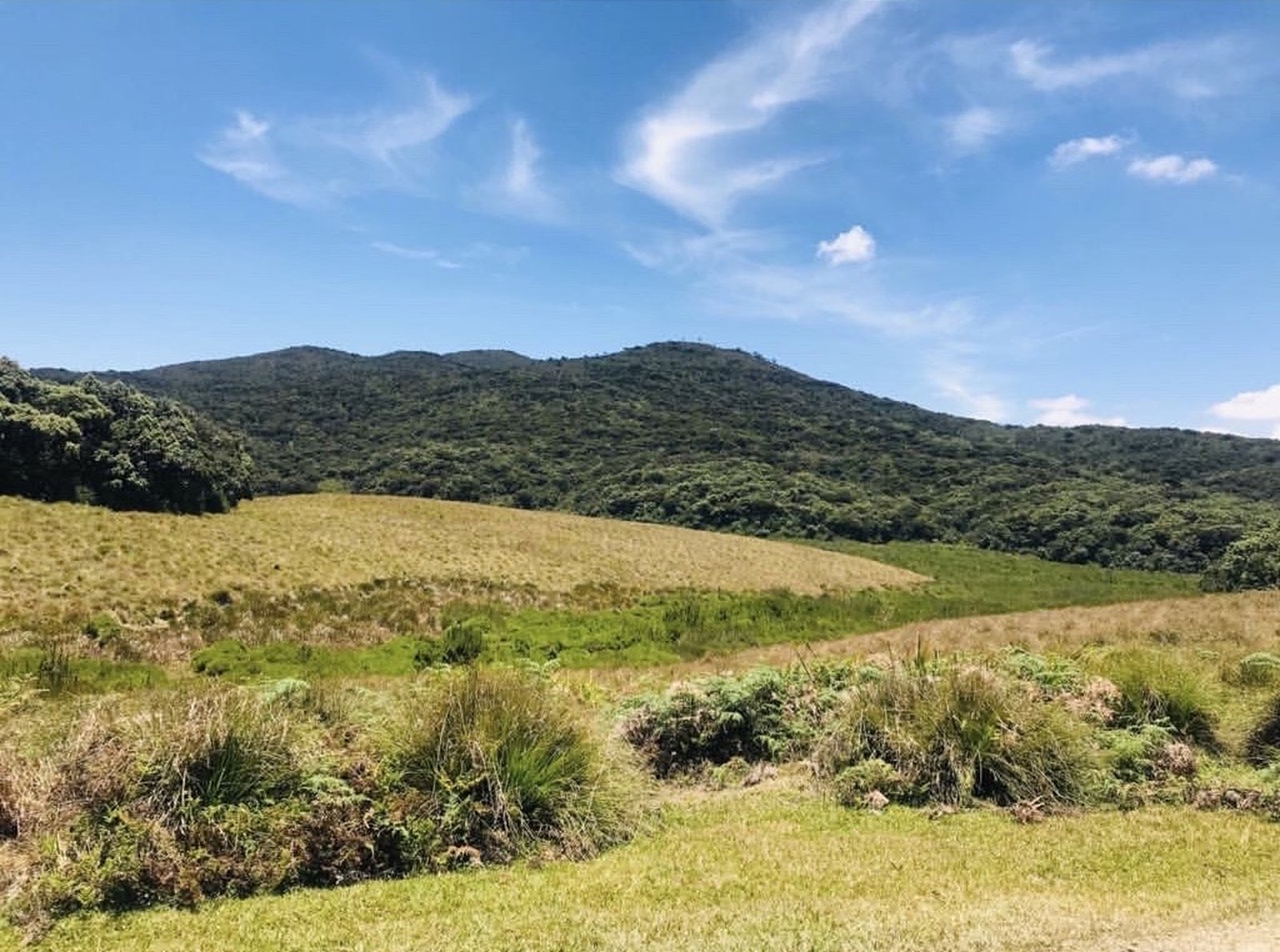
Yes, Horton Plains is worth it — but only on one condition: you are standing at the gate before 6 a.m. The famous World’s End escarpment, a sheer drop of about 870 metres, is visible for only the first couple of hours after dawn before the daily mist rolls in and erases it. Get there early and this high-altitude walk is one of the great surprises of the Sri Lankan hill country; arrive after 9 a.m. and you will have hiked 9 kilometres to look at a wall of white cloud.
\n\nThe question comes up in nearly every hill-country itinerary: the train between Kandy and Ella stops at Ohiya and Pattipola, travellers see “Horton Plains” on the map, and wonder whether the extra early start is worth disturbing an otherwise relaxing stretch near Nuwara Eliya. The honest answer is one of the most weather-dependent in Sri Lanka. Unlike a beach or a temple, Horton Plains gives you almost no grace period — World’s End is genuinely a morning-only vista. Catch the light right and the reward is an otherworldly highland of rolling grassland and cloud forest, recognised by UNESCO as part of the Central Highlands World Heritage Site, and a walk far more varied — and less crowded — than the tourist-coated routes of Ella.
\n\nLast updated: September 2, 2026.
\n\nThe short answer
\n\nHorton Plains is worth the effort if you treat the early start as non-negotiable. Leave Nuwara Eliya by about 4:30–5:00 a.m., reach the Pattipola entrance just before the gates open around 5:30–6:00 a.m., and walk the 9 km loop clockwise so you stand at Great World’s End while the valley below is still clear. Budget a full morning — roughly 3–4 hours with stops — and you leave by early afternoon with time to spare.
\nIf you cannot start that early, the maths changes. From about 9:30 a.m. the mist almost daily caps World’s End, and the whole plateau sits in cool, often damp cloud. In that case the park is still a pleasant, unhurried ramble with fine birdlife, but you will have paid a fairly high entrance fee for a view you largely missed. Start early — or sit it out for a day when you can.
\nThe timing is everything, and it is worth understanding why. Horton Plains is a high plateau around 2,000–2,300 metres above sea level on the southern crest of the central highlands. Warm valley air rises as the sun climbs, hits the cold upland and condenses into cloud that banks against the escarpment from mid-morning onwards. That window between opening and the fog rolling in is your only guaranteed chance to see the sheer face and the plains falling away hundreds of metres below.
\n\nWhat’s worth doing
\n\nThe main walk is the 9 km loop circuit. From the trailhead near the visitor centre, the route is a clearly marked, mostly level and undemanding trail through open patana grassland and dense cloud forest. On a clear morning the loop delivers, in order:
\n\n- \n
- Little World’s End first. A smaller but still dramatic escarpment viewpoint reached fairly early on the circuit — a good sign of how clear the valley is before you commit to the big one. \n
- Great World’s End. The headline — a sheer cliff drop of roughly 870 metres where the plateau ends abruptly. On a clear morning you look down across forested lowland towards the south coast; it is the view everyone photographs, and it rarely lasts past mid-morning. \n
- Baker’s Falls. Around the far side of the loop, this roughly 20-metre waterfall drops into a shady gorge and is the other recognised highlight. The side path down to the viewing point is short and worthwhile, and it is usually where walkers stop for a snack. \n
- Cloud forest and endemic wildlife. The trail threads through mist forest full of endemic birds — the Sri Lanka white-eye, yellow-eared bulbul and Sri Lanka wood pigeon among them — and the grasslands often hold sambar deer and purple-faced langurs early in the day. Sri Lankan leopards live here too, though you are far more likely to see their tracks than the cat itself. \n
Allow 3–4 hours for the loop at an easy pace with photo stops, plus a moment at the visitor centre at either end. The altitude (thin air at 2,200 m) slows everyone a little, so this is a walk to savour rather than race.
\n\n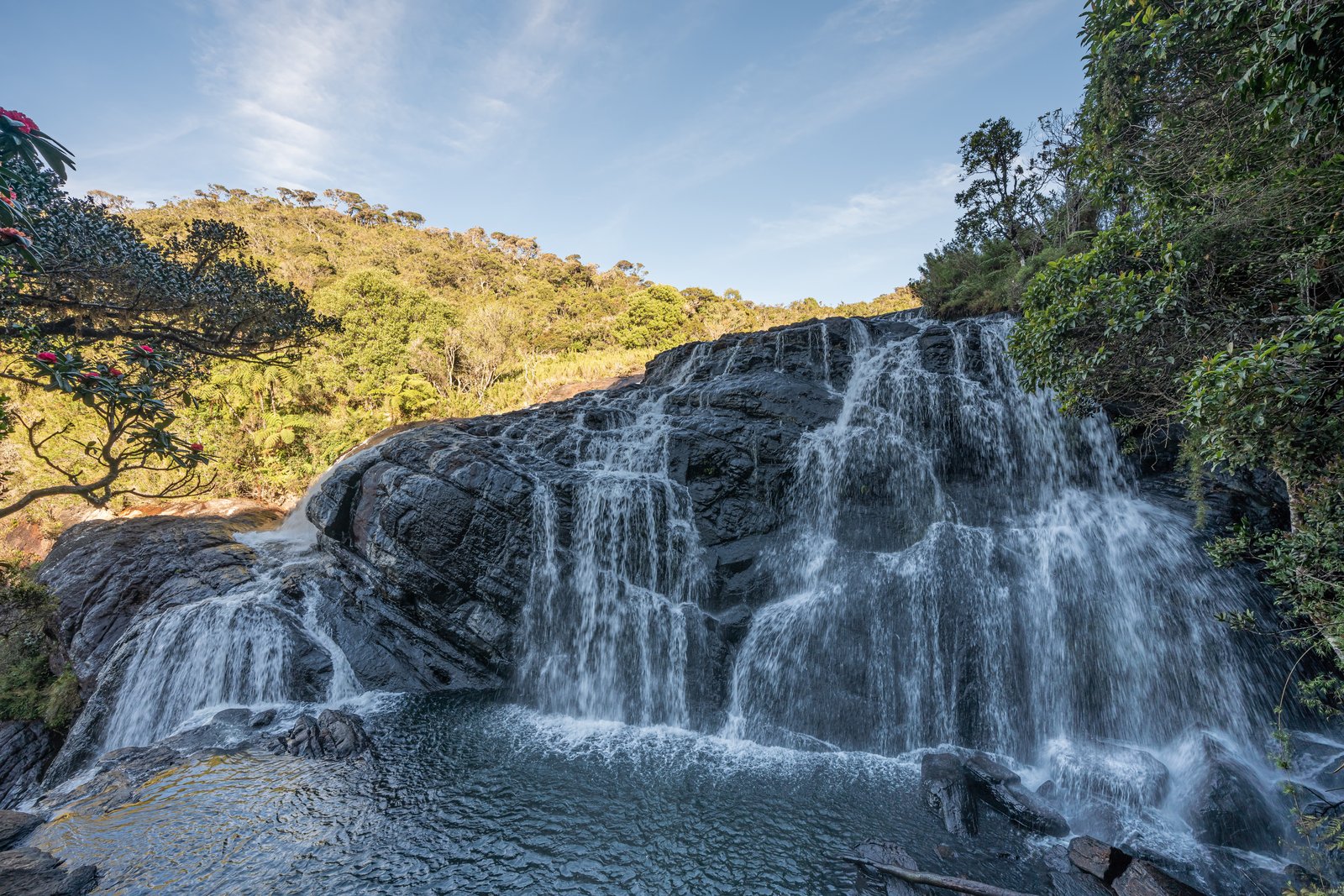
Getting around
\n\nHorton Plains sits roughly 30–35 km south of Nuwara Eliya, and the sensible base is Nuwara Eliya itself. The road climbs through tea country to the park’s main visitor area; from town allow about 1–1.5 hours by private vehicle. Nuwara Eliya has the widest choice of drivers and guesthouses, which is why most visitors base there even though the park is not on the town’s doorstep.
\n\nThere are two recognised entrances, each reachable by road and each also served by the scenic main railway line that runs between Kandy and Ella:
\n\n- \n
- Pattipola entrance — the one most private drivers use from Nuwara Eliya, and the shorter, more common route. Pattipola is also a station on the famous hill-country rail line, and sits at roughly 1,897 m, making it the highest station in Sri Lanka. \n
- Ohiya entrance — an alternative gate used more by those arriving by train or coming up from the Ella/Haputale side. Ohiya is the station travellers often alight at for a Horton Plains day. \n
For drivers from Nuwara Eliya, a round trip with waiting time typically runs US$30–45 (about LKR 10,000–15,000) for the morning — the option that lets you leave at 4:30 a.m. comfortably. Relying on public transport instead, the classic move is to take the early hill-country train to Ohiya or Pattipola and a short tuk-tuk up to the gate, about LKR 1,500–2,500 one way. It is doable and atmospheric, but it ties you to station timetables, so a dawn start works better with a pre-arranged driver. Return to Nuwara Eliya for lunch; there is little worth stopping for on the plateau itself.
\n\nWhat to budget
\n\nA Horton Plains morning from a Nuwara Eliya base is not the cheapest single outing in Sri Lanka once entry and transport are added, so set expectations honestly. Here is the realistic 2026 split:
\n\n- \n
- Park entry (foreign adult): roughly US$15–25 per person, plus value-added tax (about 15%) on top, and a separate vehicle entry fee of about LKR 250–500. Pay at the gate — bring cash (rupees), as the ticket office has been known to accept cash only. \n
- Transport from Nuwara Eliya: a hired car or jeep for the round trip with waiting is about US$30–45. A tuk-tuk from the nearest station is cheaper but cold and slow on the mountain road — fine as a back-up, not ideal as a dawn plan. \n
- Organised day tour: bundled options that include transport, entry and often a guide run from about US$35–55 per person, which works out similar to arranging it yourself once the driver is included, and spares you the arithmetic at the gate. \n
- Optional guide: some visitors pay extra for a spotter to help find birds and wildlife on the loop — worthwhile for keen naturalists, skippable if you are there mainly for the escarpment. \n
- Afterwards in Nuwara Eliya: a proper lunch back in town runs US$5–12, and a hot drink at one of the estate-view cafés is a pleasant way to thaw out after the cold upland start. \n
All told, budget roughly US$50–70 per person for the whole morning, assuming you split transport with a partner or small group. Split a private car across four and the per-head cost drops meaningfully — a strong reason to travel to the park with others.
\n\nWATCH OUT FOR
\n\nThese are the recurring traps visitors hit at Horton Plains, so you plan the day with eyes open:
\n\n- \n
- The mist beats late starters. The single biggest disappointment is arriving mid-morning and finding World’s End sealed in cloud. This is not bad luck — it is the daily routine. Leave Nuwara Eliya by 4:30–5:00 a.m. and treat the dawn start as a fixed part of the plan, not a suggestion. \n
- It is genuinely cold. At 2,200 m the plateau runs cool all year, and the early morning can hover near 5–8°C with a stiff wind at the escarpment. A jacket or fleece, long sleeves and closed shoes matter; several visitors under-dress and end up shivering at World’s End instead of enjoying it. \n
- Bring what you need — there is little on site. Carry water and a snack for the loop; food and drink on the plateau are minimal, and the walk length makes dehydration sneaky. Sun is also real here even when it is cold, so sunscreen matters at altitude. \n
- Single-use plastic is checked. The park is serious about its plastic ban, and bags are inspected at the visitor centre. Bring a refillable bottle rather than disposables, and take all rubbish out with you — it is part of keeping this fragile highland ecosystem intact. \n
- Don’t rush the climb at altitude. First-timers unused to 2,200 m sometimes push hard on the loop and feel the thin air. Keep a steady, easy pace, especially uphill, and you will enjoy the walk far more than someone racing the clock. \n
GOOD TO KNOW
\n\n- \n
- The whole circuit is one contiguous 9 km loop. You do not need to arrange separate tickets for World’s End and Baker’s Falls — one park entry covers the entire marked walk, and you pass both on the same route. \n
- Clear mornings cluster in the dry months. December to February tends to offer the most reliably clear early-morning windows, and the light is at its best then. Outside that window mornings are still frequently clear — it is rainfall, not season, that most often spoils a day, and even the dry season brings passing showers. \n
- Sundays and public holidays attract local crowds. Horton Plains is genuinely popular with Sri Lankan visitors, so weekends and holidays see more people on the trail. For the emptiest circuit, aim for a weekday that is not a public holiday. \n
- The hill-country train is a beautiful add-on. If you take the Kandy–Ella line anyway, alighting at Ohiya or Pattipola combines two icons in one day — just confirm the early train fits a dawn start before you commit. \n
- Pair it with a Nuwara Eliya afternoon. Because the walk finishes by early afternoon, the day works beautifully with Gregory Lake and a tea-estate visit back in town — you lose almost nothing of the day. If that is your plan, the gate fees and boat prices for the afternoon half are itemised in the Gregory Lake ticket price guide. \n
WHERE TO STAY
\n\nNamed properties below are picked from guest review data — positive mentions only, with the review-backed reason each earns its spot as a dawn-start base for Horton Plains.
\n- \n
- The Plains (Nuwara Eliya area) — a well-reviewed stay close to the access road where guests consistently praise the owners’ help arranging the very early Horton Plains departure, making the 5 a.m. start genuinely easy from the door. \n
- Hill Safari Eco Lodge (Ohiya) — about 10 km from the park gate and the go-to for travellers arriving by train who want to be closest to the dawn start; reviewers value the simple warm hosting and its position for the very first entrance. \n
- J’s Villa (Nuwara Eliya) — comfortable guesthouse base near the town’s lake where guests highlight dependable transport help and a good night’s rest before the early rise, suited to a multi-day Nuwara Eliya stay rather than a one-night dash. \n
- Eco Wild Glamping Bambarakanda / The Glenrock Wellness Nature Resort — for those wanting a forest-adjacent retreat rather than town, these nature-stay options place you in the highland scenery itself, with the park a scenic morning drive away and guests praising the calm surroundings. \n
The bottom line
\n\nHorton Plains is worth it — decisively so if you are willing to start before dawn. The 9 km loop delivers an escarpment view with few rivals in Sri Lanka, a genuinely different highland landscape and some of the island’s best cloud-forest walking, all finished by early afternoon. Commit to the early rise, dress for the cold and pick a clear weekday, and the World’s End you stand in front of will be the version postcards can only hint at.
Have a specific question about your Sri Lanka trip?
Ask BYC at byc.lk — Free and honest. Some links are affiliate links and never change our advice.
Ask BYC Your Question →