Is Jaffna Worth Visiting? An Honest Verdict for 2026
You have a Sri Lanka itinerary that keeps stopping at Kandy — and the voice in your head keeps whispering “but what about the north?” Jaffna is the question travellers circle for weeks before committing to the long ride up-country. It is far from the south-coast beaches, it is hot, it is different. And across the island’s tens of thousands of guest reviews, the travellers who actually make the journey north describe it, again and again, as the most surprising and most memorable stop of their entire trip. This guide gives you a straight, data-backed verdict on whether Jaffna is worth the effort in 2026 — and exactly how to do it so it rewards you the way its biggest fans say it does.
The short answer
Yes — Jaffna is absolutely worth visiting, but only if you go with the right expectations and give it real time. It is not a beach resort, a checklist of Instagram spots, or a place to rush. It is Sri Lanka’s Tamil cultural capital — a city with its own language, cuisine and rhythm — where the attractions are mostly free, the crab curry is the best on the island, and the whole experience rewards travellers who slow down. The honest catch: the journey is long (about seven hours from Colombo), the heat is intense, and the infrastructure is still rebuilding. If you have three clear days and a sense of curiosity, Jaffna will likely be the highlight of your trip; if you are cramming a two-day loop in July with no flexibility, it will frustrate you. The verdict is not “worth it or not” — it is “worth it, if you come properly prepared.”
The right way to come prepared is to give the north real time - our 30-day north-to-east itinerary allocates 5-6 nights to the peninsula so you are structuring the trip around Jaffna instead of squeezing it in.
What’s worth doing
Jaffna’s attractions are spread across the peninsula, and several are half-day commitments. Here is what earns its place on your list.
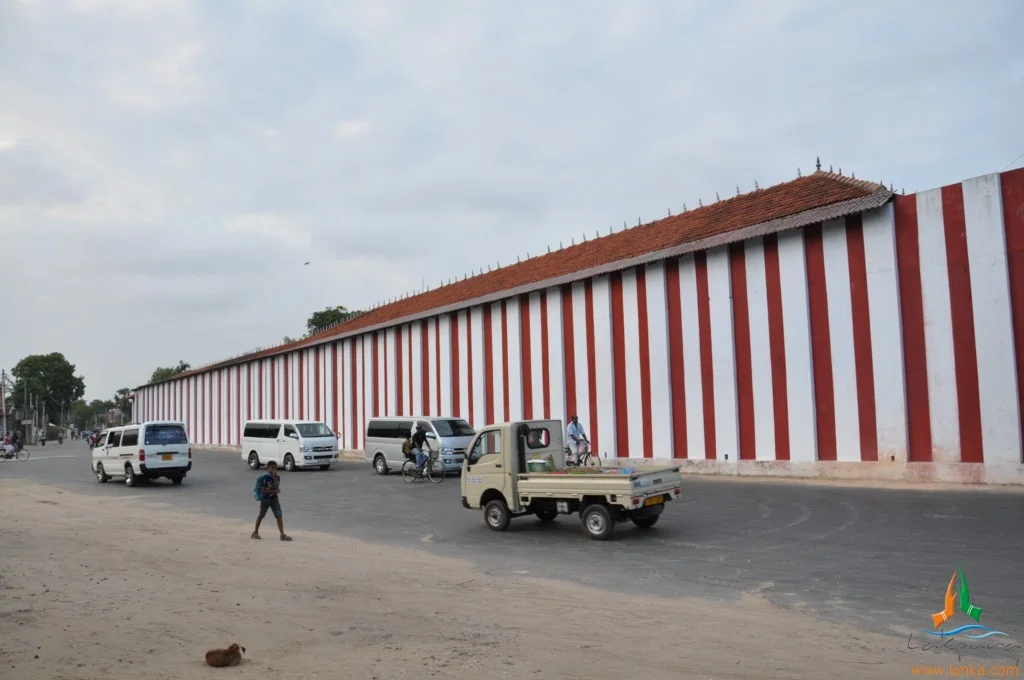
- Nallur Kandaswamy Kovil — Jaffna’s most important Hindu temple, its towering golden gopuram visible from across the city. Non-Hindus can enter the outer courtyard and watch ceremonies, though not the inner sanctum. Dress modestly (shoulders and knees covered; men remove shirts in the inner areas) and no photos inside. Arrive for the atmospheric evening puja around 6 pm. Free entry; allow 30–45 minutes.
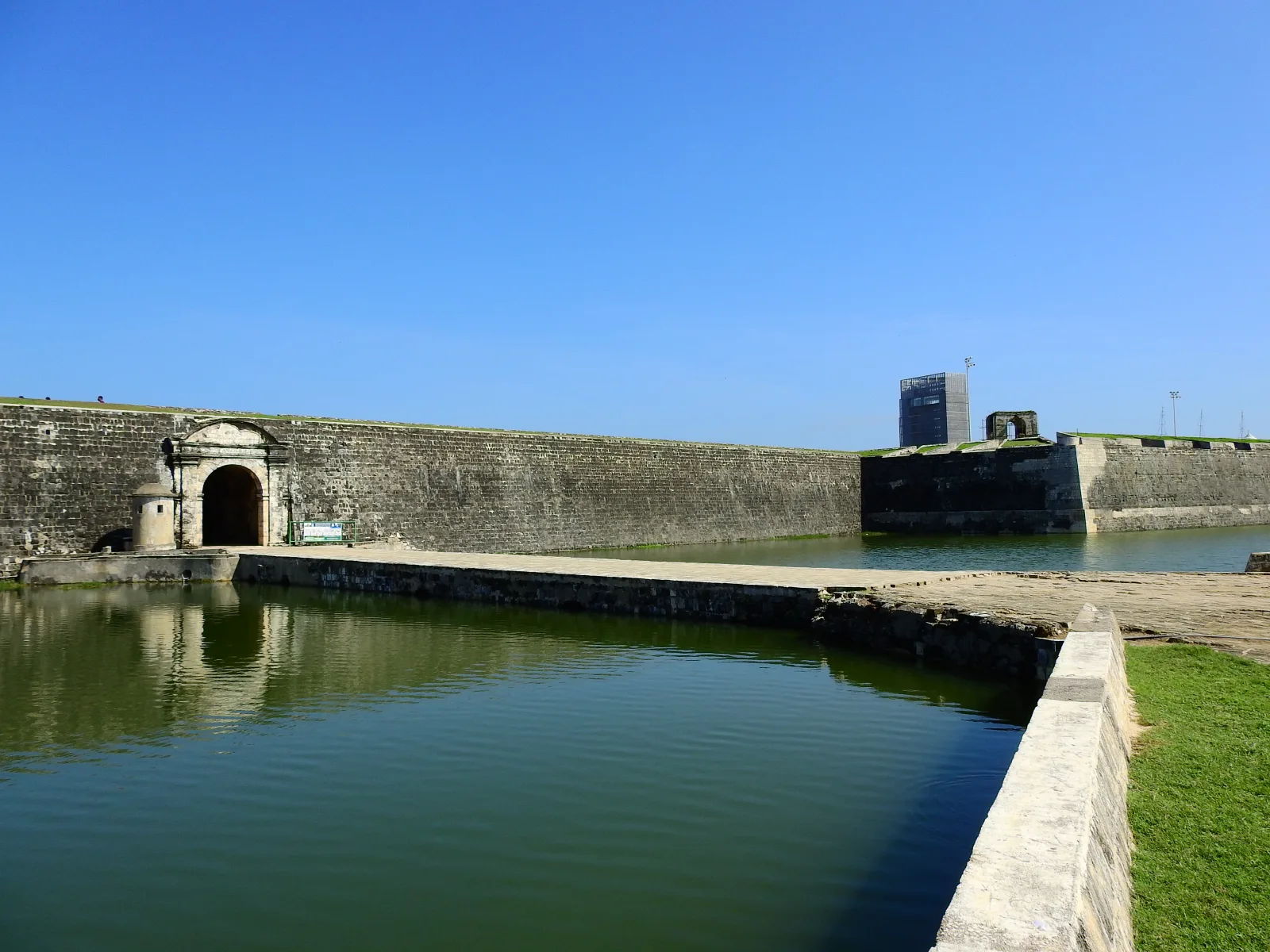
- Jaffna Fort — a 17th-century Dutch star fort (built by the Portuguese, expanded by the Dutch) with sweeping views over Jaffna Lagoon. Still under partial restoration after war damage, but the outer ramparts are fully walkable — sunrise here, when the coral stone turns gold, is the city’s best free moment. Allow 45 minutes.
- Jaffna Public Library — a striking white building rebuilt after its destruction in 1981, once home to one of Asia’s great collections of ancient Tamil manuscripts. The ground-floor lobby and reading rooms are open free; it is a quietly moving stop that explains a lot about the city. Allow 20 minutes.
- Delft Island (Neduntheevu) — a remote coral island reachable by an hour-long ferry, where wild horses roam free, baobab trees stand sentinel from Arab-trader days, and a ruined Dutch fort sits on the northern shore. Facilities are minimal — bring water, snacks and sun protection. A full day; roughly $3 return by ferry.
- Nainativu & Nagadeepa — twin islands a 20-minute ferry from the same jetty, home to Nagadeepa Purana Viharaya, one of Sri Lanka’s most revered Buddhist temples, plus a lively Hindu kovil. Easy to pair with Delft or visit alone in half a day. Ferry around $1.50 return.
- Keerimalai Natural Springs & Casuarina Beach — mineral springs where fresh water meets the sea in a stone pool complex (separate men’s and women’s areas, free), and a calm white-sand beach 20 minutes north, ideal for cooling off late afternoon.
Getting around
Reaching Jaffna is the main decision. The train from Colombo Fort is the classic option — roughly $5–$7.40 (1,600–2,480 LKR) for the 7–8-hour voyage via Anuradhapura, and genuinely scenic in places. Book ahead; the popular Yal Devi service runs from Colombo on certain weekdays and fills fast. The bus is a little faster at 6–7 hours and similar in price ($4–$8), but less comfortable. Flying is possible but wildly expensive for the distance ($290–$480) and not worth it for most budgets. Once in Jaffna, tuk-tuks are the default — a short town hop runs 200–400 LKR, and hiring one for the day ($10–$15) covers Nallur, the Fort and the library comfortably. For the islands, take a tuk-tuk to Kurikadduwan jetty (30 minutes) and catch the earliest ferry — the sea gets rougher in the afternoon and crossings can be cancelled in wind. What to avoid: relying on a car for every peninsula hop (tuk-tuk day-hire is far better value), and assuming every island runs on schedule in the northeast monsoon (October–January).
What to budget
Jaffna is one of Sri Lanka’s cheapest destinations, and the standout value is food. Here is an honest per-person breakdown (in USD, at roughly 330 LKR to the dollar):
- Accommodation: a clean private room in a guesthouse runs $25–$40/night; budget dorm beds are $10–$15; the top-end stays (Jetwing Jaffna, Fox Jaffna) are $70–$100.
- Meals: a full Jaffna crab curry with rice and sambols at a local restaurant is $5–$7 — the single best food value on the island. Local rice-and-curry plates are $2–$4; a splurge rooftop dinner rarely exceeds $15.
- Transport: $5–$15/day depending on whether you hire a tuk-tuk for the day or hop by the ride.
- Activities: almost everything in town is free. Budget $8–$12 for a Delft Island day (ferry plus snacks) and $2–$5 for Nainativu.
Add it up and a comfortable trip lands around $45–$70 per person per day — and a budget traveller can do it on $25–$30. Two or three nights costs roughly $140–$210 all-in for a mid-range solo traveller, ferry days included.
We checked the guest reviews: Jaffna has more rave crab reviews than anywhere else in Sri Lanka.WATCH OUT FOR
- The travel time is non-negotiable. Train and bus both take 6–8 hours, so your first and last Jaffna days are effectively travel days. Two nights gives you exactly one full day on the ground; three nights gives you two. Underestimate this and you will spend the whole “Jaffna trip” on a bus.
- The heat is dry and intense. Between March and September, daytime temperatures regularly hit 35–38°C with little cloud and almost no breeze inland. Sightseeing between 11 am and 3 pm is not advisable — plan early starts (7–10 am) and late afternoons (3:30 pm onward), and carry at least 1.5 litres of water per person on day trips.
- Accommodation quality genuinely varies. Several mid-range guesthouses run on intermittent water and occasional power cuts. Properties with solar backup and water storage are worth the premium. Check recent reviews specifically for air-conditioning performance, water pressure and hot-water reliability — these are the most common pain points in Jaffna stays.
- Island ferries depend on the sea. During the northeast monsoon (October–January) crossings to Delft and Nainativu can be cancelled at short notice; even in dry months, afternoon winds make the return rough. Take the earliest ferry and keep your schedule flexible.
- Cash is king outside town. ATMs concentrate in Jaffna city centre. On the outer peninsula and the islands, card payment is unreliable — carry enough rupees for ferry fares, snacks and tuk-tuks before you leave town.
GOOD TO KNOW
- Best time to go is January–September. The dry, settled months suit the peninsula best; the northeast monsoon (October–December) brings rain and rougher seas. If you can time it for August, the month-long Nallur Festival fills the city with processions, chariots and festival energy — an unforgettable time to be there, but book accommodation early.
- Book the Yal Devi train in advance. The Colombo–Jaffna service is popular and seats sell out, especially first and second class. Reserve on the Sri Lanka Railways site before you travel rather than chancing a walk-up.
- Dress for temples, not the beach. Modest clothing (shoulders and knees covered) plus a remove-your-shoes habit gets you into every kovil and viharaya comfortably — carry a sarong or scarf in your day bag.
- Eat where the locals eat. The crab curry at a simple local restaurant beats the tourist spots and costs a fraction. Look for busy places near the Market and the bus stand; a queue is a good sign.
- Stay for the evenings. Jaffna’s best atmosphere — the dusk puja at Nallur, the sunset over the lagoon, the ice-cream ritual at Rios — happens after the heat breaks. Do not rush back to your room at 4 pm.
WHERE TO STAY
- Jetwing Jaffna — the most reliable large hotel in town, with a rooftop pool that travellers consistently describe as a lifesaver in the afternoon heat and the most effective air conditioning guests found anywhere in Sri Lanka — plus a breakfast buffet that includes Tamil dishes like dosa, idli and pongal. The perfect base if comfort is your priority.
- Fox Jaffna — a modern, well-designed hotel near the Fort, repeatedly praised in reviews for staff who organised a Delft Island trip at short notice without fuss, and for the in-house restaurant serving the best Tamil seafood in the city. Great value in the mid-range.
- The Thinnai — a heritage stay in a restored Jaffna townhouse with a courtyard garden, whose owner is a knowledgeable guide to the city’s history — guests consistently say the informal conversations over breakfast were the highlight of their stay. The best pick for travellers who want to understand Jaffna, not just see it.
- D’Villa Garden House — a boutique guesthouse with a pool and lush garden that multiple reviews describe as a peaceful refuge from the city heat, with solar-powered backup so the air conditioning keeps working even during power cuts. A calm, well-run mid-range choice.
- Ashley Summer Resort — a mid-range property in Kokuvil with a large pool that families rate highly; guest reviews note the owner actively helps with itinerary planning, and most travellers end up refining their plans on his local knowledge. A warm, practical pick.
The bottom line
Jaffna is worth visiting — genuinely one of the most rewarding destinations in Sri Lanka — provided you give it three honest days, go between January and September, and arrive ready for heat and a slower pace. The north is not the island’s easiest trip, but the travellers who make it describe it as the one they remember longest: the food, the culture, the resilience of the people, and the feeling of discovering a Sri Lanka most visitors never see. Start with our how many days in Jaffna guide to shape your itinerary, and let the north surprise you the way it surprises everyone who goes.
Where the north goes next
Most people who love Jaffna regret not building in a second day for the islands. Two of the peninsula’s best days are the ferry trips to Nagadeepa Purana Viharaya on Nainativu — a 20-minute crossing to one of Sri Lanka’s most revered Buddhist temples — and out to Jaffna Fort, whose coral ramparts at sunrise are the city’s best free hour. Curious whether the trip north is really worth the seven hours from Colombo? We put 4,419 guest reviews into one honest verdict. From here the next decisions are already answered: where to go after Jaffna if you are continuing east or south, and how many days the north actually needs before you commit your dates.
Have a specific question about your Sri Lanka trip?
Ask BYC at byc.lk — Free and honest. Some links are affiliate links and never change our advice.
Ask BYC Your Question →