Matara or Mirissa? Where to Stay on Sri Lanka’s South Coast
The coastal bus from Galle rounds the headland and suddenly you have to choose. On one side, Polhena: a reef-protected lagoon where green turtles graze on the seagrass a few metres from the sand, and a working town behind it that most travellers only see through a bus window. On the other, a few kilometres west, Mirissa: the teardrop bay on every south-coast itinerary, Coconut Tree Hill at sunset, and a beach road built for whale-watching mornings and long, sociable dinners. They sit barely twelve kilometres apart, they cost the same to reach, and yet they suit completely different trips.
Here is the short answer: choose Mirissa if this is your first south-coast stop and you want scenery, tours and nightlife within walking distance. Choose Matara if you want the same coast for less money, a calmer base, and turtles you can swim with five minutes from your bed. Neither is a mistake — but booking the wrong one for your travel style is the most common regret on this stretch of coast. Across the 2,885 guest reviews we hold on Matara, the honest average is 8.71 out of 10; Mirissa, on far more traffic, holds 8.59 across 15,528 reviews. Matara edges it on satisfaction, and the reason is not the beach — it is the quiet.
What’s worth doing
- Swim (and snorkel) with turtles at Polhena. This is Matara’s headline and it is genuinely special. A natural coral reef forms a shallow, sheltered lagoon just off Polhena Beach, and green turtles feed on the seagrass beds close to shore — you can often see them from the sand before you even get in. Snorkelling here is beginner-friendly because the reef breaks the swell. Go early morning for the clearest water and the most turtles; the beach gets busy with local families by mid-morning and on weekends.
- Walk the Matara Fort and Star Fort. A compact Dutch-era fort with ocean views, a working clock tower and truly zero crowds. It is a twenty-minute wander rather than a day, but it gives Matara the thing Mirissa lacks: a sense of being a real, historic town rather than a beach strip.
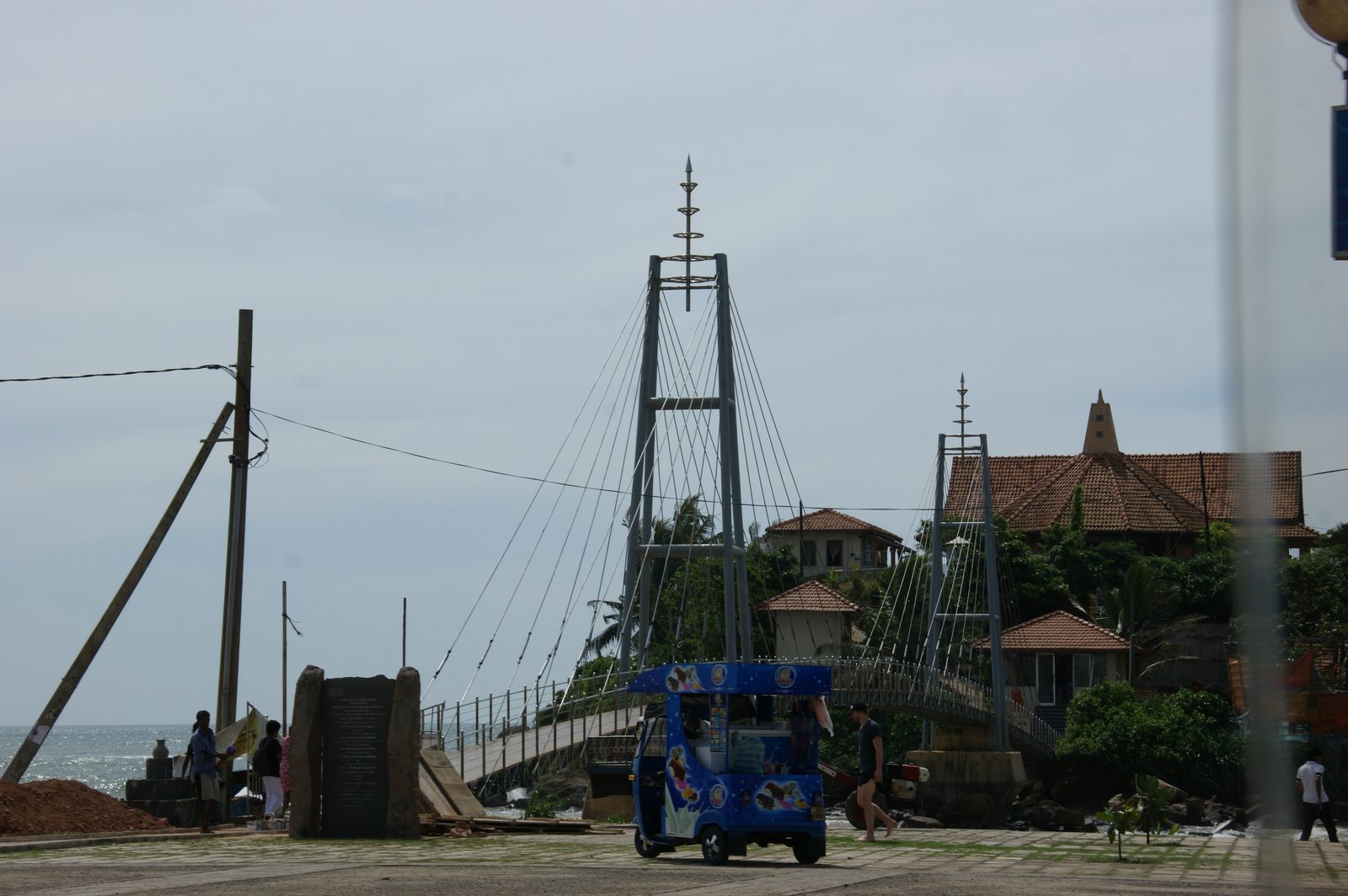
- Cross to Paravi Duwa temple. A Buddhist temple sits on a tiny island just offshore, connected by a short causeway you walk across. The murals inside reward the visit, and the setting — temple, sea, fishing boats — is one of the south coast’s most photogenic and least-visited spots.
- Climb Dondra Head lighthouse. Sri Lanka’s southernmost point, about six kilometres east of Matara. A 200-year-old lighthouse with a spiral climb and coastal views to match anything on the island. Go early or late — the midday heat on an exposed headland is punishing.
- Visit Weherahena temple. A vast seated Buddha and a cave-temple complex, best done in the morning before the heat builds up. Dress respectfully and remove shoes and hats before entering.
- Whale-watching and Coconut Tree Hill (Mirissa side). Mirissa is the island’s whale-watching hub for blue and sperm whales, with boats leaving at dawn from November to April; the rest of the year dolphin trips run but odds and sea state are worse. Coconut Tree Hill, at the eastern end of the bay, is the classic sunset viewpoint — go early, it is small and popular.
- Surf and beach-hop. Weligama, ten minutes west of Mirissa, is the beginner-surf capital of the south; Hiriketiya, further east past Matara, is the prettier, quieter bay. Both are easy day trips from either base.
Getting around
Matara and Mirissa are about 12 km apart on the A2 coastal road, so this is not a hard choice to reverse if you change your mind — but the practical costs differ by base:
- Between them: the local bus costs under LKR 100 (about US$0.30) and runs every 5–10 minutes from Matara Central Bus Stand; a tuk-tuk is the door-to-door option at roughly LKR 1,200–1,800 (US$4–6) or a little more at night. A private car or van for the same hop runs about LKR 3,500 (US$11) and up.
- Arriving: Matara is the terminus of the southern railway and the Southern Expressway, so it is the easier of the two to reach directly from Colombo — buses and trains land in the middle of town. Mirissa has its own small railway station, but not every train stops; many only stop at Weligama, six kilometres further on.
- Getting around Matara: it is a working town, so you will take tuk-tuks more than you expect — short hops run about US$1–3, and Matara town to Polhena is around US$2. Ride-hailing apps (PickMe, Uber) work in and around Matara town; they are patchier on the beach roads.
- Getting around Mirissa: almost everything — beach, restaurants, Coconut Tree Hill — is within a 15-minute walk, so you can go days without a tuk-tuk. That convenience is a real part of why Mirissa prices run higher.
- What to avoid. Do not pay the first tuk-tuk price at a station or bus stand. Check the standard rate on PickMe even if you plan to hail on the street — it gives you a fair number to quote. And carry small notes (LKR 100 and 500); drivers and conductors rarely have change for a LKR 5,000 note.
What to budget
The single biggest reason to pick Matara over Mirissa is what your money buys. An honest per-person day, for a comfortable solo traveller:
- Accommodation: this is where the split shows. In Matara, clean guesthouses and small resorts run US$18–$45 a night, with pool-equipped properties still under US$60. In Mirissa, the same standard starts around US$30 and climbs fast in season — a sea-view room in December–February is easily US$60–$150. Matara regularly delivers the higher-quality stay for less, which is exactly why its review average is higher.
- Meals: US$8–$15 a day eating well in Matara, where rice-and-curry plates are US$2–$4 and local eateries outnumber tourist restaurants. Budget US$12–$25 in Mirissa, where the beachfront restaurant culture is the draw and the prices reflect it.
- Activities: snorkelling around Polhena with a local boat or guide is about US$10–$20; turtle-watching from the shore is free. Whale-watching from Mirissa runs US$40–$80 per person depending on boat and season. Surf lessons in Weligama are around US$15–$25.
- Transport: US$2–$6 a day in Matara (tuk-tuks add up); under US$2 in Mirissa because you walk.
All in, a comfortable Matara day sits around US$45–$90; the equivalent Mirissa day is closer to US$65–$130, and wider in peak season. Over a four-night stay that gap can be a hundred dollars or more — enough to fund your whale-watching trip.
WATCH OUT FOR
- Booking Matara for the wrong reason. Matara is not a resort strip. Reviews that score it lower almost always trace to one mismatch: arriving expecting a polished beach holiday. It is a real town with a working port; the swimming beach is Polhena, a couple of kilometres out.
- Expecting hospitality to make up for maintenance. Across Matara’s lower-rated reviews, a consistent pattern appears: warm, well-meaning hosts paired with rooms that need attention — dated fixtures, inconsistent hot water, weak Wi-Fi, and rooms that feel damp in the humidity. Ask directly whether the room has dehumidification or strong ventilation, and confirm the water pressure and hot water on arrival.
- Noise that is not on the listing. Parts of the Polhena and Matara foreshore have moved toward a livelier evening scene, and some reviews note music carrying late from nearby bars. If you are a light sleeper, request a room set back from the beach road — or accept that the trade-off for the location is some evening sound.
- Swimming outside the reef. Polhena is calm inside the coral reef and can become genuinely dangerous outside it, especially when monsoon swell is running. Do not swim past the reef line, and follow local advice on the day rather than judging by how flat it looks from the beach.
- Peak-season prices in Mirissa. December to February, and around Christmas and New Year, Mirissa rates spike hard and the good rooms sell out weeks ahead. In Matara the same season is busy but far easier on both wallet and availability.
- Whale-watching realities. On the Mirissa side, the dawn boats are long and the sea is often rough; sightings are never guaranteed and the smaller boats give a rougher ride. Take motion-sickness precautions, choose an operator with a solid safety record, and set your expectations that it is a wildlife trip, not a show.
- Card fees and cash. Some smaller properties on this coast add a surcharge for card payments, and not every guesthouse or tuk-tuk takes cards at all. Carry a sensible amount of cash and treat the quoted room rate as the baseline, not the final bill.
GOOD TO KNOW
- Best time to visit: the south coast’s dry, calm window runs roughly November to April, when Polhena’s lagoon is at its clearest and Mirissa’s whale season is on. The southwest monsoon (roughly May to September) brings heavier rain and bigger swell; the coast still works, but swimming and whale trips get less reliable. October is a shoulder month with improving conditions.
- Two nights is the sweet spot in Matara; three or four in Mirissa. Matara rewards a short, calm stay — turtles, fort, temple, a lighthouse — and pairs naturally with moving on. Mirissa has enough beach life, day trips and restaurants to justify a longer, lazier stay.
- You can book Matara and day-trip Mirissa. The twelve-kilometre gap and the sub-dollar bus mean you can sleep in cheaper, quieter Matara and still spend an afternoon or a sunset in Mirissa. It is the single best value-for-money move on this stretch of coast.
- Base yourself by activity, not by reputation. If turtles, budget and calm are your priorities, pick Polhena or Madiha in Matara. If whales, sunsets and a social beach road are, pick Mirissa. Both are on the same A2 line, so you are never stranded.
- Ride-hailing works in town, not always at the beach. Keep your accommodation’s trusted tuk-tuk number as a backup for late-evening returns when app coverage is thin.
- Dress and behave for the temples. Matara has more functioning religious sites than Mirissa — cover shoulders and knees, remove shoes and hats, and keep voices low.
- Combine it with Hiriketiya and Weligama. Both are short hops from either base and add the surf-and-cove side of the coast that neither Matara nor Mirissa fully provides alone.
WHERE TO STAY
The honest pattern in Matara is that the best-rated properties are the smaller, well-run ones — which is why a careful choice matters more here than in a resort town.
- Deep Blue (9.49/10 across 168 reviews) — a Polhena seafront resort with a large pool, its own garden and direct access to the reef. Guests keep naming the manager, Ruzaik, for fair tuk-tuk prices and local tips, and the calm, family-friendly pool is repeatedly called a highlight. The pick if you want Polhena’s turtles on your doorstep with comfort behind you.
- Hotel Ferola (9.33/10 across 215 reviews) — the value-and-design choice in Matara town. Reviewers describe beautifully decorated rooms and grounds, a lovely pool and genuinely welcoming staff, with guests calling it their best-value stay in Sri Lanka. Choose it for polish without a resort-strip premium.
- Light house beach home (9.12/10 across 104 reviews) — the character stay, near Dondra Head in the far south. Reviewers love the setting by the lighthouse, the juice bar attached to the property and the friendly, no-fuss hospitality. Book it if you want the quietest, most scenic corner of the Matara coast.
- Moana La Vie – Polhena (8.76/10 across 87 reviews) — a well-placed Polhena base within easy reach of both the swimming beach and local eateries. Guests highlight the setting and the easy access to turtle-watching, making it a practical middle-ground between town comfort and beach access.
- Coco Mount Mirissa (9.68/10 across 162 reviews) — if you lean Mirissa, this is the higher-scoring option, on the Matara side of the bay. Guests single out the peaceful garden setting, comfortable beds and effective air-conditioning, with one reviewer calling it a place they could happily stay long-term. It captures Mirissa’s scenery without its crowds.
The data here comes from the same review corpus we use across the whole site. To see how Matara stacks up as a destination in its own right, start with our Matara travel guide, and to weigh this coast against the rest of the island compare Mirissa vs Unawatuna vs Weligama. Sorting out how to reach either base from Colombo or Galle? Getting around Sri Lanka has the real times and fares.
The bottom line
Matara and Mirissa are not rivals so much as two moods of the same coast — and the good news is you rarely have to choose only one. Sleep in Matara for the turtles, the budget and the calm; spend your afternoons and sunsets in Mirissa for the scenery and the beach life, twelve kilometres and thirty cents away. Pick the base that matches your travel style rather than the name you heard first, and the south coast will give you exactly the trip you came for.
Have a specific question about your Sri Lanka trip?
Ask BYC at byc.lk — Free and honest. Some links are affiliate links and never change our advice.
Ask BYC Your Question →