The Longer the Review, the Worse the Stay: What 315,523 Sri Lanka Reviews Reveal

Every travel guide tells you to read the reviews before you book a hotel. Almost none tell you the thing that the data makes obvious the moment you measure it: the length of a guest review is one of the best predictors of whether the guest was happy — and it points the opposite way to what you would guess.
We took the same 315,523 verified guest reviews that power this site and sorted them by how much the guest actually wrote. Short, breezy one-liners turn out to describe the best stays. The long, detailed, paragraph-after-paragraph reviews — the ones a careful traveller instinctively trusts most — describe the worst.
words in the average complaint (under 5/10)
words in the average rave (9/10 and up)
longer titles when the guest is unhappy
1. The headline: happiness is short, unhappiness is long
Break the corpus into bands by review length and the pattern is clean and monotonic at the top, then falls off a cliff:
- Under 100 characters (“Great stay, lovely staff!”): 8.42/10 — 132,400 reviews.
- 100–199 characters: 8.85/10 — 67,590 reviews.
- 200–399 characters: 8.92/10 — 66,537 reviews. The sweet spot.
- 400–799 characters: 8.73/10 — 35,019 reviews.
- 800+ characters: 7.39/10 — 13,977 reviews. A 1.53-point drop.
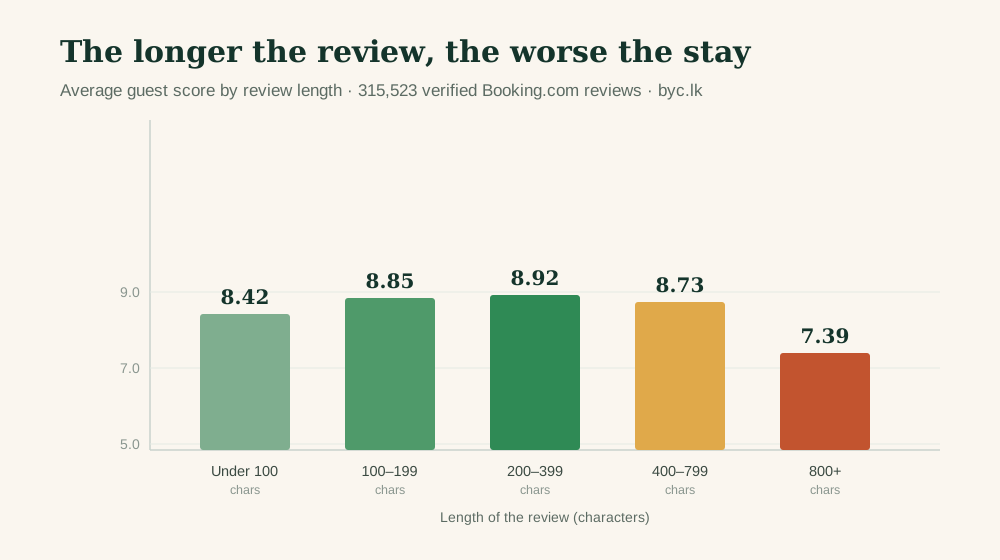
The reason is not mysterious once you see it. People do not write 900 words because everything was fine. They write 900 words because the air-conditioning broke, the promised sea view was a wall, the transfer never came, and they want you to know exactly how it happened — in order, with dates. Praise is easy to compress. Grievance demands detail.
2. Complaint rates double in the longest reviews
Sort the same bands by how many reviews are genuine complaints (a score under 7/10) and the effect is even sharper:
- Under 100 characters: 12.9% are complaints (61.9% are outright raves).
- 100–199 characters: 7.9% complaints (72.1% raves).
- 200–399 characters: 8.3% complaints (75.9% raves) — the most satisfied band on the island.
- 400–799 characters: 12.5% complaints (75.1% raves).
- 800+ characters: 31.0% complaints (61.6% raves) — nearly one in three is someone with a serious problem to report.
A review of 800 characters or more is almost four times as likely to be a complaint as a review of 200–399 characters. If you only read the shortest handful of reviews on a booking page, you are reading the happiest guests. If you only read the longest, you are reading the most aggrieved. Neither sample is representative — which is exactly the trap.
3. The words themselves: 134 vs 46
Length is only a proxy. The clearest single number in the whole study is words-per-score:
- An unhappy guest (score below 5/10) writes an average of 134 words.
- A delighted guest (score 9/10 or above) writes an average of 46 words.
Unhappiness is nearly three times more verbose than happiness. The same asymmetry shows up in the titles guests choose. Reviews titled with “would not”, “avoid” or “never” are 2,797 characters long on average. Reviews titled “perfect”, “amazing” or “wonderful” average just 837 characters. Even in a single line, the negative review has more to say.
4. Who answers the essays? (Spoiler: hotels do)
This is where the study gets quietly useful for the traveller. We asked how often properties reply to the long reviews versus the short ones — and hotels are ruthlessly strategic about it:
- Long complaints (under 5/10, 800+ characters): 59.4% get an owner reply.
- Short raves (9/10 and up, under 100 characters): just 8.4% get a reply.
Hotels respond to the essays and ignore the thank-yous. That is rational — a long complaint is public evidence of a failure and worth managing, while a five-word compliment needs no defending — but it reshapes how you should read a review page. A wall of answered complaints does not mean the hotel is bad; it may simply mean the hotel is present. What matters far more is whether the specific complaint you care about is answered with a fix or a shrug. Our separate study of how Sri Lanka hotels reply to reviews found that businesses answer only 1 in 10 reviews overall, and skew heavily towards complaints.
5. What this means when you are booking
None of this makes reviews untrustworthy. It makes them readable, if you know the shape of what you are reading:
- Do not equate length with importance. The longest review on the page is very likely the angriest, not the most representative. Read a spread: a few short ones for the baseline mood, a few long ones for the specific risks.
- Count, do not just read. If a page has 400 reviews and only three are long complaints, the 31%-of-long-reviews stat does not mean 31% of guests were unhappy — it means the unhappy ones wrote the most. Check what share of all reviews are under 7/10 before you panic.
- Mine the long ones for specifics. Length is where the operational detail lives: which room was noisy, how the transfer failed, what the “sea view” actually faced. That is exactly the information a short review omits.
- Check whether the complaint was answered. A long complaint with a real reply from the property is often a better signal than a page of unanswered five-star one-liners. The reply tells you the hotel fixes things.
- Weight the middle. The 200–399-character band is where guests are both fluent and satisfied — the most balanced signal on the page.
6. The bottom line
Across 315,523 verified reviews, the single strongest length effect in the data runs backwards from intuition: the more a guest wrote, the worse their stay was likely to have been. Reviews of 200–399 characters average 8.92/10; reviews of 800+ characters average 7.39/10 and are four times as likely to be complaints. Unhappy guests write 134 words; happy ones write 46. And hotels know it — they answer the essays and ignore the cheers.
So read the long reviews — but read them as a list of risks, not as a verdict. Read the short ones for the mood. And before you decide anything, look at the proportion of complaints across the whole page, not the drama of any single entry. The guests who write the most are not the guests who had the most typical stay.
Method: all 315,523 text-bearing verified Booking.com guest reviews in the byc.lk corpus (363,148 reviews total; average score 8.64/10). Bands by review-text character count; complaint defined as a score under 7/10; rave as 9/10 or above. Owner-reply figures count any non-empty reply. Last updated: 8 October 2026.
Have a specific question about your Sri Lanka trip?
Ask BYC at byc.lk — Free and honest. Some links are affiliate links and never change our advice.
Ask BYC Your Question →