Is Sri Lanka Good for a Baby or Toddler? (2026 Family Guide)
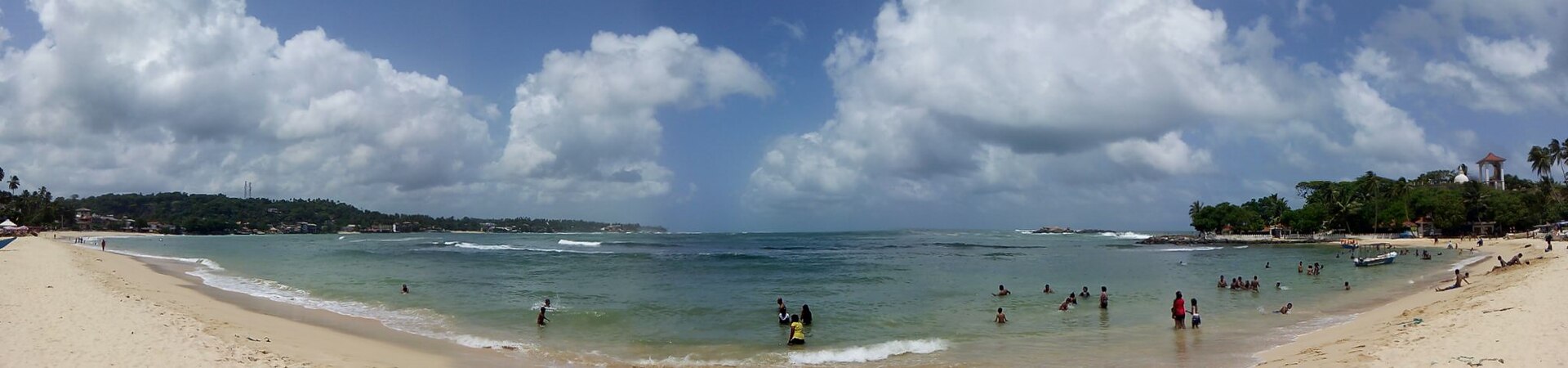
Yes — Sri Lanka is one of the most genuinely baby-friendly destinations in Asia, and families with infants and toddlers report some of the warmest stays anywhere on the island. The catch is that the classic Sri Lanka itinerary is the wrong one for you. Do fewer places, stay longer, hire a private car, and the trip becomes easy; try to tick off eight destinations in ten days and it becomes a slog for everyone.
Watch a family with a toddler wander into almost any Sri Lankan hotel, guesthouse or roadside restaurant and you will see the same thing happen: staff appear from nowhere, someone takes the child for a gentle walk, the kitchen makes a small portion of plain rice and dhal without being asked, and a high chair materialises. This is not a coincidence. Sri Lankan culture places enormous value on children, and the hospitality industry is built around family life. The question parents actually ask is not “is it possible?” — it plainly is — but “how do I plan it so the heat, the roads and the distances do not defeat us?”
That is a question we can answer with evidence. Across 324,000+ real guest reviews in our database, “kid” appears in over 2,000 individual stays, “cot” in around 1,200, “crib” in over 500, and “baby” and “toddler” together in close to 800 more. The families writing those reviews are remarkably consistent about what worked — and about the handful of things that caught them out. Here is both.
Last updated: September 12, 2026.
The short answer
Bring your own car seat, book a private driver rather than public transport, base yourself in just one or two places, and choose hotels with a pool, air-conditioning and a kitchen that will cook plain, mild food for a small child. Do that and Sri Lanka with a baby or toddler is genuinely relaxing. The review data is full of families who described their Sri Lankan hosts as patient, kind and endlessly helpful with children — staff making special baby food at no charge, upgrading rooms for safety, and going out of their way to keep a toddler entertained.
The things that go wrong are predictable: too much driving between too many places, expectations that nappies and swim nappies are always easy to find, heat that hits hardest between 11am and 3pm, and roads where car seats simply are not provided unless you bring one. Every one of those is solvable with a little planning before you fly, and none of them will ruin an otherwise wonderful family holiday.
Reassurance first, because it matters: Sri Lanka is not a difficult country for small children. It is warm, unhurried and profoundly welcoming to families. Children are fussed over, admired and helped everywhere — in restaurants, in temples, on trains, in the markets. The planning burden is real, but it is logistical, not cultural. Get the logistics right and the rest takes care of itself.
What’s worth doing — with a small child in tow
The activities that delight a baby or toddler in Sri Lanka are rarely the ones on the classic bucket list. Sigiriya’s rock, the deep-country hikes and the long safari drives are all possible but demanding; the magic happens at a lower altitude and a slower pace. Here is what genuinely works, with the detail that decides whether the day succeeds:
- Calm, shallow beaches on the right coast. The single best toddler activity in Sri Lanka is a gentle, warm, shallow bay. Unawatuna, Bentota, Pasikuda and the quieter stretches around Weligama all offer water that shelves slowly, so a toddler can splash safely within arm’s reach. Check which coast is in season before you book — the south and west are driest roughly December to March, the east roughly May to September — because a rained-out beach is no fun with a crawler.
- Hotels with a proper pool and a toddler section. This sounds mundane; it is the single most-praised feature in family reviews. Guests at a hill-country resort wrote that the pool had “a dedicated area for toddlers,” and at a Mirissa beach hotel another family noted “two shallow areas which can be great for toddlers.” A shaded, shallow pool buys you two easy hours every afternoon — exactly when the outdoor heat peaks and a nap in the shade is welcome.
- Wildlife without the long game drive. A full day bouncing over park tracks is hard on a small child, but elephants are unmissable. Choose parks with shorter, gentler circuits or take a half-day jeep rather than a dawn-to-dusk safari, and ask your hotel to arrange a jeep with proper seats and restraints. A toddler who sees real elephants from the safety of a stationary vehicle will remember it.
- Boat rides and gentle lagoon trips. A slow boat on a calm lagoon or river — a lake, a mangrove channel, or a small lake town — holds a small child’s attention far better than a trek. Book short trips, insist on life jackets sized for children, and go early in the morning when the water is flat and the heat is bearable.
- Trains for the scenery, not for the distance. The famous hill-country line is spectacular, and a short daytime hop — an hour or two rather than a whole-day journey — gives a child the train experience without the endurance test. The full run is long and crowded; a brief, scenic leg is the family version.
- Food that a toddler will actually eat. This is a hidden strength. Restaurants and hotel kitchens routinely make plain, mild versions of rice, dhal, string hoppers and curries for children, often at no charge — one reviewer wrote that “all of our special baby food we asked the chefs to make was not charged.” Ask for ‘mild’ and ‘no chilli’ explicitly; Sri Lankan cooking can be gently spiced even when it looks plain.
- Slow mornings and long afternoons. The winning daily rhythm with a toddler is an early excursion, a long middle-of-the-day break back at the hotel, and a late-afternoon outing. Plan around your child’s nap rather than fighting it, and you will see everything that matters without a single meltdown.
Getting around — the one place to spend money
Transport is where family trips are won or lost. Sri Lanka’s public buses and the older trains are cheap and full of character, but they are crowded, hot and slow, and they are a poor fit for an infant or a restless toddler. The near-universal advice in family reviews is the same: book a private car with a driver for the whole trip. It is the single biggest quality-of-life upgrade you can buy as a travelling family.
The reason is not luxury — it is control. With a private car you decide when to stop, you can pull over for a nappy change or a feed, you carry far more luggage and baby gear without a struggle, you avoid waiting in the sun for a bus, and you skip the exhausting public-transport shuffle entirely. In our review data, drivers arranged through hotels and guesthouses come up again and again as kind, careful and good with children — and because you are hiring by the day, a rest day costs you nothing extra but a lower waiting rate.
Real 2026 costs so you can budget honestly: a private driver with an air-conditioned car runs roughly US$50–70 per day, and a larger van for a family with luggage and a pram around US$70–100 per day, fuel and the driver’s own costs usually included. A short airport transfer to a nearby beach town is US$10–25; a longer cross-country leg such as Colombo to Kandy is US$60–80. Tuk-tuks are perfect for short local hops — agree the fare before you get in, and expect to pay a little more for the convenience of not walking in the heat.
Car seats: bring your own. This is the most important practical note in this whole article. Sri Lanka has no law requiring child car seats, and private drivers and rental cars almost never provide them. If you want your child restrained in the car — and with a baby or toddler you should — pack a lightweight, travel-friendly seat from home or confirm in writing with your operator that an appropriate seat will be fitted. Do not assume one will be there. For the shortest hops, a sling or carrier is often more practical than wrestling a seat in and out of a tuk-tuk.
What to budget
Family travel in Sri Lanka can be excellent value, because small children usually sleep in your room and eat little, so your marginal cost per child is low. Here is an honest family picture for 2026:
- Accommodation: a comfortable family room or a small villa with a pool runs roughly US$60–150 per night; a genuinely luxurious family resort can be US$200+. Many hotels provide cots or cribs free of charge — ask when booking, because supply is limited — and some offer family rooms or interconnecting doors that make bedtime far easier. Our data shows around 1,200 stays mentioning a cot and 500+ mentioning a crib, so cots are common but worth confirming in advance.
- Meals: hotel and restaurant meals run US$5–15 per adult for local food and more at resort restaurants. Children’s portions are cheap or free, and a hotel breakfast is usually included. Budget a little extra for familiar snacks and formula top-ups.
- Baby supplies: nappies, wipes and formula are widely sold in the modern supermarket chains found in most towns, so you do not need to pack a fortnight’s worth — but availability thins in remote areas, so keep a three-to-four-day buffer before heading into the deep countryside. A large pack of quality nappies costs roughly US$12–20.
- Transport: the private car and driver at US$50–100 per day is the main transport line, plus tuk-tuks for short hops at a few dollars each.
- Activities: temple and heritage site entries are modest; park tickets and jeeps are the big-ticket item at roughly US$25–35 per foreign adult plus jeep cost, with children usually reduced or free at young ages.
- Contingency: keep a real buffer — roughly US$150–300 for the trip — for a pharmacy run, a private clinic visit or a change of plan. Private medical care in Colombo is good but not free, and travel insurance that covers children and medical evacuation is genuinely worth having.
Put together, a family of three travelling comfortably with a private car, a good hotel each night and a mix of beach, wildlife and culture might spend roughly US$150–250 per day all-in — considerably less if you favour guesthouses and local food, and more if you want resort luxury. That is a very reasonable figure for the quality of holiday on offer.
WATCH OUT FOR
None of these are reasons to stay home — they are simply the patterns that catch families out, and all of them are easy to plan around:
- No car seat unless you bring one. As above, this is the number one safety gap. Sri Lankan law does not require child seats, and vehicles rarely come with them. Bring your own or get a written confirmation of a fitted seat, and never assume.
- Trying to see too much. The most common family regret is an itinerary built for backpackers. Three bases in a fortnight is plenty; eight is a recipe for exhausted parents and a miserable child. Every transfer is a hot, bumpy car ride, and small children do not enjoy them.
- Midday heat and sun. Between roughly 11am and 3pm the lowlands can be punishing for a baby’s skin and tolerance. Plan indoor or shaded pool time in the middle of the day, use shade and sunscreen diligently, and keep a sun hat on your child. The hill country is markedly cooler and a good choice if you have a heat-sensitive child.
- Mosquitoes and dengue. Dengue is present year-round in Sri Lanka, and children are among those most affected. Use repellent suitable for your child’s age, use a cot net at night, avoid standing water and dress children in light long sleeves at dusk. This is a routine precaution, not a reason to worry constantly — just do it consistently.
- Water and ice. Stick to sealed bottled water for drinking and for brushing small teeth, and be cautious with salads, cut fruit and ice from street stalls for a young child’s stomach. Hotel food and bottled water are reliably safe; your child’s tummy will thank you for the small caution.
- Expectations about baby gear. High chairs, cots, prams-friendly pavements and changing facilities are not universal outside the better hotels and city malls. A carrier beats a bulky stroller on rough streets and temple steps; bringing your own essentials — barrier cream, familiar medicines, a favourite snack — saves hunting them down.
- Long, hot temple and site visits. Cultural sites are often climbed on bare feet over hot stone, in the sun, with many steps. Enjoy them in the cool of early morning, keep visits short, and be ready to sit one parent out with the child while the other explores.
GOOD TO KNOW
- Babies and toddlers need their own visa. There is no exemption for infants — apply for the whole family’s ETA together online before you fly, and allow time for processing.
- Fly into Colombo and ease in slowly. The airport is near Negombo, a short, low-stress drive from a beach town with good family hotels — an ideal first night to shake off jetlag before any long travel. Several reviewers called a Negombo guesthouse “the perfect first stay to get over our jetlag after arriving.”
- Ask for the cot, the high chair and the family room at booking. Do not leave it to arrival. Supply is limited and the best family rooms go first, especially in high season and school holidays.
- Travel light on routine, heavy on flexibility. Keep mornings for one activity and accept that a good day may be two beach hours, a nap and a sunset. That is a successful Sri Lankan family day, not a failed one.
- Pharmacy and medical basics. Pharmacies are widespread in towns and cities, and Colombo has good private hospitals with paediatric care. Save your insurance details and your accommodation’s phone number on your phone, and ask your hotel to recommend a doctor if you ever need one.
- Your hosts will help — let them. The single most repeated theme in family reviews is staff going out of their way for children: making special food, providing toys and games, upgrading rooms for safety, arranging cots and even finding a tuk-tuk at 5.30am for an early start. Ask, and Sri Lankan hospitality will usually exceed what you expected.
- Choose your coast by season, not by reputation. The island has two monsoons, so “best time” only means something once you have picked your coast. Match your base to the dry window and the whole trip gets easier.
WHERE TO STAY
Properties below are drawn from our review data — positive family mentions only, with the specific review-backed reason each earns its place. All are known for being genuinely good with small children.
- Nuwara Eliya — Suriya Guest. A hill-country guesthouse reviewers repeatedly praise for being “well equipped with high chairs and games to keep them occupied” for guests travelling with a toddler — the cool climate here also makes it a gentle base if you are worried about lowland heat. A genuinely family-ready small stay.
- Negombo — Negombo Boutique Villa. A guesthouse that families describe as “the perfect first stay to get over our jetlag after arriving in Sri Lanka,” with a room that was “a great size” for two toddlers and staff who were “welcoming and helpful with everything we needed.” Ideal for the first or last night near the airport.
- Sigiriya — Habarana Village by Cinnamon. Guests write that their toddler “felt like she was royalty,” with the restaurant staff and chef going out of their way to make breakfast fun for a small child — and a pool and vast grounds that are easy and safe to explore as a family.
- Mirissa — Lantern Boutique Hotel by Reveal. A beach hotel singled out for a warm pool with “two shallow areas which can be great for toddlers,” where reviewer children “spend long hours” happily — the calm, shallow-water beach day done properly on the south coast.
- Uppuveli / Trincomalee — Uppuveli Beach by DSK. Reviewers who travelled with a toddler called the premises “perfect,” praising caring staff, a great pool and a kitchen that happily made the special baby food they requested at no charge — an easy east-coast base in season.
The bottom line
Sri Lanka with a baby or toddler is not just possible — it is one of the warmest and most rewarding family trips you can take, as long as you plan for fewer places, more time, and a private car. Bring your own car seat, choose a hotel with a pool and a kitchen that will cook for a small child, keep the middle of the day slow, and let the island’s famously child-loving hospitality do the rest. The families in our review data came home not merely relieved but genuinely delighted — and more than a few said it was the best holiday they had taken with a little one. Pack sensibly, pace gently, and go — the island is waiting for you, and it is wonderful with children.
For the wider picture, see our guide to whether Sri Lanka is good for families, our family beach comparison for the south coast, the private driver cost guide, and when to visit Sri Lanka by month for matching your coast to the season.
Have a specific question about your Sri Lanka trip?
Ask BYC at byc.lk — free, honest, no upsell. Ever.
Ask BYC Your Question →