From Ella, Where Next? The Best Stops After Ella, Ranked for 2026
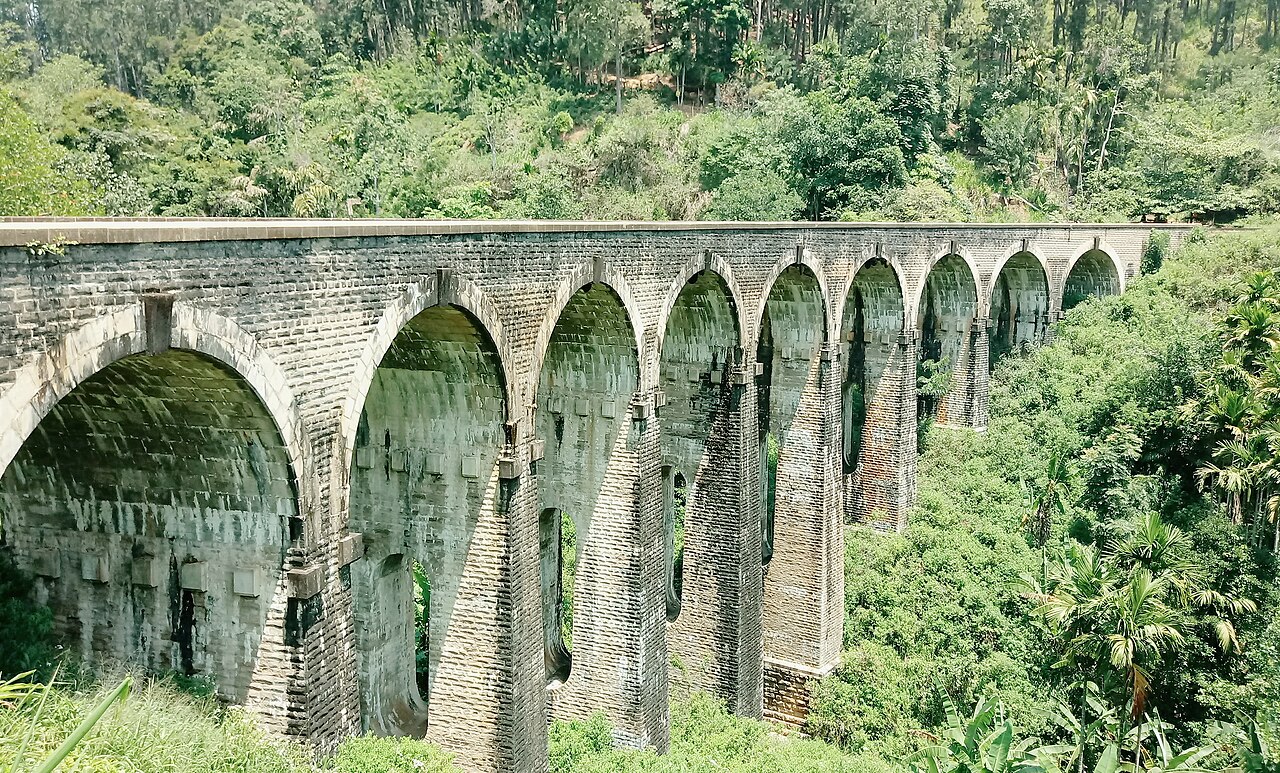
Ella is where most Sri Lanka trips reach their emotional peak: the Nine Arch Bridge at dawn, the tea-country train, misty hills and cheap rice-and-curry. Then the question lands — and it is one of the most common we see: what comes next?
You have two or three days left, a flight home from Colombo on the horizon, and a map that suddenly looks like every direction costs a full day of travel. The wrong call — a rushed backtrack to Kandy, or an over-ambitious dash to a beach that will rain on you — can flatten the last stretch of a great trip. The right call can turn it into the best part.
Last updated: September 20, 2026.
The short answer
From Ella, the strongest next stop is almost always the south coast — Tangalle, Hiriketiya, Mirissa or Unawatuna — because it flows with the direction you are already heading and puts you near Colombo for your flight. The two most rewarding add-ons are a safari detour at Udawalawe (on the way, and excellent value) and a night in Nuwara Eliya or Haputale if you want more cool hill country before you drop to sea level. Avoid backtracking north to Kandy or Sigiriya: it burns a full day and puts you further from your departure.
If you are travelling in October or November specifically, bias the coast choice by where the rain actually falls: the deep south and south-east (Tangalle, Hiriketiya, and the Arugam Bay side) stay drier longer, while the south-west around Galle and Mirissa is turning wetter. Read the month before you commit to a base.
The reason the coast wins is simple geography. Ella sits in the hills above the deep south, roughly 90–120 minutes from the southern beaches if the road behaves. Every route north, by contrast, means climbing back through the same damaged hill line toward Kandy — and with the main rail line still under repair, that leg is slower and less certain than it was before. Going downhill and south works with the grain of the island.
What's worth doing
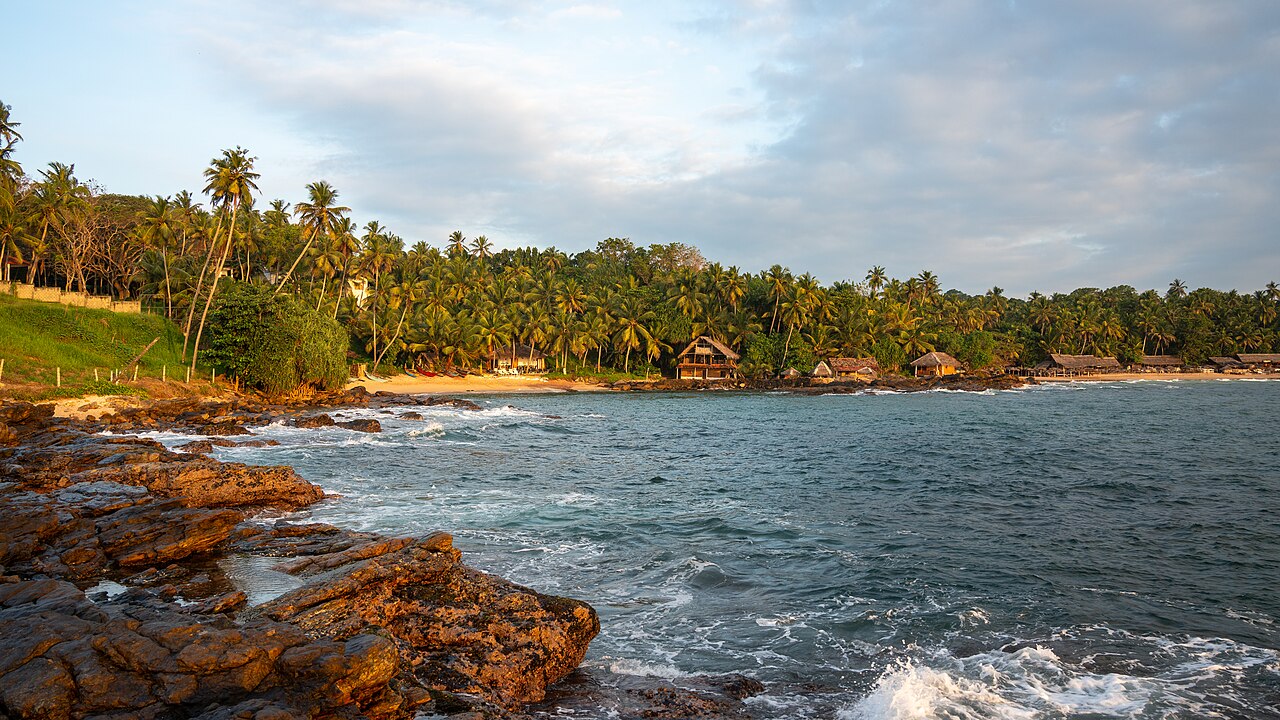
- Drop to Tangalle or Hiriketiya for a slower, less-touristed coast. Tangalle is a long, quiet stretch of golden sand with excellent local seafood and far fewer crowds than the Mirissa strip — the pick if you want space and value. Hiriketiya, a horseshoe bay 30–40 minutes further west, is the surf-and-café favourite and one of the most photogenic small bays on the island. Both are 2–2.5 hours from Ella by private car, or a bus-and-change away.
- Add a Udawalawe safari en route — the smartest single detour. Udawalawe National Park sits almost directly between Ella and the south coast, and it is the most reliable place in Sri Lanka to see wild elephants, with around 500–600 in the park. A half-day private jeep safari with park tickets typically runs $40–60 per person when shared, and 8-hour tours from Ella start around $40; a private jeep day runs higher, and a 5-hour jeep alone is quoted around Rs 17,000 (~$55). You can do it as a day trip and return, or — better — do it as a transfer so the safari is "on the way" to the beach.
- Consider Yala if you specifically want leopards, and know what you are buying. Yala's Block 1 has one of the world's densest leopard populations, but that also means a lot of jeeps at a sighting. It is a longer haul from Ella than Udawalawe and better done as an overnight or as part of a south-east routing. If wildlife is a priority and you have the days, the Ella → Yala → south coast shuttle-and-safari combos that run in 8–9 hours are efficient; if you have only one spare day, Udawalawe gives you more wildlife for less driving.
- Take two nights in Nuwara Eliya or Haputale before descending. If you loved the hills and are not ready for the coast heat, the classic move is the scenic train or a car up to Nuwara Eliya — cool, green, tea-estate country — or to Haputale and Lipton's Seat for the best view in the highlands. From there you drop south via Bandarawela and Wellawaya to the coast. This adds a day but makes the descent feel like part of the journey rather than a transfer.
- Head east to Arugam Bay if it is the right season and you surf (or want to learn). From Ella the road east to Arugam Bay via Monaragala runs roughly 3–3.5 hours, and the bay is one of Asia's classic point breaks. It works best May–September when the east coast is dry; outside that window, or if you are not a surfer, the south coast beats it for a final stop.
- Do not forget the small stuff you have been putting off. If you skipped Little Adam's Peak, Ella Rock or Diyaluma Falls, a half-day flex before you leave keeps you based in Ella while you tick them off — cheaper and calmer than trying to see them on a rushed return later.
Getting around
The good news is that every realistic next stop after Ella is reachable in a single travel day, and you have three main tools. Prices below are 2026 figures in USD.
- Private car or taxi (best for the coast transfer). Ella to Tangalle, Hiriketiya or Mirissa runs $60–95 door-to-door in 2–3.5 hours depending on the base and the road, and 12Go-quoted taxi fares for the Ella–Mirissa leg have started around $81. Splitting a car two or three ways makes this excellent value and lets you stop at a waterfall or a tea factory on the way.
- Bus (cheapest). The classic budget route to the deep south is Ella → Wellawaya → change to a coast bus to Tangalle/Matara, or Ella → Bandarawela → Matara then west. Expect $2–5 total and 3.5–5 hours with the change. Buses are frequent by day, slow, and stop running to a useful schedule in the evening — start before mid-afternoon.
- Train (scenic, but staged). With the main line still being repaired, hill-country rail is a patchwork: the Nanu Oya–Ella scenic section reopened on 18 July 2026 and runs, while the full Colombo–Kandy leg is expected back around October 2026 — watch for a confirmed date rather than assuming it. For a southbound plan, treat the train as a scenic add-on, not your primary transfer, and check status the day you travel.
- Shared shuttle-and-safari combos. For travellers doing Ella → Yala/Udawalawe → south coast in one push, pre-booked shuttles bundle the drive and the game drive in a single 8–9 hour day starting around $40 for the shuttle element. Efficient if your time is tight; less flexible if you like to linger.
What to avoid: do not plan a long southbound hop to arrive after dark — coastal roads have poor lighting in places and tuk-tuk drivers will charge a premium for late runs; do not assume you can just "grab a bus" in the evening, as services thin out sharply; and do not back-track north to Kandy or Sigiriya as a "quick" day trip from Ella — with the rail line still patchy, that is a long road day in the wrong direction for your flight.
What to budget
Honest daily numbers for the next-stop phase of your trip, per person, in USD, split by style. This is on-the-ground spend, excluding your international flight.
- Accommodation: good guesthouses and small hotels on the deep-south coast and around Ella run $20–45 a night for a double; mid-range boutique stays and beach-view rooms $50–90; design-led or high-end $120+. Nuwara Eliya is similar to Ella; Udawalawe has solid safari-lodge rooms from about $30–60.
- Meals: a local rice-and-curry or kottu meal is $2–5; a café breakfast $4–8; a mid-range restaurant dinner $8–18. Budget $12–25 a day for food if you eat mostly local with one sit-down meal.
- Activities: a half-day Udawalawe safari $40–60 shared (park tickets included in most packages, otherwise entrance is around Rs 13,420 (~$45) for foreign adults plus jeep); Yala similar or a little higher; tea factory tours $5–15; a surf lesson at Hiriketiya or Weligama $20–35; whale watching from Mirissa $30–45 in season (November–April).
- Transport: the big variable. A shared private car transfer to the coast is $20–35 per person for two to three people; buses are $2–5; tuk-tuks for local hops $2–6.
- All-in daily: a comfortable but not luxury pace lands around $55–90 per person per day including accommodation, food, a shared activity most days and transport. Lean backpacker travel can run $30–45; add a safari and a nicer room and you are at the top of the range.
Over the typical 3–4 day "after Ella" phase, that is roughly $180–360 per person — easily the best-value stretch of most Sri Lanka itineraries, because the coast is cheaper than the hill country and the biggest ticket (a safari) is still modest.
WATCH OUT FOR
These are the recurring traps travellers hit on the Ella-to-next-stop leg, so you plan around them:
- The monsoon is not island-wide — but people plan as if it is. The south-west coast (Galle, Mirissa, Unawatuna) is wettest from roughly May to September, while the deep south and south-east stay drier into the shoulder months. Travellers who assume "it rains everywhere" pick the wrong base, or cancel a trip that would have been fine two hours east. Match your coast to your month.
- Underestimating the road. Distances on the map are short, but hill roads are slow and winding. A "2-hour" transfer can become 3.5 with rain, traffic or a broken-down bus ahead. Do not stack a safari, a transfer and a sunset in one day.
- Booking a safari you have not checked. Not all "safari from Ella" offers include park fees, and unlicensed touts at bus stops and guesthouses will quote cheap then add "park tickets extra." Confirm in writing whether entrance fees, jeep and guide are included before you pay — and prefer operators your accommodation can vouch for.
- Arriving at a beach town with nowhere to stay in high season. December to March and the July–August European window fill the best south-coast rooms. Turn up unbooked in peak season and you will either pay a premium or take a compromised room. Book the first night at least.
- The "convenient" transfer that is not. Some drivers will route you the long way to add a commission stop, or promise a direct transfer then insist on a detour to a shop or spice garden. Agree the route, the price and whether stops are included before you set off — this is standard advice everywhere on the island, and it applies most on longer transfers like the coast run.
- Cash and ATMs thin out. Smaller coastal towns and safari-gate areas have fewer reliable ATMs, and card acceptance at guesthouses and tuk-tuks is patchy. Carry enough rupees for a day or two, with a backup card, so a dead machine does not derail your plan.
GOOD TO KNOW
- Match the season to the coast, not to the island. Two monsoon systems govern Sri Lanka: the south-west (Yala) monsoon wets the west and south-west coast roughly May–September, and the north-east (Maha) monsoon wets the east, north and hill country roughly October–January. That is why the "wrong" month can be perfect two hours away — and why the after-Ella decision is really a weather decision.
- Book the scenic train seat, not the whole journey. The Nanu Oya–Ella stretch is the postcard leg and it is running again; reserve it a few days ahead if your dates are fixed. For everything else, treat road as your default and rail as a bonus until Colombo–Kandy formally resumes.
- Do the safari early morning or late afternoon. Animals are most active in the cool hours, and the light is better. A dawn or late-afternoon game drive beats a midday one by a wide margin — worth adjusting your transfer timing for.
- One base, longer stay beats hopping. The common regret on the last stretch is too many one-night towns. Two or three nights in one south-coast base — Tangalle, Hiriketiya or Mirissa — lets you actually rest, surf, eat well and day-trip, rather than spending your final days in transit.
- Keep the last night near Colombo. If your flight is from Bandaranaike International, aim to be within easy reach the night before. From the deep south it is roughly 2.5–4 hours by expressway/highway; from the Galle–Mirissa stretch, 1.5–2.5 hours. A pre-booked transfer on departure day removes the stress.
- Off-season value is real. In the shoulder and monsoon months, coastal rooms drop sharply and the same beach is quieter. If you can tolerate a few afternoon showers, the after-Ella coast can be outstanding value — just pick the coast that is actually dry.
WHERE TO STAY
Named properties below are positive picks for the first nights of your "after Ella" move — each with the specific reason it earns a spot, drawn from what guests consistently highlight.
- Tangalle — a relaxed southern beach base. The deep-south stretch around Tangalle and Goyambokka is prized by guests for space, quiet and genuinely fresh seafood, making it the pick if you want the coast without the crowd. Choose a beachfront or garden boutique stay here for your first two nights down from the hills.
- Hiriketiya — the surf-and-café bay. Travellers rave about the compact horseshoe bay's walkability — surf hire, beach cafés and sunset bars within a few minutes on foot — which is why it works so well as a social, easy final stop.
- Mirissa — the all-rounder. Guests consistently rate Mirissa for its combination of a swimmable, sheltered bay, whale-watching in season and a wide choice of restaurants, which makes it the safest "something for everyone" coastal base.
- Unawatuna — closest to Galle Fort. The draw guests cite is location: a calm bay with Galle Fort, its ramparts and its cafés a short tuk-tuk away, so you get beach and heritage in one stop on your way back toward Colombo.
- Udawalawe — for the safari night. Safari lodges and tented camps around the park are valued by guests for proximity to the gate and dawn game drives, letting you sleep near the elephants and roll out before the day-trippers arrive.
The bottom line
After Ella, go downhill and south — not back uphill and north. The south coast gives you beaches, seafood and value on the route toward your flight, and a Udawalawe safari slipped in on the way is the easiest "wow" you will add to the whole trip. Pick your base by season, keep the last stretch to one or two towns instead of five, and let the final days of your Sri Lanka trip be the slowest ones.
Planning the wider journey? See our Where to go after Anuradhapura companion guide, check the current state of the rails in our Colombo–Kandy–Ella train status update, weigh your beach bases in Mirissa vs Unawatuna vs Weligama, and budget the whole trip with our 2026 cost guide.
Have a specific question about your Sri Lanka trip?
Ask BYC at byc.lk — free, honest, no upsell. Ever.
Ask BYC Your Question →