Can You Swim at Every Sri Lanka Beach? What 363,148 Reviews Show 2026
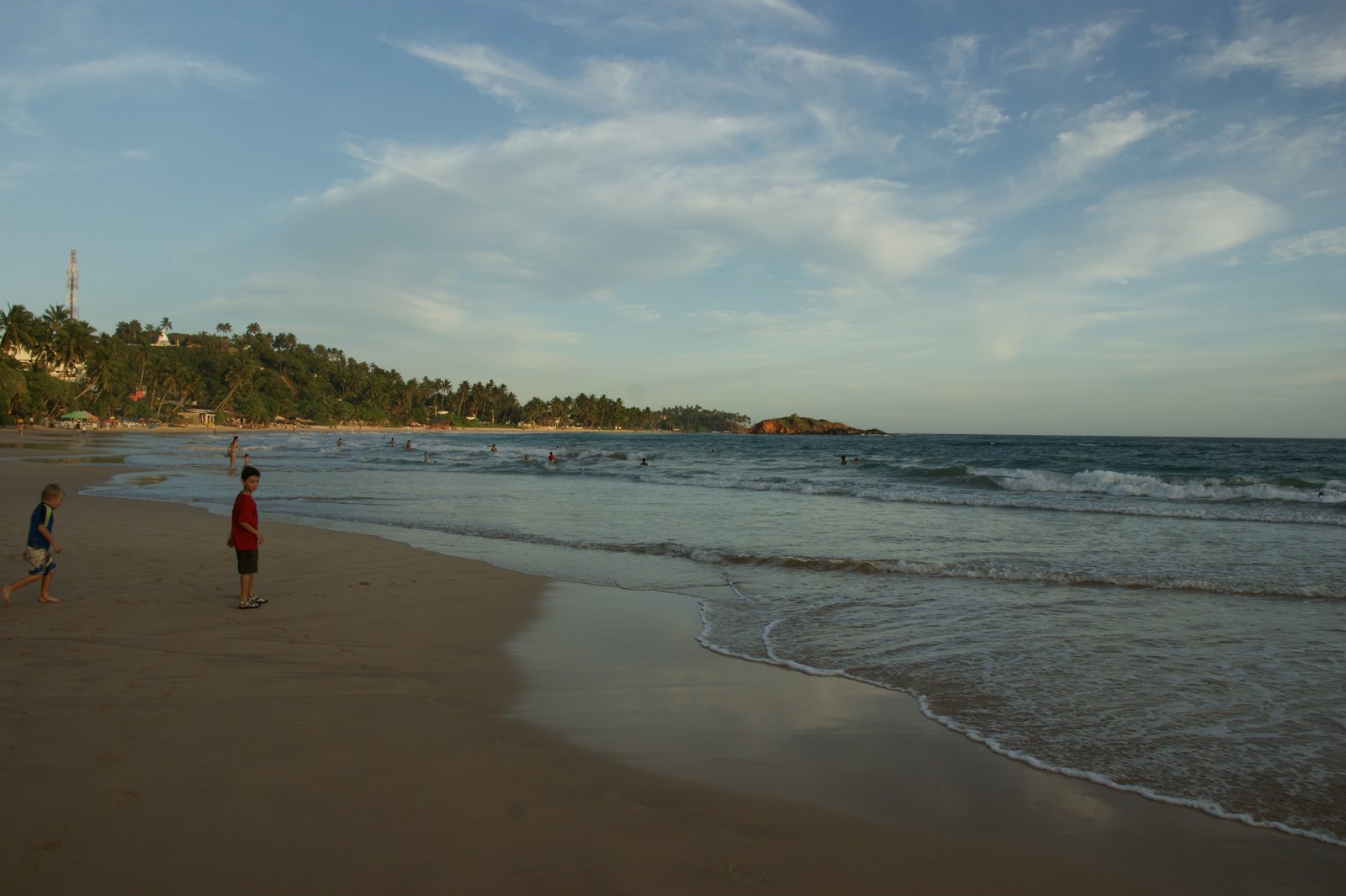
You book the beachfront room off a photograph: a curve of sand, palms, a sea so pale it looks filtered. Then you walk down the steps and the water is the colour of grey tea, breaking hard on a shore you cannot stand up in. Nobody lied. The photo was taken in another month, and Sri Lanka’s coast changes personality twice a year. So here is the honest question under every beach booking on this island — can you actually swim?
The answer from our own review corpus: most of the time you can — but not everywhere, and not at every beach you might have already booked. Of the 363,148 reviews in the BYC corpus, 7,139 talk about swimming and 301 mention a water hazard — currents, waves too rough to get in, a shore break you could not pass. 138 of those come from coastal beachfront stays, so roughly one in three coastal swim mentions carries a warning. The warnings are not spread evenly. They cluster in specific towns, and they attach to details the brochure leaves out.
The short answer
No — not every Sri Lanka beach is a swimming beach. The island has genuinely calm water for families (Pasikudah, the inner bay at Unawatuna, the river side of Bentota), seasonally excellent water (Mirissa and the south coast from December, the east coast from May) and beaches that are beautiful, famous and largely not for swimming (much of Tangalle’s open coast, Mirissa’s main bay outside the sheltered middle, the sea wall at Negombo). The single best predictor of whether you can swim is which coast is in its dry season on your dates. The second best is whether the property you booked is inside a reef or bay or on the open ocean. Both are knowable before you pay.
What’s worth doing
Pick the coast by season, not by the photograph
Sri Lanka has two monsoons on opposite coasts, and they decide everything. From roughly November to April the south and west coasts — Galle, Unawatuna, Weligama, Mirissa, Hikkaduwa, Bentota — are in their dry, settled season and the sea calms progressively through November. From roughly May to October the east coast — Trincomalee, Nilaveli, Pasikudah, Kalkudah, Arugam Bay — takes over. Travel on the wrong side of that line and you will not be swimming; you will be watching white water from a pool deck, which is not a bad holiday but is a different one. Our broader guide to when the monsoon actually hits each coast covers the month-by-month detail, and Sri Lanka in November is the right read if you are travelling in the next few weeks.
Learn to read the beach itself, not the forecast
Guests who wrote about swimming without complaint described the same three things: inside a reef or bay, mid-way along a sandy stretch rather than at a headland, and in water where they could stand and see the bottom. Guests who wrote about currents had usually done the opposite — walked to the emptiest part of the beach, or stepped off the terrace of an open-ocean hotel. A calm-looking sea and a safe sea are not the same thing, because photographs flat-line the swell. Stand at the water’s edge for five minutes: if waves are breaking above knee height and nobody else is in, wait an hour. It costs nothing.
Treat pools as infrastructure, not luxury
This is the most practical thing we learned. Among the reviews that describe rough or unsafe sea, 61% also go out of their way to mention the property’s pool — it is how guests with children salvage a beachfront stay where the ocean is unswimmable all week. If you are travelling with young children to an open-ocean coast, a pool is not a nice-to-have. Book it deliberately, and if there is no pool, book a beach that has a sheltered section.
Ask the one question hotel listings never answer
Listings sell a view, and rarely state whether the water in front is safe to swim in, or in which month. Three questions before you pay will tell you more than the gallery: “Can guests swim directly in front of the property in the month we arrive?” “Is there a reef, bay or lagoon nearby with calmer water?” “Are lifeguards on the beach outside peak season?” A clear answer means the team knows the water. “Beautiful beach” is not an answer.
Use guided water activity in the months when the sea is unknown
Surf lessons are the cheapest ocean education on the island and come with a person who reads the sea for a living. A beginner lesson in Weligama runs LKR 4,000–7,000 ($12–22) for 1.5–2 hours; board rental is LKR 1,000–1,500 an hour. The value is not standing up — it is that someone points at a channel and tells you where the current pulls. Same logic for guided snorkelling inside a reef.
Swim in the morning, and know why
On the south and west coasts the onshore breeze builds through the afternoon and the sea gets choppier and less pleasant as the day goes on. The morning window — roughly 7am to 10am — is flatter, emptier and easier on children. It is also when lifeguard patrols are most likely to be present in the season. July and August are not the mornings to force it anywhere on the southwest coast.
Getting around
Beach-hopping is cheap if you stay off the private-taxi habit. The coastal train between Colombo, Galle, Unawatuna, Weligama and Matara costs a few hundred rupees for second class and under $3 even in observation class — the ride between Galle and Matara is under an hour and drops you within a short tuk-tuk hop of the sand. Local buses on the coast run LKR 50–150 a hop (under a dollar), run until about 7pm and stop almost everywhere.
- Tuk-tuk, short hops: Mirissa to Weligama (5 km) is LKR 400–600 ($1.35–2); Galle to Unawatuna $3–4. Agree the fare first — tuk-tuks parked inside Galle Fort quote an inflated minimum.
- Private car or van with driver: about $55–75 a day, more on long multi-day runs. Worth it with children, boards or heavy luggage.
- What to avoid: reflex hotel transfers both ways (train plus a five-minute tuk-tuk costs a fraction on the Galle–Matara stretch), and scooters on the coastal road in the rain season — it is narrow and full of buses.
For rail, car and bus compared on the island’s busiest stretch, see how to book Sri Lanka train tickets; south coast hops are in how the south coast towns compare.
What to budget
Per couple, per day, in the shoulder weeks where November sits, excluding flights:
- Accommodation: a mid-range, pool-equipped south coast room is $45–$90 a night, or $80–$160 from late December to March. Air conditioning and a pool decide the upper end.
- Meals: a local rice-and-curry lunch is $3–$6 each; a beachside seafood dinner for two with a drink is $20–$40. Coffee and a western breakfast add $8–$12 for two if you take them every day.
- Activities: a beginner surf lesson $12–$22; board rental $2–$4 an hour; snorkelling inside a reef with a guide $15–35; a blue whale boat from Mirissa $45–$60 once the season is properly moving, usually from December, with late-November departures running when the sea allows.
- Transport: $6–$15 a day using buses and the odd tuk-tuk; $55–75 a day if you keep a driver.
Comfortable daily total for two, with a pool-backed room, two proper meals and an activity every other day: $95–$150. Island-wide detail in the Sri Lanka cost guide.
Watch out for
These are patterns from the corpus, not property-specific warnings, and most guests hit none of them. But they repeat with enough regularity to plan around.
- The open-ocean beachfront. Properties on stretches with no reef, bay or lagoon in front show the lowest swimming satisfaction in the data — the sea is photogenic and genuinely not swimmable for large parts of the year. This is the single most common mismatch between what a booking photograph implies and what the water delivers.
- The famous beach with a local exception. Mirissa’s main bay is a famous sunset beach and is not, for most of the year, a swimming beach — the surf breaks close to shore and the current near the headland is real. That does not make it a bad place to stay. It makes it a place to confirm the swimming situation before you book, and to know where the sheltered section is.
- The pool-less budget beachfront. Where the sea is rough for a week and there is no pool, a beachfront booking becomes a sand-and-walks stay — and families, who booked for water, are the most disappointed.
- Do not read the flags as decoration. Red flags go up for a reason on coasts with patrols, and the absence of a flag does not mean the water is safe. We found repeated mentions of unstaffed lifeguard posts in shoulder months. If the post is empty, swim where other people are swimming, and keep children within arm’s reach.
- Lagoon and river mouths are not pools. Calm, but they run their own currents on the tide. Ask locally, and never swim at dusk.
Good to know
- Foreign tourists are rescued in Sri Lankan waters regularly. Police lifeguards pulled two foreign swimmers taken by a current from the water at Mirissa on 24 October 2026, and rescued a 44-year-old Irish visitor from the same beach in the first week of November 2026. Neither was unusual weather; both mornings looked ordinary. Police data reported in July 2026 put national drowning deaths at 75 for the year to that point, locals and visitors included.
- If a current takes you, do not swim against it. Ride it sideways — parallel to the beach — until you are out of it, then come back in at an angle. This one sentence is the difference between an incident and a story, and it is the advice Sri Lanka Police repeat after every rescue.
- Flags and season are not decoration. South and west coast swim roughly November to April; the east coast roughly May to October. Outside those windows the sea does not get “a bit choppier” — the character changes and patrols thin out.
- Jellyfish are seasonal, not constant. August on some east coast beaches is when guests mention them; a rash guard solves most of it — and doubles as sun protection close to the equator.
- Book the shoulder, not the peak. Late November to mid-December: drier south coast, seas calming, rooms at roughly half the festive price. Best-value swim of the year.
Where to stay
Five coastal properties from our corpus, one review-backed reason each — and, where it matters, how the sea in front of them behaves.
- Riff Hikkaduwa (Hikkaduwa, 606 reviews, 9.6 average). Guests who mention the water speak about the reef area and the dive and snorkel operation more than the open sea — the reason to pick it is that it sits inside Hikkaduwa’s protected reef zone, which is the calm water in that town. Check what is in front of the room you are booking: inside the reef line is the swimmable part.
- Turtle Bay Boutique Hotel (Tangalle, 219 reviews, 9.26). The reviews are candid and consistent: the beach in front has strong currents much of the year, and guests who stayed well had already understood that — the property’s pool is what they praise instead. Book it for the setting and the pool, not for the swimming.
- Ananthaya Beach (Tangalle, 316 reviews, 9.25). One reviewer noted the sea currents are too strong for swimming but that there is a small swimming spot in the harbour in front of the hotel — a rare example of a property where the workable water is documented rather than assumed. Ask which side of the harbour they mean when you book.
- Blue Skies Guest House and Restaurant (Tangalle, 97 reviews, 9.61). Guests describe a big-wave beach with pockets where you can get in — and a pool on site. It is the honest version of a rough-coast stay: the water is part of the experience, with a backup.
- Lantern Boutique Hotel by Reveal (Mirissa, 105 reviews, 8.72). Expectations decide a Mirissa booking: one guest took a beachfront room expecting a calm bay, found it too rough for children, and still rated the stay 10. Go in knowing the swimming is seasonal and the beach is for looking at.
Two comparison pages worth reading before you commit to a stretch of coast: Mirissa vs Unawatuna vs Weligama, which covers swimming and surf in the same frame, and the best beach in Sri Lanka by guest rating. If your trip is a broader island loop, November’s weather pattern tells you which coast to put first.
The bottom line
Sri Lanka’s beaches are not one thing: two bays that look identical in a gallery can be a paddling pool and a serious shore break. The good news is that this is one of travel’s most predictable uncertainties — match the coast to your month, pick the property by whether a reef, bay or pool is in the plan, and swim in the morning. Then the water becomes the part of the trip you remember for the right reason.
Have a specific question about your Sri Lanka trip?
Ask BYC at byc.lk — Free and honest. Some links are affiliate links and never change our advice.
Ask BYC Your Question →