Gal Oya Boat Safari 2026: Prices, Times & Swimming Elephants
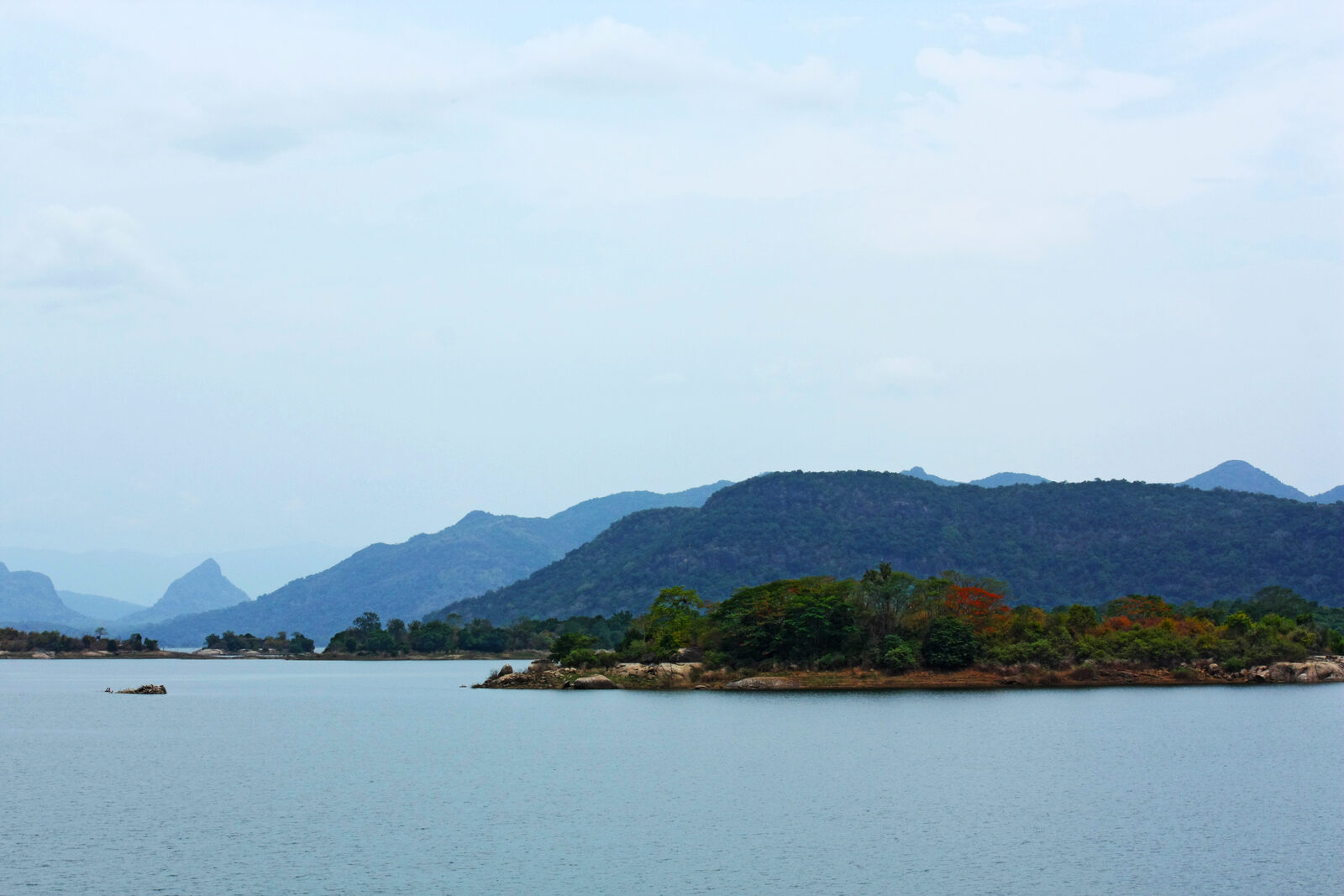
You are planning the east of the island — Arugam Bay, maybe Batticaloa, maybe a night inland — and every safari you find is a jeep bouncing along a dusty track in Yala. Then someone mentions Gal Oya, the national park where the wildlife watching is done from a boat, and where elephants swim between the islands in the middle of a reservoir. It sounds like it should be busy. It is not, and that is exactly why it is worth building a night around.
The short answer
Gal Oya is the only national park in Sri Lanka where a boat safari is the main event. You cruise the Senanayake Samudraya — the reservoir created by damming the Gal Oya river, and the largest body of water in the country — for roughly two hours in a small motorboat, looking for elephants swimming between the forested islets, plus crocodiles, deer, monkeys, and one of the island's richer bird populations. A guided boat safari in 2026 typically runs about US$55–80 per person for a shared boat that bundles the park entrance fee, the boatman and hotel transfers, and can rise to US$150–250 for a private charter. The main departure is from the Inginiyagala entrance, near the dam wall; standard departures are early morning (around 06:30), late morning (around 09:30) and late afternoon (around 15:30). Everything below is the practical detail: what the trip actually is, what it costs, how to reach a genuinely remote park, and where to sleep so you are not making a four-hour round trip in the dark.
What's worth doing at Gal Oya
The park is not a tick-box. It is one of the least-visited national parks in Sri Lanka, and its whole character is that a boat lets you cover water and shoreline no vehicle can reach. Here is what people actually spend their time doing:
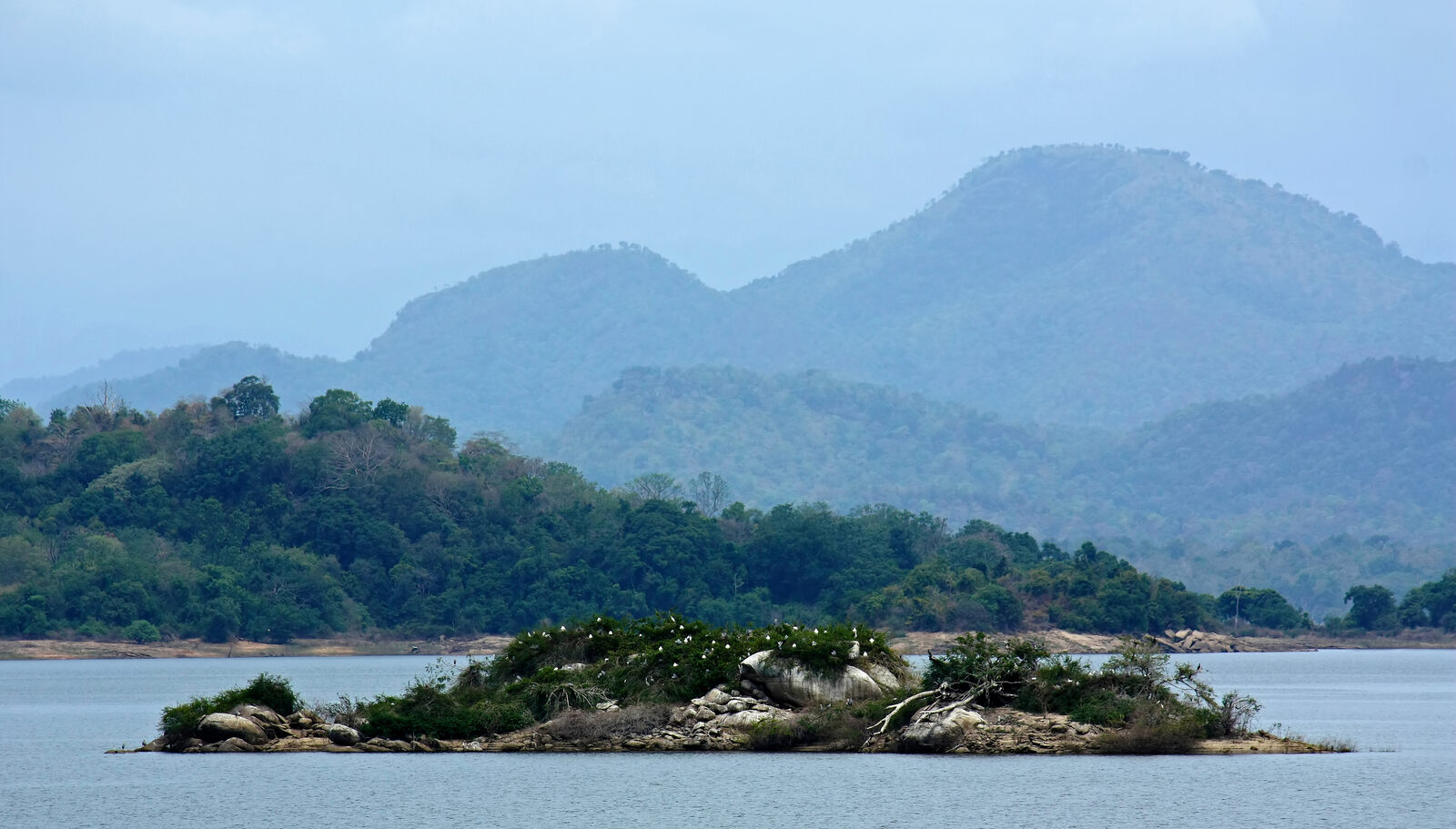
- The boat safari itself. This is the reason to come. A small motorboat takes you out among the islands of the reservoir, cutting the engine to drift past birds and basking crocodiles, and around the edges of the drowned forest where the water meets the treeline. The landmark moment is the swimming elephants — Gal Oya is the one park on the island where you may watch elephants cross open water between islets, trunk up, back just above the surface. It does not happen on every trip, so treat it as the reward for patience, not a guarantee.
- The birdlife. The reservoir and its shores support a genuinely large bird list — well over a hundred and fifty species are recorded around Gal Oya, including eagles, kingfishers, storks, herons, cormorants and bee-eaters. For a birder the two hours go very quickly; for everyone else it is a very good introduction to why the dry-zone wetlands matter.
- A jeep safari on the land side. There is a road network inside the park, and a jeep safari is a real alternative or complement to the boat. It is not the marquee experience — the road driving in Gal Oya does not match the concentration of Yala or Udawalawe — but it shows you the park's dry-zone forest and grassland, the Nilgala side, and a different angle on the same wildlife.
- The Vedda and village side. This region is the heartland of Sri Lanka's indigenous Vedda community, and several lodges arrange respectful visits and walks with community guides as part of their programme. If a stay offers this, it is one of the few places on the island where the visit is a genuine cultural exchange rather than a staged show — but it needs to be done on the community's terms and with a guide they trust, so arrange it through your accommodation rather than turning up unannounced.
- The dam and the viewpoint. The Inginiyagala dam is one of Sri Lanka's great post-independence engineering projects and the reason the reservoir exists. Even without a safari, the stretch of shoreline and the hills behind the water are quietly spectacular at dawn, and it costs nothing to stand there at first light.
Getting to Gal Oya
This is the part that decides whether Gal Oya is worth it for you, because the park is genuinely remote. The main gateway is the Inginiyagala entrance, on the eastern side of the Senanayake Samudraya dam, closest to the town of Ampara. The real constraint is not distance but the last stretch of road, which is slow, so build in more time than the map suggests.
- From Arugam Bay: roughly 60–70 km, about 1.5–2 hours by car or tuk-tuk. This is the most common approach and the reason many travellers fold Gal Oya into an Arugam Bay stay.
- From Batticaloa: around 100–120 km, about 2.5–3 hours.
- From Ella / Badulla: 100–130 km over the hill roads, roughly 3–4 hours — doable as a transfer day rather than a day trip.
- From Colombo: about 320 km and 7–8 hours by road. Do not come from Colombo and back in a day; if you are starting in the west, pair it with the east-coast leg of your trip.
- By public transport: buses run to Ampara and Inginiyagala from Batticaloa and the east, but services are infrequent and the timing rarely lines up neatly with a 06:30 boat departure. In practice most visitors arrive with their own vehicle, a hired car with driver, or an arranged transfer.
What to avoid: don't turn up at the entrance expecting to walk onto a boat. Boat safaris are arranged through the park's visitor operations and the handful of nearby lodges, and seats and boats are limited — book at least a day ahead, and longer in any peak period. Also avoid scheduling your boat for the same day as a long drive out; the roads in are slow enough that a late arrival means missing your slot entirely.
What to budget
Gal Oya is not cheap to reach, but once you are there the costs are modest and predictable. A realistic daily breakdown for one person, using 2026 prices:
- Accommodation: budget guesthouses in and around Inginiyagala and Ampara run US$20–40 a night; mid-range hotels about US$40–70; the specialist eco-lodges on the park's edge are the other end of the scale at roughly US$150–500 a night including meals and activities.
- The boat safari: about US$55–80 per person on a shared boat with entrance fee and transfers included, or US$150–250 for a private charter split between a group.
- Park entrance: the national park entry is normally bundled into the safari price. If you are arranging things independently, expect the standard foreign visitor rate and a vehicle charge on top.
- Meals: US$3–6 for a local rice-and-curry lunch, US$8–15 for a hotel dinner. Food options in the immediate area are limited, which is another reason the lodges price meals in.
- Transport: if you are not driving yourself, a return transfer from Arugam Bay by private car is roughly US$40–60; a tuk-tuk return is cheaper but slow and not ideal on the dam road.
All told, a comfortable two-night Gal Oya add-on — one or two boat safaris, a night's accommodation and meals — lands around US$250–400 per person at mid-range, and considerably less if you base at a guesthouse and share a boat.
WATCH OUT FOR
None of these are reasons to skip Gal Oya; they are the things that catch visitors out because the park is small, remote and low-volume.
- Elephants in the water are never guaranteed. This is the honest one. The swimming-elephant moment is what brings people here, and it depends on water levels, season and pure luck. Go expecting a beautiful boat trip with excellent birding and a real chance of the crossing — not a certainty — and you will love it.
- The park is at its best in the dry season, and the east has its own weather. The east-coast dry window (roughly May to September) generally gives the clearest water and the best wildlife access. Outside it, expect more rain, higher water and slipperier access; check conditions before you commit, and remember the island's monsoon pattern is not the same on both coasts.
- Confirm the departure time and meeting point in writing the day before. Operations here are small and run on local timetables. A mis-timed morning departure with no backup boat is a wasted day.
- Bring the right kit. Sun, hat, water, binoculars and a camera with some reach, plus a light rain layer. Boats are open and the reservoir wind is real. There is very little shade on the water.
- Do not over-plan the area. There is not a town full of restaurants and shops around the park. Bring what you need, carry cash (card acceptance is patchy this far east), and treat the scarcity as part of the appeal rather than an inconvenience.
- Choose your wildlife encounters carefully. The Vedda visits and any animal interaction should be arranged through operators who do it respectfully. If something feels staged or exploitative, walk away — the genuinely good versions of both exist here.
GOOD TO KNOW
- Two nights is the right amount. One night gets you one boat trip and a rushed arrival; two nights gets you a dawn boat, a second late-afternoon or jeep outing, and time to actually feel the place. This is the single most common piece of advice from people who have been.
- Dawn is the best departure. The 06:30 boat gives you calm water, active wildlife and the best light. If you only do one, do the morning.
- Pair it with the east coast. Gal Oya fits naturally between Arugam Bay, Batticaloa and Passikudah. It is the inland counterweight to a beach leg, and the drive between them is part of the trip.
- Book accommodation and the safari together where you can. Lodges on the park edge handle boats, permits and transfers as a package, which removes almost all of the logistics friction in a place with few independent operators.
- Bring binoculars. Budget ones will do; the birding is good enough that you will want them.
- Set expectations on the roads. The final approach to Inginiyagala is slow. Add at least an hour to whatever a maps estimate tells you for the last leg.
WHERE TO STAY
There is no town at the park gate, so where you sleep decides how the whole visit runs. These are the strongest-rated bases we hold enough reviews on to recommend honestly:
Gal Oya Lake Club (Ampara) — the standout in the area at 9.81 from 277 stays, and the natural first choice for a Gal Oya trip: it sits by the water, guests rate it for exactly the park access and quiet setting you are coming for, and it is large enough to be dependable in a place where accommodation is scarce.
Wild Glamping Gal Oya — Thema Collection (Bibile) — 9.28 from 123 stays, the upscale glamping option on the park's edge, with tents and outdoor bathrooms on a green estate, a pool, and its own activity programme including the Vedda-community visits. Guests consistently rate the staff and the setting; this is the choice if you want the trip framed for you.
Gal Oya Lodge (Bibile) — 9.43 from 58 stays, the boutique eco-lodge that made this area known to travellers in the first place, set in jungle with a strong reputation for its guides and its food. It is the priciest of the three, and guests say it is worth it.
Crystal Water Inn (Bibile) — 9.91 from 142 stays, the value pick in the Bibile area and one of the best-reviewed small properties in the region. If you want a comfortable, well-run base a short drive from the park rather than a full lodge programme, this is where the review data points.
Rathnapriya Oasis (Ampara) — 8.44 from 143 stays, a straightforward, well-reviewed Ampara option closer to the dam and the Inginiyagala entrance than the hill-side lodges, and a sensible choice if you are driving yourself and want to be near the gate at dawn.
Weighing Gal Oya against Sri Lanka's other wildlife parks? Our Minneriya vs Udawalawe vs Yala comparison sets out where each one wins, and if ethical wildlife is the priority, the elephant-experience guide is built on the same review data. If you are threading this into a wider east-coast route, the Monaragala booking notes and the monsoon-season guide will tell you when the east is genuinely dry.
The bottom line
Gal Oya is what Sri Lankan wildlife watching looks like when you take the jeep out of the equation: two quiet hours on the water, elephants swimming between the islands, and almost nobody else there. It rewards the extra effort it takes to reach, and it is one of the last big experiences on the island that still feels genuinely uncrowded. Add two nights to your east-coast leg, take the dawn boat, and go while it is still the park that most travellers have never heard of.
Have a specific question about your Sri Lanka trip?
Ask BYC at byc.lk — Free and honest. Some links are affiliate links and never change our advice.
Ask BYC Your Question →