Is Elephant Bathing in Sri Lanka Ethical? How to See Elephants the Right Way
You have landed in Sri Lanka, and within a day someone has offered you a photo of yourself scrubbing an elephant in a river. It is the single most-pitched “must-do” on the island, and it is also the one you should question hardest before you hand over cash. The good news is that Sri Lanka offers some of the best places on Earth to see elephants in the wild — you just need to know which experiences fund conservation and which ones quietly drive the problems the adverts never mention.
The short answer: skip the bathing and riding experiences entirely, and put your money on wild elephants instead. The most ethical and rewarding way to see them is in the national parks — Udawalawe, Minneriya and Yala — where herds roam free and your ticket directly funds the Department of Wildlife Conservation. If you want a closer, up-close encounter without the ethics headache, the Udawalawe Elephant Transit Home gives you a front-row seat to genuine rescue and rehabilitation work for a few dollars. Bathing with an elephant usually means an elephant trained to tolerate being handled for tourism — and that is a very different thing from a happy animal.
What’s worth doing
Build your elephant day around observation, not interaction. These options are worth real money:
- A safari in Udawalawe National Park. This is the most reliable wild-elephant viewing in Sri Lanka — herds of 20 to 60 are common near the reservoir, and the open grasslands mean you see them clearly. A morning safari (6–9am) is the best value: cooler, active elephants, and the light for photos is exceptional. Entrance is roughly $40–$43 per foreign adult, plus about $25–$30 for a shared open-top jeep that seats 5–6, so it is far cheaper per person in a group.
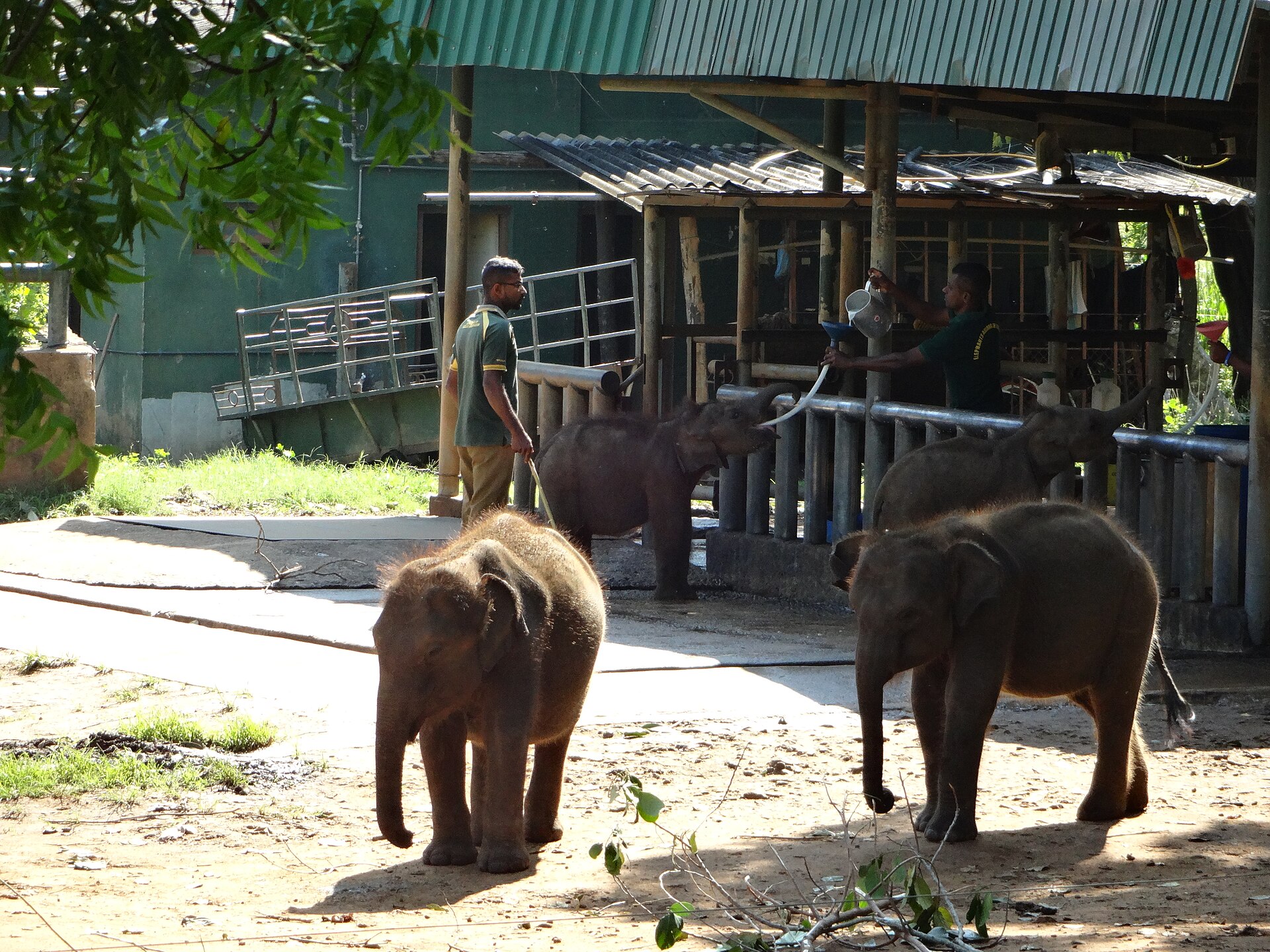
- The Udawalawe Elephant Transit Home. Run by the wildlife department, this is a rehabilitation centre for orphaned calves that are later released to the wild. The public visiting window lets you watch the daily feeding from a raised platform — you stay behind the barrier, and the calves stay wild. Entry is about $5 per adult and $3 per child. Time your visit for the scheduled feeding times (typically early morning and late afternoon); it is genuinely moving, not gimmicky.
- Minneriya National Park during the gathering (roughly June to early September). When the reservoir shrinks, hundreds of elephants gather on the exposed grasslands — one of the largest seasonal gatherings of Asian elephants anywhere. Because we are just past the peak of that window this year, it is tailing off now, but it remains a spectacular option for anyone planning the next dry season. Entrance is around $25–$30 plus a jeep fee.
- A small, no-touch sanctuary like the Elephant Freedom Project near Kegalle. A family-run refuge for two retired working elephants, with strict single-family visitor limits and a heavy focus on education. You can walk alongside and observe, but there is no riding or bathing. It costs more per person (around $80–$100 including a meal), but the cap on numbers means it feels far more respectful. Book well ahead — it is small by design.
- Wild elephants on the road itself, done safely. Some of the most magical elephant moments in Sri Lanka are unplanned: herds crossing near the parks at dawn, or elephants drinking at roadside tanks in the early morning. Always stay inside the vehicle and give them a very wide berth — wild elephants are unpredictable at close range, no matter how calm they look.
Getting around
Your elephant plans will shape your route, so think about geography before you book.
Udawalawe is easiest from the south coast, not from Kandy. From Galle, Mirissa or Weligama it is a manageable 2–3 hour drive through tea and rubber country, which makes an early-morning safari realistic as a day trip. From Kandy or the Cultural Triangle it is a punishing 7–8 hour journey by public transport, so almost no one does it as a day trip from there — if you are coming from the hills, plan to overnight near the park. A private driver (roughly $50–$70 for a half-day on the south coast, or more for a full-day transfer) is by far the easiest way, because the safari itself needs a jeep anyway.
Minneriya and Sigiriya pair naturally. Minneriya is only about 30–40 minutes from Sigiriya, so combine the elephant gathering with the rock if you are on a Cultural Triangle loop. Yala, meanwhile, is the choice if you want leopards as much as elephants — it has both, but the elephant sighting odds are lower than Udawalawe.
What to avoid: taking an evening bus into a park area and expecting to arrange a safari same-day at nightfall (gates close and tours start at first light), and paying a “guide” who appears at the entrance offering to bypass ticket lines for a fee — official tickets are bought at the park office and there is no legitimate shortcut.
What to budget
A full elephant-focused day, done right, is one of the more expensive single days in a Sri Lanka trip — but it is also one of the most worthwhile. An honest breakdown:
- Park entry (Udawalawe): $40–$43 per foreign adult. Yala and Minneriya are in the $25–$40 range depending on park and season.
- Jeep + driver: $25–$30 per jeep (shared), so around $5–$10 per person in a full jeep of 5–6. Private-only jeeps cost more but are rarely necessary.
- Transit Home entry: ~$5 per adult — genuinely cheap and worth adding to any Udawalawe visit.
- A no-touch sanctuary (Freedom Project style): $80–$100 per person with a meal — the premium buys small group sizes, not frills.
- Local transport to the park day: $10–$30 depending on whether you use a shared tuk-tuk/bus or a private driver.
Add it up and a top-tier safari day is roughly $60–$90 per person if you share a jeep — not pocket change, but you are paying for one of the best wild-elephant experiences on the planet. Skip the river-bathing add-ons and you are not missing a photo op; you are saving money that would otherwise fund an experience best left alone.
WATCH OUT FOR
These are the patterns to steer around — flagged so you can spot them, not to name and shame any single operator:
- “Free” elephant experiences that end in a hard sell. A driver who “just happens” to stop at a place where you can bathe or ride “for free, for photos” is usually steering you to a commission-based interaction. Decide your boundary before you set out and hold it.
- Bathing and riding described as “rescue” or “sanctuary.” Genuine rescue-and-rehabilitation centres keep an arm’s-length distance between you and the animals. If the pitch centres on getting you into the water with the elephant, it is an entertainment venue wearing conservation language, not a rehabilitation centre.
- Pay-per-photo setups near the parks. At roadside stops you may be offered staged photos draped on an elephant. These reinforce exactly the handling the better facilities are trying to move away from.
- “Guaranteed” sightings pushed as an upsell. No ethical operator can guarantee a wild elephant. A promise of a certain sighting is a red flag for an experience that is staged or heavily constrained.
- Invisible wildlife-welfare fine print. If an operator can’t clearly explain where the animals came from, what they are trained to do, and how profits are used, treat that vagueness as the answer it is.
GOOD TO KNOW
Practical tips that make the difference between a good day and a great one:
- Go early and book a morning safari. Elephants are most active and visible at first light; by midday many are resting in shade. The 6am start is worth the early alarm.
- Book the jeep and park entry the day before in high season — jeeps fill fast in the mornings, and last-minute arrangements at the gate mean waiting in line as the light gets harsh.
- Check the Transit Home feeding schedule before you go. The whole point is a short window; arriving mid-morning for the wrong session means standing around for hours.
- For a no-touch sanctuary, book weeks ahead — they are deliberately tiny and genuinely book out, especially December to March.
- Pack for the dry zone. Udawalawe and the gathering parks are hot, dusty and exposed. Sunscreen, a hat, water and binoculars will make or break the experience.
- Respect the seasons. Udawalawe is good year-round, but Minneriya’s famous gathering is a dry-season phenomenon. If elephants (not leopards) are your priority, plan the parks around the months when the herds are actually gathering.
WHERE TO STAY
Base yourself where the elephants are, and pick lodging that matches the style of visit you want:
- Elephant Reach (Udawalawe) — guests consistently rave that wild elephants wander the grounds near the reservoir, giving you a safari before the safari even starts.
- Mahoora Tented Safari Camp (Udawalawe) — reviewers love the canvas tents under the stars and the fact that the camp is close enough to the park for a genuinely early start without a long commute.
- Kalu’s Hideaway Bed & Breakfast — one of the most reviewed budget stays near the park, praised again and again for helping guests arrange jeeps and park tickets smoothly on site.
- Athgira River Camping Company (Hambantota) — safari-style tents on the river, with reviewers calling out the evening wildlife around the camp as a highlight in its own right.
- Centauria Wild (Udawalawe) — a solid mid-range option whose reviews repeatedly note the helpful staff can organise the whole safari-and-transit-home combo without extra hassle.
The bottom line
You do not have to choose between a memorable elephant encounter and a clear conscience in Sri Lanka — the country offers world-class wild viewing that is also the responsible choice. Put your money behind national parks and genuine rehabilitation, give the bathing and riding experiences a miss, and you will come home with photographs of elephants doing what elephants actually do. And that, almost always, is the better story.
Have a specific question about your Sri Lanka trip?
Ask BYC at byc.lk — Free and honest. Some links are affiliate links and never change our advice.
Ask BYC Your Question →