Is Batticaloa Worth Visiting? The East Coast's Quietest City, Honestly
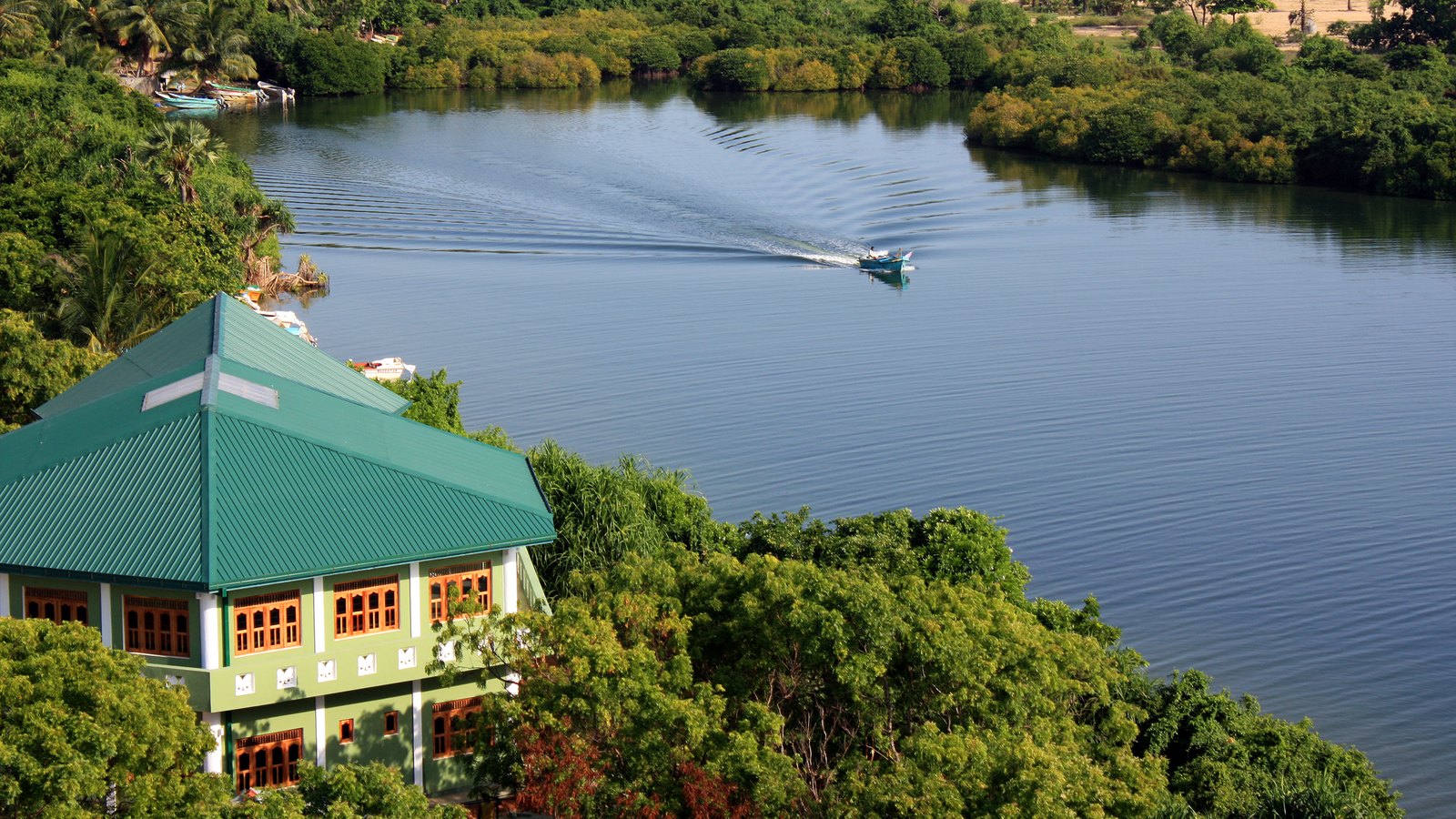
You get off the night train at four in the morning and the station road is completely dark. No touts, no drivers waving, no guesthouse sign glowing. Just a couple of dogs, a few parked three-wheelers, and a man smoking who may or may not be waiting for you. Somewhere beyond that darkness is a lagoon people come halfway around the world to see at sunrise. Whether the trade is worth it is what this page answers.
The short answer
Yes, Batticaloa is worth visiting — but for a specific reason, not a general one. It is Sri Lanka's quietest eastern city: a lagoon crossed on a colonial bridge, an old fort, a Tamil-speaking town where the beach is genuinely empty and the restaurants genuinely thin on the ground. Across 1,509 guest reviews for properties here, the clearest pattern is that travellers who describe the place as quiet and peaceful are markedly happier than those who do not. Batticaloa rewards stillness and frustrates anyone who wants options. Book two nights, in the right half of the year, based in the right spot, and it is one of the most restful stops on the island. Book it as a beach holiday and you will spend most of it in a tuktuk.
What's worth doing
- Cross the Kallady Bridge at sunrise or sunset. The old iron bridge, built in the British period and named for the wife of a governor, still stands alongside its 2013 replacement, and both span the lagoon where the sea meets the freshwater. Before the traffic builds, the water on either side goes flat and copper. This is the one thing every traveller to Batticaloa does, and it deserves the reputation.
- Go looking for the 'singing fish'. The lagoon has a long-standing local claim that fish in the shallows produce an audible sound at certain times of year — traditionally said to be best on moonless nights, listened for from a boat with an oar dipped in the water. Whether you hear anything or not is beside the point: the boat trip itself, out on the lagoon at dusk with the bridge lights coming on behind you, is the experience. Ask your guesthouse to arrange it; several hosts do this as a matter of routine.
- Walk Kallady Beach in the late afternoon. The beach south of the lagoon mouth is where locals go, and it is largely empty of foreign visitors. Villagers haul nets in at dusk, children play, and the sand runs for kilometres. Guests who mention the beach in their reviews rate their stays considerably higher than those who do not — a beach that stays this uncrowded is the reason people come.
- Walk the old fort. The Dutch fort sits on the peninsula between lagoon and sea, and its walls and clock tower make a slow, unpolished hour. It is not restored to Galle's standard and does not pretend to be — no ticket queue, no gelato stand, just a working town built around a 300-year-old wall.
- Eat a proper Tamil breakfast. The strongest vegetarian food on the east coast — string hoppers, coconut sambol, dhal, idli with potato curry. Eat where your hosts eat, not where the menu is printed in English, and eat early: kitchens here run on their own clock.
- Use it as a base for Pasikudah. The reef-protected, wave-free swimming the east coast is famous for is 35 km north, about an hour by road. Staying here and day-tripping gets you both the calm water and a town with actual street life, without resort rates for the night.
Getting around
Batticaloa is far from everywhere, and the journey is part of the decision.
By train from Colombo Fort, three services run on a normal day according to the current published timetable: an express leaving around 06:00 that reaches Batticaloa in the early afternoon after roughly nine and a half hours, an intercity express around 15:15 that arrives shortly before midnight in about eight hours twenty, and a night service around 19:00 that lands in the small hours. Second class is inexpensive and third class cheaper still; reserve a sleeper or a reserved seat where you can, because unreserved on this line means eight hours of sitting up. Last updated: 24 October 2026.
By bus is faster and less pretty. Super-luxury services from Colombo's southern suburbs run overnight along Route 48 via Dambulla, 313 km in roughly seven hours, with several departures between about 19:30 and 21:30 and arrival in the early morning. Fares are modest — expect a few thousand rupees for the nicer operators and considerably less on a standard SLTB service.
By car or van with a driver, allow six to seven hours from Colombo, or five from Kandy via Mahiyanganaya; a private transfer for two runs around USD 100–140.
Inside town, tuktuk is the only real option and it is cheap: guests regularly quote 500 rupees from the main bridge into town, with short hops at 200–500. What to avoid is walking. Distances look small on a map and midday heat is serious — the strip between Kallady and the centre is a couple of kilometres either way. Agree fares before you get in, and take one driver's number and use him for the stay, because the tuktuk supply thins sharply after dark.
What to budget
Batticaloa is one of the better-value places to stay on the island, and the honest caveat is that cheap rooms here sit next to a thin food scene, so you can accidentally spend your savings on overpriced meals at your own guesthouse.
Accommodation. Guesthouses, homestays and small villas dominate, and value is the consistent theme. Expect roughly USD 20–40 for a clean double with air conditioning and breakfast, USD 45–70 for a good room in a garden property near the beach, and USD 80–130 for the better small resorts.
Meals. A local rice-and-curry lunch runs 400–800 rupees. A guesthouse dinner is often 1,000–2,000 rupees per person and, based on what guests write, is the single most variable line in the budget — sometimes excellent, sometimes described as expensive for what arrives. Budget USD 15–25 a day per person for food if you eat locally, more if you take all your meals at your accommodation.
Activities. Lagoon boat trip 2,000–4,000 rupees; tuktuk day hire around 4,000–6,000 rupees; Pasikudah day trip by tuktuk or van 4,000–8,000 rupees depending on the vehicle and how long you stop. The fort, the bridge and the beaches cost nothing.
A realistic daily figure: about USD 45–70 per person for a couple travelling together, staying somewhere comfortable, eating locally and taking one paid activity every second day. Single travellers pay closer to USD 65–95 because room costs are not shared.
Watch out for
- Booking a beach resort and arriving at a road. The single most common complaint in the reviews is location: properties marketed as beach stays that are a tuktuk ride from any water, or a fifteen-minute drive from town with nothing whatsoever around them. Check the exact pin on a map before you book, and check how far the nearest restaurant and shop really are. In some cases guests report nothing within three kilometres.
- Assuming there will be somewhere to eat. Outside the town centre, there often is not. Several travellers describe hosts being unable to suggest anywhere for dinner, and a few describe arriving after a long drive to find no restaurant, no kiosk and no shop nearby. If your guesthouse offers dinner, ask the price before you commit for the whole stay — and consider whether you want to depend on it.
- Extras appearing at checkout. A recurring theme in lower-scored reviews is a charge that was not mentioned at the start: a service percentage added to everything including the room, or an unexpected bill on the final morning. Confirm in writing what is included, and ask on arrival whether the room rate is final.
- Rooms that are not the room in the photo. Often enough here to be a pattern: guests shown a different category, or a family room far more dated than the pictures. Ask for the exact room type to be confirmed in writing, and if a booking is not honoured on arrival, ask to be rebooked and get that in writing too.
- Choosing the wrong two months. This is the most consequential warning on this page, and it is covered in full below.
- Expectations about the beach itself. The beaches are beautiful and they are not manicured. A number of guests mention plastic and litter on the sand, particularly after weather. Nobody is going to bring you a lounger. Bring what you need, and if you want facilities, go to Pasikudah.
Good to know
Timing is everything here. Batticaloa's climate runs opposite to the south coast. The dry, reliable window is March to September, when rain is rare — July averages about 31 mm for the whole month. October is transitional, with roughly 187 mm. Then the northeast monsoon arrives: November averages around 419 mm over 17 rain days, and December around 469 mm over 17 rain days, making November and December comfortably the worst months of the year for this coast and also the period when cyclones in the Bay of Bengal are most likely to affect Sri Lanka. If you are reading this in late October and thinking about next month, choose the south coast instead and come here between March and September. The trade-off is heat: May to September is very hot, with daytime highs around 33–34°C, so plan activity for early morning and late afternoon.
Language and cash. This is a Tamil-speaking city and English is less widespread than in the southern tourist belt; five words of Tamil go a long way. Bring cash — card acceptance outside the bigger hotels is patchy and ATMs are fewer and less reliable than in Colombo or Galle.
Two nights is the right shape. One night and you see the bridge and resent the journey; three or more and you have run out of things to do unless it is a beach base. Arrive on the morning train, lagoon at dusk, beach and fort on the full day, leave the next morning.
Book the return leg before you arrive. This is not a walk-up-and-hope destination; trains fill and the overnight buses are the fastest way out. Guesthouses here are notably good at arranging transport, so ask yours on day one, not day three.
Where to stay
Places below are chosen from guest reviews for this town, and each is here for a specific, verifiable reason.
- Leena Holiday Home — for the quietest, best-run rooms in Kallady. With 119 reviews it holds the highest average of any property in the area, and the recurring detail is service that anticipates: a cold towel on arrival, free bicycles, a host who sorts out your onward transport. Guests single out how genuinely quiet the lane is.
- Inpan's beach resort — for the empty-beach experience, with the caveat clearly stated. Wooden cabanas a short walk from a wild, near-deserted stretch of sand, run by one person, cleaned to a standard guests keep remarking on. Its guests love it because there is nothing else there — and the ones who rate it low are the ones who did not realise that. Read the location notes carefully before booking this one.
- Coastal villa — for the best-value hosted stay in Kallady. Clean, simple rooms with modern bathrooms and a welcome guests describe in unusually warm terms, with lagoon boat trips and tuktuk handled by the family. Food is cooked on site and fairly priced, which matters enormously here.
- Naaval Beach Villa & Rooms — for travellers watching the budget. A few hundred metres from the beach, basic but consistently described as clean and very good value, with an owner who works hard to keep costs down. Note that shops and restaurants are around two kilometres away.
- The Dream Inn Guesthouse Passikudah — if you want the calm-water beach rather than the town. Spacious rooms, outdoor bathrooms, a garden kept immaculately, and a local breakfast that guests rate as the best part of the stay. Pasikudah gives you the wave-free swimming; you give up the town.
If you are weighing the two, our guide to whether Pasikudah is worth visiting covers the beach side properly, and the east coast versus south coast month-by-month comparison will settle which side of the island your dates belong to. For the journey itself, see getting around Sri Lanka.
The bottom line
Batticaloa is the east coast's quietest bargain: a lagoon, a bridge, an empty beach and a town that has not been arranged for your convenience — which is precisely why the people who love it love it. Come between March and September, book two nights rather than one, stay somewhere within walking distance of either the beach or the town, and bring cash. What you get in return is the calmest, least crowded stop on the island, and the sense of having been somewhere rather than merely shown it.
Have a specific question about your Sri Lanka trip?
Ask BYC at byc.lk — Free and honest. Some links are affiliate links and never change our advice.
Ask BYC Your Question →