Is Sri Lanka Good for Vegetarians & Vegans? The Honest 2026 Verdict
It is the question that comes up in almost every pre-trip planning conversation the moment anyone mentions cutting out meat: "OK, but what am I actually going to eat in Sri Lanka?" For a vegetarian or vegan traveller, the worry is rarely about flavour and almost always about options — will I be stuck eating plain rice while everyone else feasts? The reassuring truth is the exact opposite: Sri Lanka is one of the easiest and most delicious countries in Asia to travel as a vegetarian, and a very manageable one as a vegan, because so much of the everyday cuisine is already plant-based at heart.
Across the hundreds of thousands of verified guest reviews we track, food is the single most-praised element of a Sri Lankan stay — the phrase "amazing food," "delicious curry" and "wonderful home-cooked meals" appear in guest feedback more consistently than almost any other compliment. And the striking part for plant-based travellers is that most of that praise centres on meals that are naturally vegetarian. Here is the honest, review-backed answer to whether Sri Lanka works for vegetarians and vegans, what to order, what costs, and the few genuine pitfalls to keep in mind.
The short answer
Yes — Sri Lanka is genuinely excellent for vegetarians and very good for vegans, with some care. The island's daily rice-and-curry meal is built around a stack of vegetable curries, dhal (lentils), coconut sambol, and pickles, with meat usually just one optional dish among many — so a vegetarian table here is rarely a compromise. A typical home-style vegetarian rice and curry at a local eatery costs about LKR 300–600 (roughly US$1–2), and even a fancier tourist-aimed plate rarely passes US$4–5. Vegans need to watch two things — ghee (clarified butter) and a dried, salted fish used as a seasoning called Maldive fish — but once you know to ask for "no ghee, no Maldive fish, no egg," coconut-milk curries and hoppers make the island remarkably doable. Rather than a dietary afterthought, plant-based eating here is close to the default.
What's worth doing
Eating well as a vegetarian in Sri Lanka is less about hunting out dedicated veggie restaurants and more about knowing the classics that are already meat-free. Build your around the following and you will rarely repeat a meal:
- Rice and curry (the essential): The national plate — a mound of rice ringed by several small curries. Ask for the vegetable version and you typically get dhal, potato, okra or pumpkin, a leafy mallung, and pol sambol. At local spots it is the cheapest, most filling and most vegetarian-friendly meal in the country, and the selection varies by region and season.
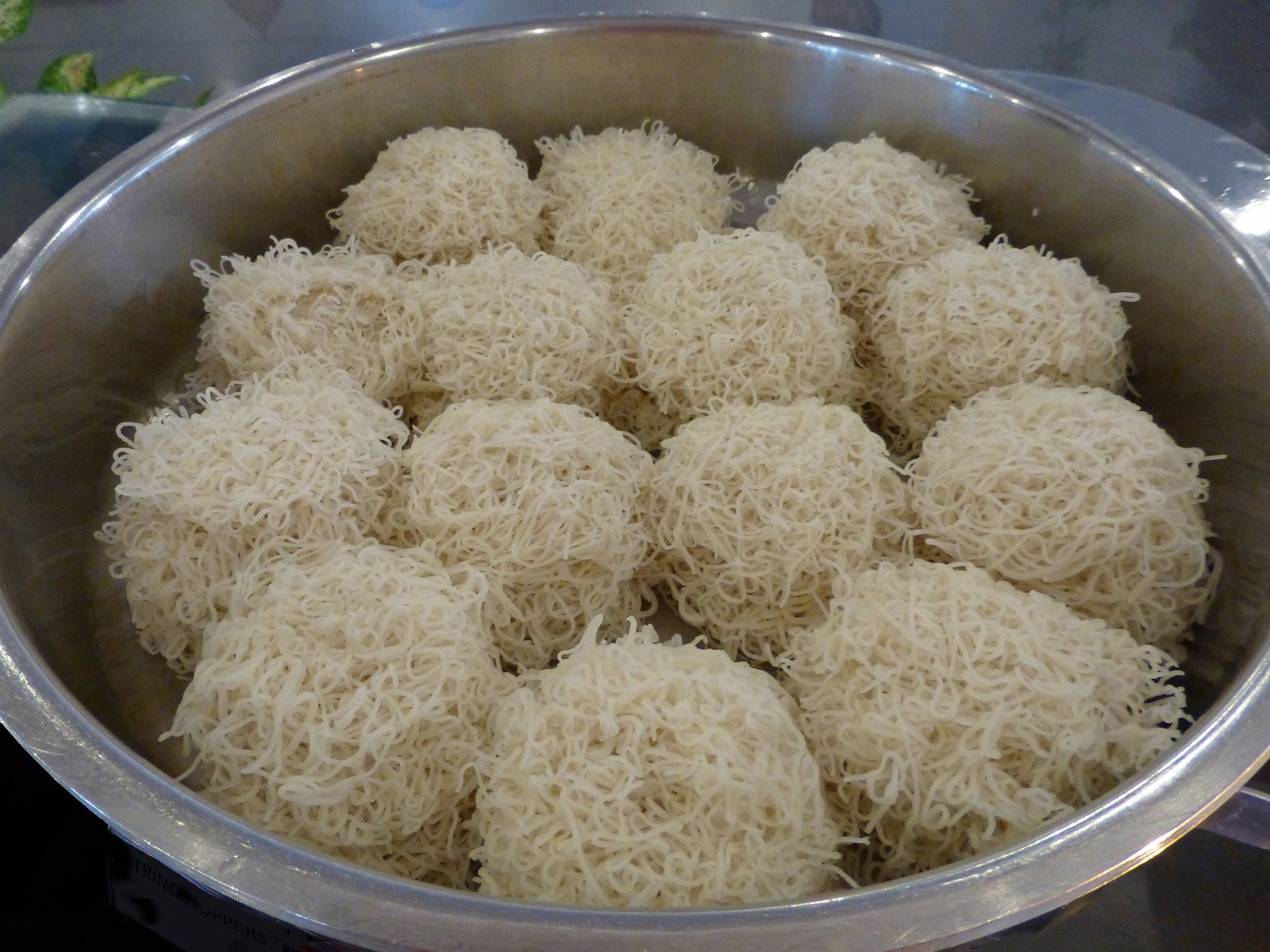
- Hoppers and string hoppers at breakfast: Bowl-shaped hoppers (appa/appam) made from fermented rice flour and coconut milk, plus the delicate noodles of string hoppers (idiappam) — both naturally vegan and eaten with curry and sambol. A plate of string hoppers with a couple of vegetable curries is the definitive Sri Lankan way to start a day of sightseeing.
- Kottu roti (ask for no egg/meat): The theatrical late-night favourite — chopped godhamba roti stir-fried on a hot plate with vegetables, curry and spices to the famous clatter of metal blades. Order it "vegetable" or "no egg" and it is a hearty, cheap street dinner; just specify egg-free if you are vegan or strict.
- Pol sambol with anything: Grated coconut, lime, chilli and (sometimes) Maldive fish — Sri Lanka's essential condiment. It belongs on hoppers, string hoppers, rice, or fresh roti, and for vegans it is a flavour bomb that makes simple carbs feel like a feast once you have confirmed no Maldive fish has been added.
- Dhal (parippu) and leafy mallung: The two vegetarian workhorses of every rice-and-curry. Parippu is a creamy spiced lentil curry cooked in coconut milk; mallung is finely shredded greens (often gotu kola) with coconut and lime. Both are reliably vegan and are the dishes that make Sri Lankan vegetarian food feel generous rather than limiting.
- Short eats and fruit: Spicy vegetable pastries, lentil patties, and samosa-style snacks at the roadside — cheap, filling, and often cooked fresh through the day. Pair with tropical fruit (mango, papaya, pineapple, king coconut water) available everywhere. In coastal areas, especially the largely Hindu and Tamil north around Jaffna, pure-veg restaurants are noticeably more common too.
Most places will happily tailor a meal for a vegetarian or vegan, and the island's strong home-stay and small-guesthouse culture means many of the best plant-based meals you will eat are cooked to order in the kitchen of the place you are staying.
Getting around
You rarely need to plan a special "veg food trip" between regions — the same dishes travel with you — but a few practical facts help:
- Local rice-and-curry places are everywhere: Every town, bus stand and market has a casual eatery serving rice and curry trays at lunch. Simply choosing the vegetable option at these spots is how most vegetarian travellers eat so cheaply; point at dishes you want rather than relying on a menu.
- Guesthouse meals beat tourist restaurants for vegetarians: Because so much praise in our review data centres on "home-cooked" food, the surest bet for a truly vegetarian meal is the kitchen at a family guesthouse or homestay, where the cook can adapt anything. It is worth asking at check-in rather than defaulting to a beachfront restaurant menu.
- Big-city and coastal veg is easier: Colombo, Kandy, Galle and Jaffna have dedicated vegetarian and Indian-veg restaurants (many fully veg, run by vegetarian communities). The popular south-coast and hill-country tourist pockets also have cafés that label vegan options. In smaller rural villages you rely on rice-and-curry spots — still excellent, just fewer "vegan menu" labels.
- Watch menus in tourist hubs: The main friction for vegans is not finding food but wording — "vegetarian" in some menus can still include egg or dairy. State "no egg, no ghee, no milk" explicitly rather than assuming.
What to budget
A vegetarian eats for less than a meat-eater in Sri Lanka, full stop. The honest daily food spend if you eat local:
- Breakfast (string hoppers/hoppers with curry): LKR 200–400 (US$0.65–1.30) at a local place; often included free with a guesthouse stay.
- Vegetable rice and curry lunch: LKR 300–600 (US$1–2) at local eateries; US$3–5 at a nicer tourist restaurant.
- Street kottu or short eats for dinner: LKR 250–500 (US$0.80–1.80); a sit-down restaurant vegetable kottu or curry plate US$3–6.
- Fresh fruit, king coconut, snacks: LKR 100–300 (US$0.30–1) a day.
- Realistic daily food total: Roughly US$5–10 for a vegetarian eating locally and well; budget US$12–20 if you alternate with cafés and nicer restaurants in tourist towns.
Drinks, sweets and the occasional "vegan gelato" or speciality café add on top, but for everyday eating a vegetarian budget is genuinely one of the lowest in Asia — and the food quality, if our guest-review data is anything to go by, stays remarkably high.
WATCH OUT FOR
Sri Lanka is easy for vegetarians, but three quiet traps trip up visitors — none should discourage you, only make you ask two extra questions:
- Maldive fish hides in "vegetable" dishes. A little sun-dried, salted fish is often added as a seasoning to sambols, mallung, and even some vegetable curries to add umami — it is easy to miss and can be a genuine surprise for strict vegetarians and vegans. It is not in every dish, but it is common enough that you should ask "no Maldive fish" whenever a chutney or sambol seems to have more going on than coconut.
- "Vegetarian" does not always mean vegan — and sometimes not even egg-free. Many Sri Lankan dishes use ghee or butter, and egg hoppers or egg kottu are defaults in some kitchens. If you are vegan, spell it out as "no ghee, no milk, no egg, no Maldive fish" rather than assuming the word vegetarian covers it. A polite, clear phrase gets you a genuinely adapted meal nearly every time.
- Curry powder and sambols can still surprise. Prepared curry powders and some achcharu (spicy pickles) occasionally contain dried fish or shrimp paste. In casual eatery trays, if you are strict, it is worth confirming the base of a relish you cannot identify — plain, mild language gets a clear answer.
GOOD TO KNOW
- Vegan is very doable, with coconut in your favour: Because Sri Lankan cooking leans on coconut milk and coconut oil rather than dairy or butter, many curries and hoppers are vegan by default. Your main "no" list is short: ghee, Maldive fish, and egg where specified.
- Guesthouses are a vegetarian secret weapon: Book a family-run stay and proactively say a meal is requested vegetarian or vegan — hosts genuinely enjoy cooking to request, and our review data shows "home-cooked food" is what guests praise most. A little advance notice is all it takes.
- Jaffna and the Hindu north are pure-veg heaven: The strongly vegetarian Tamil communities around Jaffna mean dedicated veg restaurants and clearly-labelled dishes are more common than almost anywhere else on the island — a real highlight heading north.
- Learn a useful phrase: "Mama mas/alu naati" (“no meat”) plus listing exclusions works. Even a basic request for a vegetable rice and curry (and asking for it "mild" or "less spicy" if you prefer) covers most situations.
- Tell your homestay or safari/lodge package in advance: If a stay or tour includes set meals, note your preference when booking rather than on arrival — kitchens plan ahead, and this is the single highest-leverage move for a smooth week of eating.
WHERE TO STAY
Because so many of the best plant-based meals come from the kitchen you are staying in, choosing the right stay matters as much as any restaurant tip. These are the kinds of stays our guest reviews keep rewarding for exactly the reasons a vegetarian traveller cares about:
- A family-run guesthouse where "home-cooked food" dominates the reviews: Across our value and welcome data, small owner-run guesthouses consistently earn the highest praise for food — and they are the easiest places to have a genuinely vegetarian or vegan meal cooked to order. Look for stays where guests mention the owners cooking personally, not just a buffet.
- Rice-and-curry-served Homestay — E.g. Lake House Homestay, Anuradhapura: Booked with vegan requests noted, it appears in our value ranking with glowing comments on the home-cooked meals served nightly — the kind of place where dinner is a spread of vegetable curries and your host genuinely checks what you can eat.
- Sigiriya Sun Shine Villa: A value-ranked Sigiriya stay whose reviews lean on the warm family welcome and cooking — one of the strongest-reviewed bases near the cultural triangle, and precisely the sort of guesthouse where an advance note gets you a wonderful vegetable rice and curry after a long climb.
- Kandy Hills: Well-reviewed in the hill capital and popular with independent travellers — a convenient, calm base in a city with several proper vegetarian and Indian-veg restaurants within a short ride, so you never feel dependent on one kitchen.
- KOMOREBI, Weligama: On the south coast, this strongly-reviewed, slightly-boutique stay balances comfort with the easy local food scene — close enough to cafés and guesthouses where vegetarian and vegan breakfasts are an everyday request, not an oddity.
The bottom line
Sri Lanka is not merely survivable for vegetarians and vegans — it is one of the most genuinely accommodating food countries in Asia, because its everyday cooking leans on coconut, lentils, leaves and rice long before it reaches for meat. Pack a short phrase list, tell your guesthouse what you eat, and you will finish a trip having eaten better and cheaper than almost anyone on the bus. Go hungry, ask a couple of questions, and let the curries do the rest.
Have a specific question about your Sri Lanka trip?
Ask BYC at byc.lk — free, honest, no upsell. Ever.
Ask BYC Your Question →