Sigiriya or Habarana: Where to Stay in the Cultural Triangle
You have done the itinerary maths for the Cultural Triangle: the rock, the cave temple, the elephant park, the ancient city. And now one small decision keeps tripping you up — where do you sleep? Every map puts Sigiriya and Habarana within half an hour of each other. Does it matter which you book? Enormously — and not the way the brochures imply.
Both work, but they suit different trips. Choose Sigiriya if being close to the rock and its restaurants matters most, and you want to walk or cycle to the fortress. Choose Habarana if you want a quieter, greener, gentler base and you are building your days around elephants and the wider triangle rather than the rock alone. For most travellers who are using the Cultural Triangle as a two- or three-night base, Habarana edges it — and the guest-review data backs that up.
Last updated: October 8, 2026.
The short answer
Base in Sigiriya if Sigiriya Rock itself is your priority: you can walk or cycle the two to three kilometres to the entrance, you are surrounded by the highest concentration of cafés and restaurants in the triangle, and you can be at the gate at 6:30am before the coaches arrive. It is a small village with a big daily crowd, and it is built almost entirely around one sight.
Base in Habarana if you want the calm version: a crossroads town on a lake, thirty to forty minutes from the rock, that sits in the middle of the Minneriya–Kaudulla elephant corridor and roughly midway between Dambulla's cave temple and Polonnaruwa's ruins. It is far quieter, noticeably greener, and it works better as a multi-day hub.
The data tilt: across 4,952 verified guest reviews of Habarana stays, the average score is 9.17/10 — the second-highest of any region we track nationally, and clearly above Sigiriya's 9.05 across 22,255 reviews. Both are excellent. Habarana's higher score reflects calmer, greener, more spacious stays; Sigiriya's reflects unbeatable proximity to the rock. Pick by what your days will actually look like.
Here is the part most guides miss: this is not a "better or worse" question, but a question of what your days are made of. If the rock is a two-hour tick on a bigger journey, what surrounds your bed matters more than how close it sits to the car park.
What’s worth doing from each base
The sites are shared — but what you can reach before lunch, and how you spend the hours between visits, differs sharply between the two towns. This is what genuinely works from either.
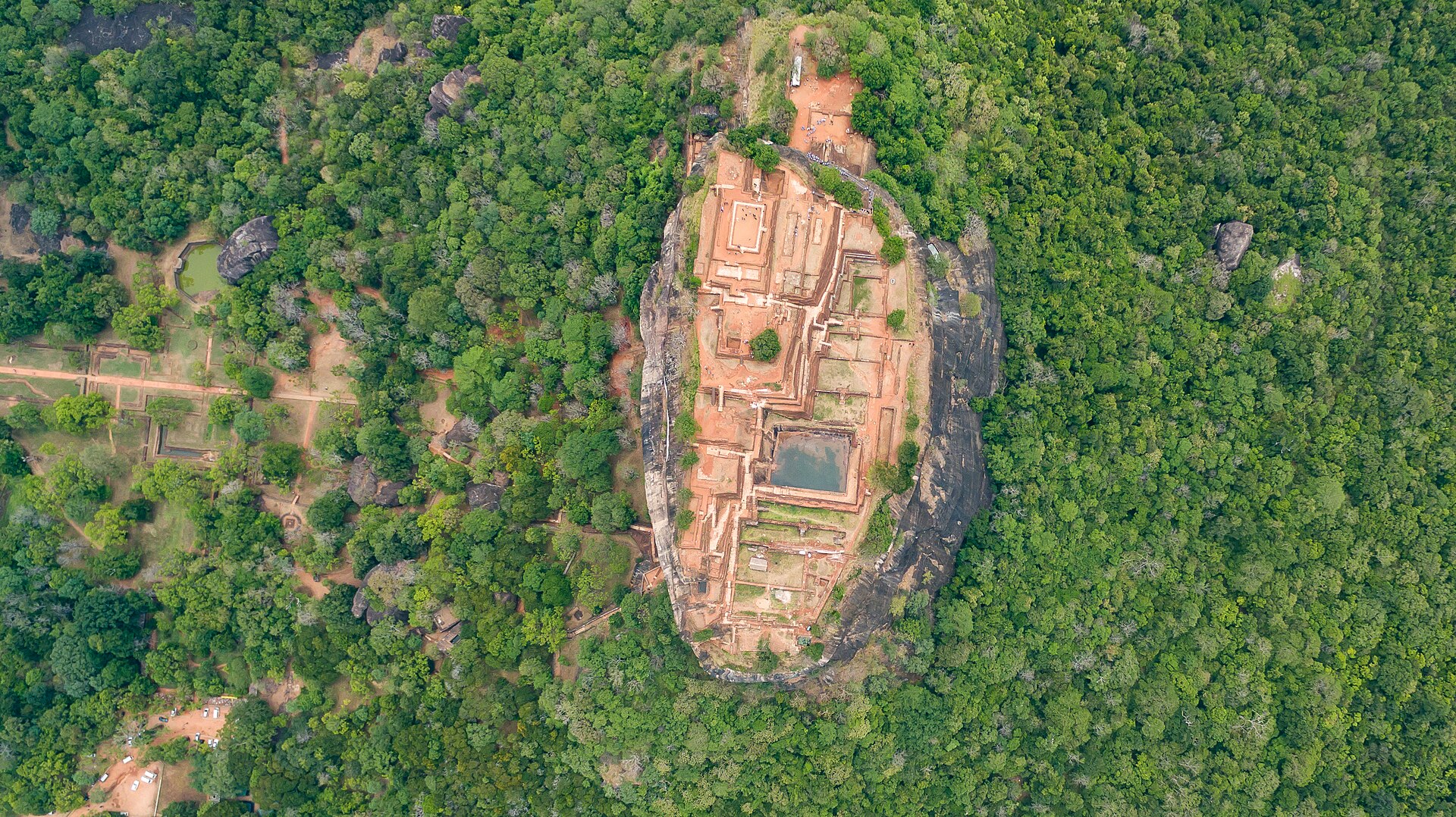
- Sigiriya Rock Fortress (US$35 foreign adult, 2026). The headline act: a 200-metre granite outcrop with water gardens, mirror wall, frescoes and a summit palace. Budget two to three hours, and arrive before 8am to dodge the stairway queues. From Sigiriya village you can walk or cycle the two to three kilometres to the ticket office — guests at one Sigiriya property called it "within walking distance" of Lion's Rock. From Habarana it is a 30–40 minute tuk-tuk ride, roughly US$8–12 each way.
- Pidurangala Rock (US$5, 2026). The budget alternative and arguably the better photograph: a shorter, rougher scramble to a viewpoint looking straight back at Sigiriya. Twenty minutes from either town, and the sunrise view is worth the early alarm. Our Sigiriya vs Pidurangala comparison tells you which to climb.
- Minneriya and Kaudulla national parks (elephant gathering). Habarana's trump card: the town sits on the doorstep of the corridor between the two parks, where hundreds of wild Asian elephants gather around the reservoirs in the dry-season months. A jeep safari with park tickets runs roughly US$45–65 per person sharing a vehicle, or US$85–100 for a private jeep for two. From Habarana you are often the first jeep in; from Sigiriya it is a slightly longer transfer.
- Dambulla Cave Temple (US$8.50, 2026). Five cave shrines under a giant granite overhang, packed with painted Buddhas and murals — one of the great sights of the island, about 25–30 minutes from either town. The 350-odd steps and barefoot policy mean you want cooler morning hours.
- Polonnaruwa ancient city (US$25, 2026). The best-preserved of the ancient capitals, best explored by bicycle (rentals US$3–5 a day). About 45 minutes from Habarana, 60–75 from Sigiriya — a full day out from either base.
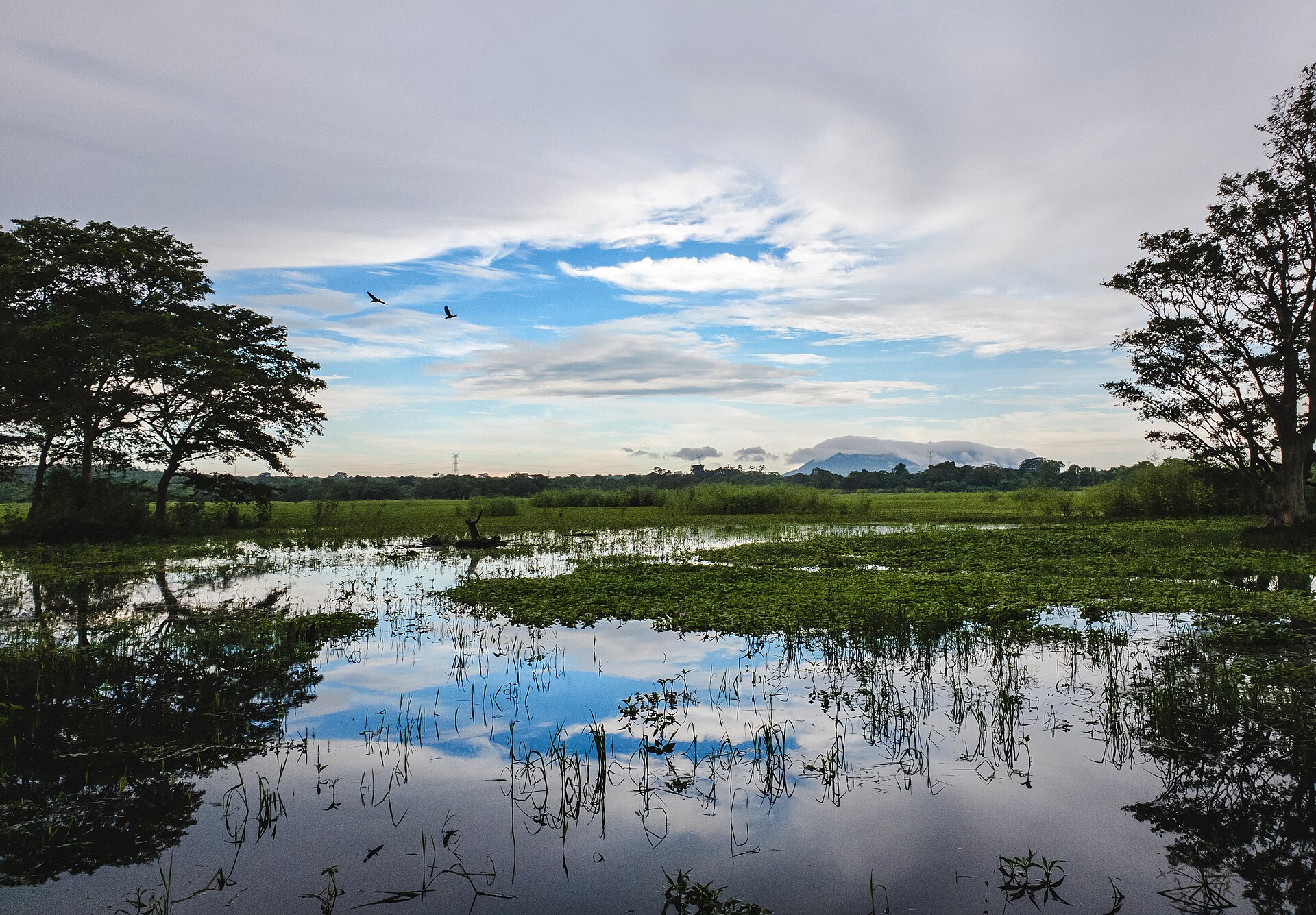
- Habarana Lake (the town’s own sight). The reservoir that gives the town its character, with a small island temple and the kind of slow, bird-heavy mornings that make guests describe Habarana as "peaceful" and "serene". A morning walk or catamaran ride here is what turns a transit stop into a stay.
- Village and spice-garden experiences. Both towns run the same-style village walks, bullock-cart rides and cookery sessions. Agree a price in writing first, and treat any in-house "package" quote with the scrutiny you would at home.
Getting around
Distances in the Cultural Triangle are short but the roads are slow, so your base is really a choice about time spent in a tuk-tuk or car.
- Sigiriya to the rock: free on foot or a US$1–2 bicycle rental.
- Habarana to Sigiriya: 30–40 minutes, US$8–12 each way by tuk-tuk; agree the price before you set off, and expect a little more after dark or at dawn.
- Habarana to Dambulla: 25–30 minutes, roughly US$7–10 by tuk-tuk or a stop on a driver-led day.
- Habarana to Polonnaruwa: around 45 minutes by car; a tuk-tuk is possible but slow and less comfortable for the distance.
- A private car and driver: US$50–70 per day for an air-conditioned car, fuel and driver's costs usually included — the single most efficient way to see the triangle from either base, and the way most travellers stitch together Dambulla, Sigiriya and the parks in two days. See how to get around Sri Lanka for the wider picture.
- Trains and buses: Habarana sits on the main Colombo–Trincomalee rail line and the Kandy road, making it a natural arrival and departure point if you are travelling by public transport. Sigiriya has no railway of its own.
What to avoid: don't plan a Sigiriya-to-Habarana hop on the same morning as a 6am rock climb — the transfer eats 40 minutes you'll begrudge. And don't assume tuk-tuk prices after dark; with fewer drivers about, the quote can double.
What to budget
Both bases sit in the same price band, and both are far cheaper than the south-coast resorts. Here is an honest 2026 day, per person.
- Accommodation: guesthouses and homestays run US$20–45 a night; comfortable mid-range hotels with a pool US$50–110; and special boutique or jungle properties US$120–250+. Habarana has a deeper bench of larger, greener, pool-equipped properties — part of why its average score is so high.
- Meals: local rice-and-curry at a village restaurant runs US$3–7; a hotel dinner US$8–18. Sigiriya has more walkable restaurants; Habarana more often means eating at your stay.
- Activities: Sigiriya rock US$35, Pidurangala US$5, Dambulla caves US$8.50, Polonnaruwa US$25, and an elephant safari US$45–65 per person sharing a jeep. A full day with two sites and transport easily reaches US$60–100 a person.
- Transport: short tuk-tuk hops US$2–12; a private car and driver US$50–70 a day if you are covering multiple sites.
- Cash: bring plenty. ATMs are thin and unreliable around both towns; the nearest reliable machines are in Dambulla. Carry enough rupees for two days.
Put together, a mid-range couple basing in either town, doing the rock, the caves and one safari over two nights, might spend roughly US$100–170 per person per day all-in — less on a guesthouse-and-local-food plan, more with a private driver and a boutique room.
WATCH OUT FOR
None of these should put you off — they are simply the patterns that catch people out, and all are easy to plan around:
- Assuming the two towns are interchangeable. They are 30–40 minutes apart, not next door. If you book Habarana because "it's near Sigiriya", budget for the transfer — and the pre-dawn start if you want the rock early.
- Roadside and railway noise. Habarana is a genuine crossroads, and some properties sit close to the main road or the rail line — a few guests describe heavy vehicles and trains carrying over the quieter nature sounds. If noise-sensitive, ask for a room set back from the road or on the lake side.
- Dark, rural nights. Outside the few lit stretches, both towns go very dark after dinner, and some rural lanes have little street lighting. It is not unsafe so much as disorienting — keep a torch on your phone.
- In-house activity mark-ups. The most common complaint in the reviews is the add-ons: safaris, village tours and transfers sold at the property at a healthy premium. Ask what is included and price it against the gate rate.
- The 8am rock crowd. Sigiriya's queues build steeply from mid-morning as day-trippers arrive. Staying in Sigiriya and starting at 6:30am is the single best way to beat them; staying in Habarana makes an early gate harder.
- Safari expectations. Elephants are wild and mobile. The gathering depends on the season and on which reservoir has water — operators will switch you between Minneriya and Kaudulla accordingly. No one can promise a count; a good guide reads the conditions on the day.
- Barefoot, hot stone. Sigiriya, Pidurangala and the cave temples are all entered barefoot, and the stone gets hot by mid-morning. Go early, take socks for the stairways.
GOOD TO KNOW
- Two nights is the sweet spot. One night is a rushed dash; two lets you do the rock one morning and a safari or the caves the next.
- Book the rock for early, the safari for late. Sigiriya is best at opening; the elephant gathering at Minneriya and Kaudulla is best in the afternoon, from about 3pm, when the herds move to the water.
- Timing the season. The dry-zone triangle is largely year-round, but the elephant gathering peaks in the dry months. Check the wider picture in when the monsoon season is.
- Habarana is the better transport hub; its main-line station and crossroads position make it the more practical anchor if you arrive by train or long-distance bus.
- Sigiriya is the better food-and-foot base; if you like to walk out for dinner, browse a strip of cafes and be at the rock without a vehicle, its compact village wins.
- Combine, don't commute. For a three-night triangle, take two nights in one base and a night in the other rather than commuting daily from a coastal hotel.
WHERE TO STAY
Properties below are drawn from our review data — positive mentions only, each with the specific, review-backed reason it earns its place. Scores are the average across that property's verified guest reviews.
- Habarana — Taru Villas Maia. A beautifully designed boutique property just outside town that reviewers call "peaceful", "serene" and "one of the most special hotels we've visited", with large balconies over the paddy fields and a spa guests recommend. The best pick if Habarana's calm is what you came for.
- Habarana — Woodland Sanctuary. A family favourite praised for "spacious" rooms, silent air-conditioning and a proper pool — reviewers with children called it the highlight of a week-long stay.
- Habarana — Habarana Tree House Ambasewana Resort. A genuinely unusual stay, with tree houses built three metres up and entirely from wood; guests describe it as "like living in the jungle". Memorable rather than polished — ask for a room away from the road.
- Sigiriya — Il Frangipane. The proximity pick: guests repeatedly note it is "within walking distance" of Lion's Rock, with a "lovely pool", generous breakfasts and a quiet setting "comfortably back from the main road". Ideal if the rock at dawn is why you came.
- Sigiriya — Golden Rock Retreat Sigiriya. The highest-rated Sigiriya property in our data (9.98 across 475 reviews), with guests calling it "the perfect start to our holiday" and praising knowledgeable hosts. Book early — this kind of score does not stay secret.
Weighing the wider region? Our Sigiriya and Dambulla destination guides cover the sites themselves, while our data study on why quieter regions rate highest explains why both bases out-score the famous ones — and Minneriya vs Yala settles the elephant-park question.
The bottom line
Sigiriya and Habarana are not rivals so much as two different trips wearing the same map pin. Base in Sigiriya for the rock, the walkable village and the dawn start; base in Habarana for the lake, the elephants and the calm its 9.17/10 review score quietly reflects. If you are undecided and using the Cultural Triangle as a multi-day base, Habarana's mix of green space, quiet and central position makes it the more rewarding place to come home to — and the rock is only a short, scenic drive away. Whichever you choose, you are basing yourself in the most peaceful, best-rated corner of the island — and the elephants, the caves and the rock will all be waiting.
Have a specific question about your Sri Lanka trip?
Ask BYC at byc.lk — Free and honest. Some links are affiliate links and never change our advice.
Ask BYC Your Question →