Hot Water in Sri Lankan Hotels: The Cold-Season Shower Problem
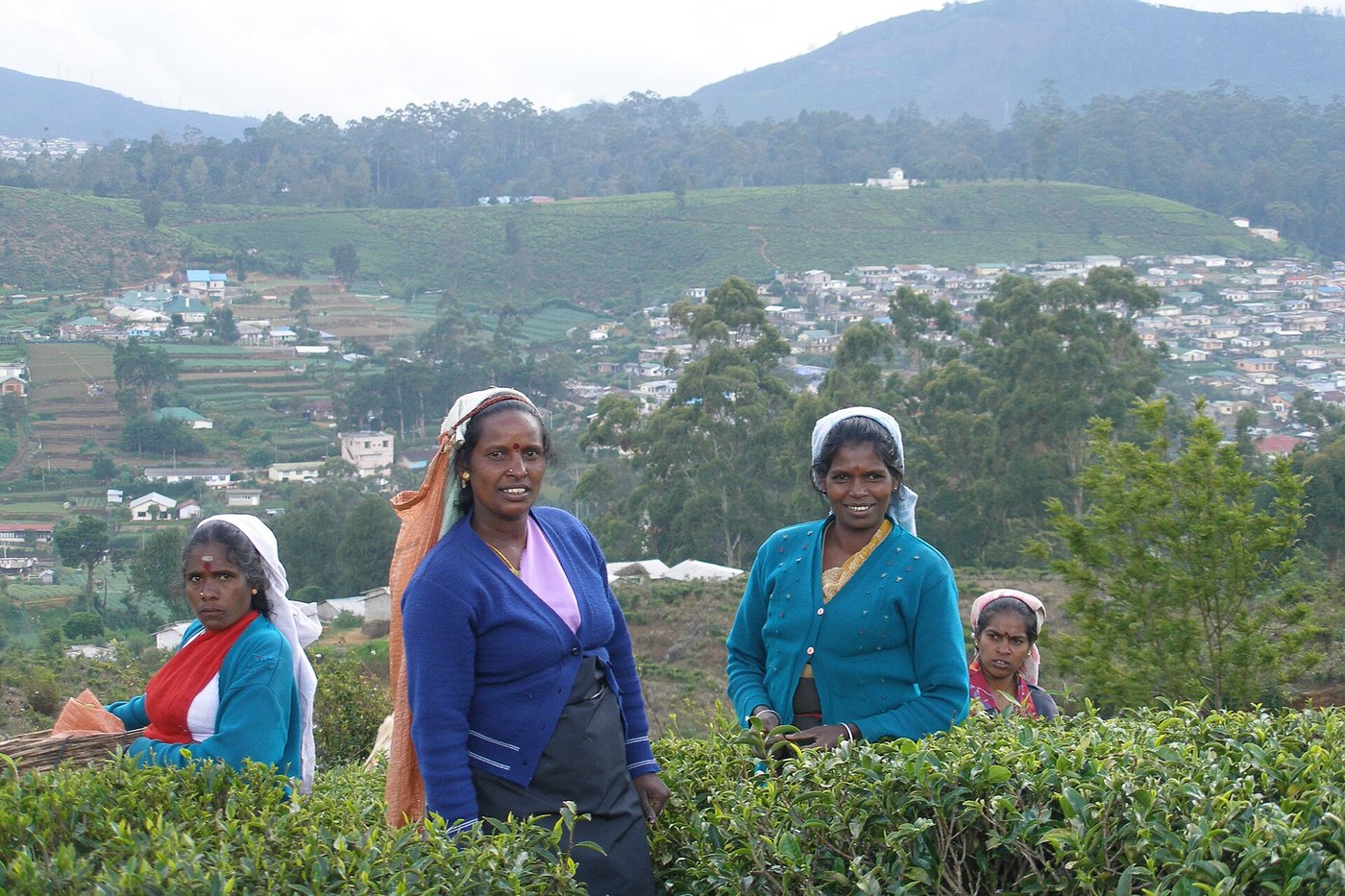
It is 6:40 in the morning in Ella and it is 13 degrees outside. The mist is sitting in the valley below the balcony, the kettle has boiled, and you have turned the hot tap on and stepped back to wait. And wait. The water stays the temperature of the hill it came out of. Twenty minutes later you are dressed, cold, and slightly furious about a detail that appeared nowhere on the booking page.
This is one of the most common ways a Sri Lankan trip starts going sideways in November, December and January — and it has almost nothing to do with a hotel being bad. Of 363,148 verified guest reviews of Sri Lankan properties we have collected, 3,705 mention hot water by name. Those reviews average 7.13/10 against a national average of 8.64, and 32.0% of them score 6 or below against a national rate of 11.1%. Narrow it to the four cool months and the reviews mentioning hot water average 6.68, with 38.1% scoring 6 or under. A shower is a small part of a holiday and a large part of a bad memory, which is exactly why it is worth ten minutes of planning before you book.
Is there hot water in Sri Lankan hotels?
Yes — most of the time, and almost never on demand. Sri Lankan hotels, guesthouses and homestays overwhelmingly heat water in a tank, not continuously. A large property runs a central boiler or a bank of storage tanks. A small one runs a solar collector on the roof, an electric immersion tank, or in the hill country a wood-fired system. Each has a supply and then nothing, until it refills and reheats.
The number to know is four minutes. A typical small-property tank holds enough for two or three consecutive showers. The fourth person in the room, or the third person in the queue at 7am, is often the one who gets a cold one — and their review will say “no hot water” when what actually happened is “no hot water left”.
Where it matters least and most. On the coast in April, a cool shower is a relief and nobody mentions it. In the hill country in December — Ella, Nuwara Eliya, Haputale — a cold shower at dawn is genuinely unpleasant, and it is the single most weather-dependent thing in this whole dataset.
The rule. Ask two questions before you book: is the hot water solar, tank or instant? and is there a heater or hot-water bottle in the room? The second question is the one that separates a property that has thought about its guests in winter from one that has not.
Why the hill country goes cold, and when
The central highlands sit between roughly 1,000 and 2,000 metres above sea level, and above about 1,500 metres it gets genuinely cold at night. Nuwara Eliya, at 1,868 metres, is regularly described locally as the coldest place in the country; Ella and Haputale sit lower and are milder but still cold at dawn. A December night in Nuwara Eliya commonly drops to around 10–14°C, and the mist that makes the tea country beautiful also means the sun reaches your solar panel late and leaves it early.
The review data follows the weather almost exactly. Of the 16,634 reviews of Nuwara Eliya properties, 57 mention being freezing, a lack of heating or a missing heater — and those reviews average 4.52/10, one of the harshest figures anywhere in the corpus.
- Coolest months — November to February. This is the north-east monsoon period: dry and bright on the south and west coasts, wet and grey in the hill country and on the east coast. Nuwara Eliya runs 10–20°C, Ella 13–24°C. Mornings are cold, evenings are cold, and midday can still be warm enough for shorts.
- The warm months are the opposite problem. March and April score best in this dataset for hot-water reviews (averages of 8.02 and 8.15), because a cool shower is not a hardship. If you are travelling in April, this whole article matters much less.
- May to August is the south-west monsoon, and it is cool and wet in the highlands too — 77 Nuwara Eliya reviews mention cold in June and July, and they average 6.69. Not as bad as December, still worth planning for.
- The coast is a different country, weather-wise. Colombo, Negombo and Galle in December sit around 26–31°C. Your hot-water risk there is a hotel that has never needed a heater and does not have one, which is fine, because you will not want one.
What's worth doing: the ten minutes before you book
- Search the property's reviews for the word “hot water”. Every review platform supports this and nobody does it. Read the newest three mentions. A property where the last mention says “plenty of hot water, no problem” is a different proposition from one where three guests in two years wrote “no hot water” and the replies never mention a fix.
- Message the property and ask how the water is heated. One line: “Hi — how is hot water supplied in the rooms, and is there a heater for the night?” The answer tells you two things at once: whether there is a system, and whether anyone is awake at the other end. “Solar, and yes we have electric heaters” is a complete answer. “24 hours hot water sir” is not an answer.
- Ask for the room with the individual tank. Small properties that have invested in one water heater per room exist, and their guests write about it in exactly those words. One Kandy review from January 2026 puts it plainly: “enough hot water for two people to shower one after the other — the rooms have individual water tanks which quickly heat up after use.” That is what good looks like.
- Shower in the evening, not at dawn. A solar system has had all day to heat; a tank refills and reheats overnight but slowly. If the property uses solar, evening water is hot and early-morning water may not be. If it uses a boiler on a timer, ask what the schedule is — many run morning and evening only.
- Take the room with a bath if the trip is December, Ella. Not for luxury: a bath holds heat, and a cold shower in a cold bathroom is the specific failure mode. Reach for the heater before the shower, not after.
- Treat a hill-country stay as two climates in one day. The packing list that works for Negombo fails in Nuwara Eliya. A merino layer, warm socks and a light waterproof beat a bigger suitcase. Our December guide has the town-by-town temperatures if you want to plan the route around it.
- Watch the price floor in cold towns. A room at a third of the local median in Nuwara Eliya is usually an old building with no heating, and November–January is exactly when that shows. The same room is fine in April.
Getting around in the cool months
The practical transport picture changes as much as the weather does, because the hill country is where the roads are slowest and the rail line is the attraction.
- Train, but check the line first. The hill-country railway has been badly disrupted through late 2026 by landslides on the Colombo–Gampola section and near Nanu Oya, with through services suspended until further notice pending reconstruction. Before you build a trip around a seat, read the live status of the Colombo–Kandy–Ella line — it carries the current segment-by-segment position and the one published engineering estimate for reopening.
- Second class, $1–$3 for the hill-country legs, reserve seats days ahead in December.
- Private car and driver, $40–$60 a day. In a wet, misty, landslide-prone December this is the most reliable way through the highlands, and splitting it between two couples makes it cheaper per head than four separate tuk-tuk runs. Budget fuel and driver accommodation if you move towns daily.
- Bus, $1–$3 between towns. Local buses run the hill roads constantly and are fine in the dry, less fun in December when the windows steam and the road washes. Do not take a bus from Kandy to Ella expecting the train view; the route is the same valley, four hours of it.
- Tuk-tuk on the steep lanes, $2–$5. Ella, Haputale and Nuwara Eliya all have properties up lanes that are genuinely unwalkable with a case. Most guesthouses will send one, or the owner will carry it. Ask when you book — and read the road-access guide before you pick a spot on the map.
- What to avoid. Long first-day transfers straight into the highlands after a dawn flight — Colombo airport to Ella is 5–6 hours by road and it is the one leg where a tired mistake is expensive. Take the coast for the first night, or break the drive at Kandy.
What to budget
The cool months are peak season on the south and west coasts, and the price of that is accommodation. A realistic mid-range day per person in December:
- Accommodation, $35–$75. Coast in peak December runs $50–$90 for a good guesthouse room; the hill country is cheaper at $25–$50. Add $5–$10 a night if you specifically want heating, a bath and a reliable tank — that is what the upgrade actually buys in Nuwara Eliya.
- Meals, $12–$25. Rice and curry $3–$6, a hill-country guesthouse dinner $5–$10, a beach restaurant $10–$18. Hill-town cafés run slightly dearer than coastal village food because everything arrives by road.
- Transport, $10–$30. Train $1–$3, a shared van between towns $5–$10, driver day $40–$60 split between travellers, tuk-tuk hops $2–$5.
- Activities, $10–$35. A tea factory tour $5–$15, Horton Plains with a jeep and guide $40–$60 per group, a safari $35–$55 per jeep, a guided hike $15–$30. The Pekoe Trail sections and the Ella walks are free.
- The buffer, $10. Keep it, and spend it on the one thing you did not plan for: a heater for a night, a better room, a taxi when the bus does not come.
WATCH OUT FOR
- The “24-hour hot water” line. It means there is a system, not that it works at 6am. Ask how it is heated and when, in those words.
- Solar in a monsoon. A hill-country property running entirely on solar heat will have lukewarm water after a grey day. This is a design limitation, not dishonesty, and it is avoidable by asking.
- A tank shared by a whole floor. Six rooms pulling from one 100-litre tank is fine at 9pm and hopeless at 7am. Peak demand is the failure, not the system.
- Reviews that say “no hot water” without a date. Check whether the complaints are old. A boiler replaced in 2025 does not show up as a change in the average, but it does show up in the newest three reviews.
- Old colonial buildings with beautiful rooms. Thick stone walls, high ceilings, no insulation. A hot-water bottle and a heater turn these from characterful into comfortable; without them, December in a Nuwara Eliya bungalow is genuinely cold.
- “We will fix it tomorrow.” Warm, long, and never in the past tense. If the last three mentions of a problem got replies that promise rather than report, assume the problem is live.
- Power cuts and water pressure. 289 reviews mention a power cut or no electricity, and they average 5.78/10 with 51.6% scoring 6 or below — the harshest cluster in this study. A pump needs power; no power means no water pressure, hot or cold. Rural properties on their own generator are the most resilient.
GOOD TO KNOW
- Ask at check-in, not at 6am. Three questions in thirty seconds: What time is hot water available? Is there a heater? Who do I tell if the water goes cold? Every good host answers instantly and every answer is a signal.
- Book the hill country for two nights, not four. One cold shower is an anecdote; four in a row sours a trip. Two nights gives you the views and the walks, and leaves before the weather does.
- Nothing you shower in is a health matter. The water in Sri Lankan hotels is treated and safe for washing. Bottled or filtered water is for drinking — a separate question, covered in what to eat and drink safely.
- Pack for 13 degrees even in the tropics. A light warm layer, a waterproof shell and warm socks weigh almost nothing and are the difference between enjoying the tea country at dawn and hiding in the room.
- Timing beats upgrades. A 3pm shower in Ella is almost always hot; a 6am one is a lottery. Plan the day so the shower is not the first thing that happens.
- Late December is peak everywhere. Between 20 December and 5 January, coastal rooms double and hill-country guesthouses fill with Sri Lankan families escaping the heat. Book the highlands early if you are travelling then — and check the monsoon map before you commit the route.
WHERE TO STAY
Five properties from the corpus that have solved the shower, each named for one specific, review-backed reason — and each with a review history you can check yourself.
- Fern Hill Cabins, Ella — 9.75 across 464 reviews, 2 scoring 6 or below. Tucked into the jungle above the railway with train-spotting from the terrace, and its reviews name the two things that matter in winter together: “air condition, and great bathroom with hot water”, and a host who “drove us and picked us up, suggested activities”. A property that has thought about both the cold night and the steep lane.
- Suriya Guest, Nuwara Eliya — 9.39 across 747 reviews. Log burners in the communal rooms and a heater in the room. A guest puts the case better than we can: “Great shower and hot water was really appreciated in the chilly evening, as were the log burners.”
- The Montfort, Nuwara Eliya — 7.84 across 282 reviews. An old building with an honest average, but consistent on the one thing that matters here: “Heaters provided and warm bedding.”
- Azenya Nuwara Eliya — 9.43 across 409 reviews, 1 scoring 6 or below. A newer, well-built property where guests describe being warm by construction rather than by appliance: “A unique special place. Very modern and still warm.” One guest adds the only caveat worth having — “one extra heater would be useful for chilly mornings.”
- Sun Dove Suite, Kandy — 9.52 across 661 reviews, none at 6 or below. The best-documented water heater in the corpus: “the rooms have individual water tanks which quickly heat up after use.”
The bottom line
The shower is the most weather-sensitive thing in Sri Lankan accommodation, and it is the one thing you can plan for in a single message. In 363,148 reviews, the guests who mention hot water score the trip 7.13 instead of 8.64 — and in the four cool months that falls to 6.68. None of that is about money. It is about asking how the water is heated before you book, and choosing the property that has an answer.
Done properly, the cool season is the best time to be on this island: dry, bright coasts, cold misty mornings in the tea country, and the whole hill line to yourself before the December crowds arrive. Pack one warm layer, ask one question, and the highlands in winter become the part of the trip you talk about for years — for the sunrise, not the shower.
Plan your Sri Lanka trip with BYC at byc.lk — Free and honest. Some links are affiliate links and never change our advice.
Frequently asked questions
Do hotels in Sri Lanka have hot water?
Most do, but almost never on demand. Small properties heat water in a tank fed by solar or electricity, and a typical tank covers two or three consecutive showers before it needs to refill. Of 363,148 guest reviews, 3,705 mention hot water, and they average 7.13/10 against a national 8.64.
Why is there no hot water in my Sri Lankan hotel room?
Usually the tank has run out rather than the system being broken. Six rooms drawing on one 100-litre tank will have hot water at 9pm and cold water at 7am. Solar systems also need sun, which the hill country does not reliably provide before 10am in December.
Which part of Sri Lanka is coldest for travellers?
The central highlands: Nuwara Eliya sits at 1,868 metres and runs about 10-20 degrees C in December, while Ella and Haputale are milder at roughly 13-24 degrees C. Of 16,634 Nuwara Eliya reviews, 57 mention being cold or lacking heating, averaging just 4.52/10.
When is the cool season in Sri Lanka?
November to February, during the north-east monsoon. The south and west coasts stay dry and bright, the east coast and hill country get rain and grey skies, and highland nights drop to 10-14 degrees C. April is the opposite - a cool shower is welcome and hot water complaints drop.
Should I ask a Sri Lankan hotel about hot water before booking?
Yes, in one message: how is the water heated, and is there a heater for the night? The reply tells you whether there is a real system and whether anyone is managing it. Ask about the timing too - many properties heat water in morning and evening blocks only.
Method: BYC.lk analysis of 363,148 verified guest reviews of 1,760 Sri Lankan properties collected 2023–2026, scored on a 10-point scale. “Hot water” set: reviews containing the phrase, 3,705, averaging 7.13/10 with 32.0% at 6 or below (national baseline 8.64/10, 11.1% at 6 or below). Cool-season cut (November–February): 1,298 reviews mentioning hot water, averaging 6.68, 38.1% at 6 or below, against a same-season baseline of 8.54. Power set: 289 reviews mentioning a power cut or no electricity, averaging 5.78. Climate figures are December–February averages for Nuwara Eliya and Ella. No individual property is reported negatively; the properties named in WHERE TO STAY are named for their documented handling of cool-weather comfort, not ranked. Last updated: 2 November 2026.
Have a specific question about your Sri Lanka trip?
Ask BYC at byc.lk — Free and honest. Some links are affiliate links and never change our advice.
Ask BYC Your Question →