Is a Sri Lanka Safari Worth It? Choosing Between Yala, Udawalawe and Wilpattu
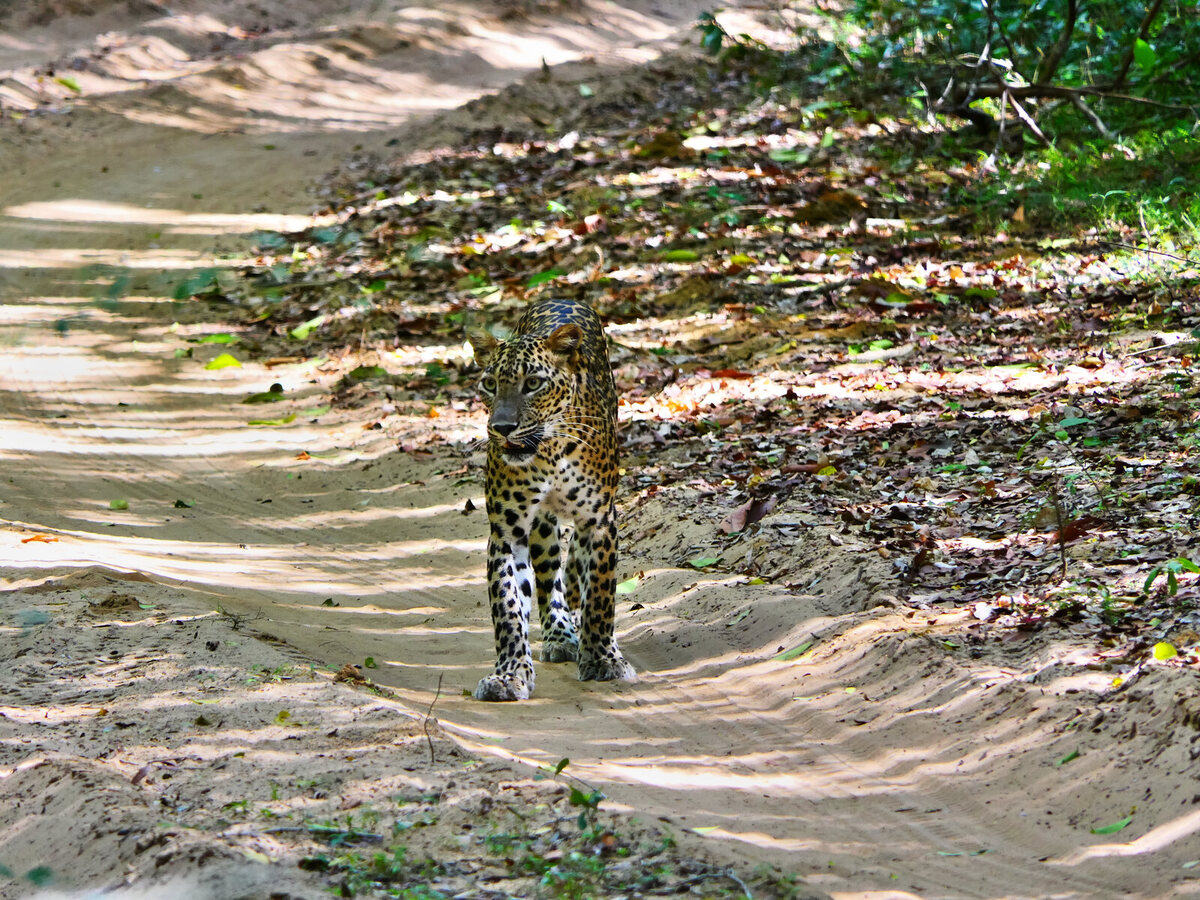
You have four days on the south coast, one spare morning, and a decision to make: Yala, Udawalawe or Wilpattu. Everyone tells you something different. Someone swears Yala is the only real safari. Someone else says you will spend six hours staring at the back of another jeep. The truth is that Sri Lanka's three big parks are not competing versions of the same thing — they are three completely different days out, and picking the wrong one is the single most common reason travellers come back disappointed.
This is not a question about whether Sri Lankan wildlife is impressive. It is. Leopards, elephants, sloth bears, crocodiles, 250-plus bird species, all packed into an island the size of Ireland. The question is which park matches the experience you actually want, what it really costs in 2026, and how not to accidentally book the version of the safari you were trying to avoid.
We looked at how guests describe safaris and wildlife stays across our review corpus — including 1,468 scooter reviews, the wider Tissamaharama and Udawalawe accommodation data, and the thousands of stays around Sigiriya, Habarana, Anuradhapura and the deep south that feed these parks — and matched it against current 2026 park fees and jeep rates. The pattern is clear: satisfaction has almost nothing to do with which park is "best" in the abstract, and almost everything to do with whether the traveller chose the park their temperament suited.
Last updated: September 15, 2026.
The short answer
Yes — a safari is worth it, but pick the park by temperament, not by reputation. Choose Udawalawe if you want reliable elephant encounters in a short, gentle, family-friendly morning. Choose Yala if a leopard is the whole point and you can tolerate jeep traffic. Choose Wilpattu if you want space, quiet and forest, and you are comfortable with the possibility of seeing less.
Budget USD 45–95 per person for a half-day safari at one of the big three once park entry and jeep hire are combined. Do it as an overnight near the park, not as a same-day dash from the beach, and book one morning rather than two crammed into a single day. A safari is a patience game: the best sighting often arrives after forty quiet minutes beside a waterhole, not in the first ten.
The mistake almost everyone makes is treating the safari as a transfer-day side quest. It is not. Wildlife viewing rewards a slow, early, unhurried morning, and the parks themselves are far enough from the coast that a day trip costs you the whole day anyway. Give it a night, and the maths changes completely.
What’s worth doing
- Udawalawe — the elephant park, and the best first safari. Wide open grassland, a big reservoir, and wild elephants visible almost every morning of the year. The park is compact, the routes are short, and sightings come early and often, which makes it the single best choice for families, nervous first-timers and anyone with limited time. Pair it with the Elephant Transit Home beside the park, where orphaned calves are rehabilitated and released — the 12:00 PM feeding session is the calmest and least crowded.
- Yala — the leopard lottery. Block 1, entered via Palatupana, is the classic first-timer route: dry-zone scrub, rocky outcrops, coastal dunes, crocodile pools, and the highest concentration of leopards anywhere on the island. It also has the highest concentration of jeeps, and during peak hours a single leopard can draw dozens of vehicles. Come for the landscape and the drama, not a guaranteed sighting.
- Wilpattu — the quiet wilderness. Sri Lanka’s largest park, on the northwest coast, built around the villus — sand-rimmed natural lakes that hold rainwater and draw everything down to drink. Fewer jeeps, more forest, second-highest leopard population in the country, and arguably the best place on the island to find sloth bears, especially when the palu fruit ripens in June and July. The trade-off is real: fewer sightings per hour, more driving between them.
- Minneriya and Kaudulla — the elephant gathering. From roughly July to October, herds converge on the receding reservoirs of the Cultural Triangle in extraordinary numbers, sometimes several hundred animals at once. If your trip falls in that window and you are already in Habarana or Sigiriya, this beats a long trip south on both cost and spectacle.
- Horton Plains — the safari that is not a safari. No jeeps, no big cats: you walk. A pre-dawn start from Nuwara Eliya buys you misty grassland, World’s End and Baker’s Falls. Sambar deer are common and the birdlife is excellent. Ideal for walkers who want wilderness without the vehicle circus.
- The birding add-on — Bundala. A Ramsar wetland just east of Yala, superb between November and March when migrants arrive. Flamingos, storks, spoonbills and waders, usually with a fraction of the traffic.
Where it makes least sense: doing two of the big three in one short trip. Yala and Udawalawe are a reasonable pair if you are already travelling the southern route, but adding Wilpattu to the same week means a 200 km drive north and a day you will spend in the car rather than in the park. One park done properly beats two done in a rush.
Getting around — how a safari actually works
You cannot self-drive inside the parks. Private vehicles are not allowed in Sri Lanka’s national parks, which means every safari is a hired jeep with a driver, arranged through your accommodation or an operator.
- The base-town rule. Sleep near the park the night before. Udawalawe: Udawalawe town or the park road. Yala: Tissamaharama, Kirinda or Kataragama. Wilpattu: Pahala Maragahawewa or Eluwankulama. Pickups are commonly before dawn, and the gates open at first light — the best light and the coolest air are in that first hour.
- Half-day, full-day or afternoon. A half-day is 6:00–11:00 AM or 1:30–6:00 PM. A full day runs 6:00 AM–6:00 PM. Mornings are consistently better for cats and bears; afternoons are cheaper and quieter and still excellent for elephants and birds.
- Jeep hire costs. A private jeep is priced per vehicle, not per person, and typically holds up to six — so the cost per head falls fast as your group grows. Expect roughly USD 25–45 for a half-day and USD 50–90 for a full day, before park fees and tip.
- Arranging it. Your hotel or guesthouse is the normal, safest route and usually the cheapest. Ask them to confirm in writing: the gate, the block, the pickup time, whether the park ticket is included, and whether the jeep is private or shared.
- Getting to the parks. Udawalawe is about 3.5–4 hours from Colombo by road and roughly 2 hours from Ella or Mirissa. Tissamaharama sits about 4.5–5 hours from Colombo, or an hour past Mirissa. Wilpattu is around 4 hours from Colombo and 45 minutes from Anuradhapura. Buses exist on all these routes and cost a few dollars; a private car with driver runs roughly USD 60–100 for the longer legs.
- What to skip. Do not book a "safari day trip" that starts from a beach hotel 4 hours away. You will spend more time in the vehicle than in the park, arrive after the best light, and pay a premium for the privilege.
What to budget
Per person, for two people sharing a jeep, in 2026 US dollars:
- Park entry (foreign adult): approximately USD 42 per person for a day visit at the big parks, including taxes and service charges. Children aged 6–12 pay around half; under-6s usually go free. SAARC nationals pay a lower rate, starting near USD 30.
- Jeep hire: USD 25–45 for a half-day, USD 50–90 for a full day, per vehicle. Split four ways, a half-day works out around USD 8–12 per person.
- Tip for the driver and park tracker: USD 3–5 per person for a half-day. Expected, and it materially improves effort.
- Elephant Transit Home (Udawalawe): about USD 5 per foreign adult plus tax, on top of the park ticket.
- Accommodation near the park: USD 25–60 for a solid mid-range double, USD 80–150 for a lodge with a garden and a pool. One night is usually enough.
- Meals: USD 8–15 a day per person eating local. Safari lodges charge more; pack water and snacks yourself.
- Transport to and from the park: USD 5–15 by bus, USD 60–100 by private car for the longer legs, split between travellers.
Realistic total for a proper overnight safari: USD 110–180 per person, all in. That buys you the jeep, the park ticket, a night near the gate, meals and the transfer. If you are comparing that against a beach day, remember the beach day is not going to show you a leopard.
WATCH OUT FOR
- The headline price that excludes the park ticket. This is the most common way a cheap quote turns expensive. A jeep advertised at USD 30 becomes USD 70 the moment the official entry, taxes and service charge are added at the gate. Always ask for a single all-in figure, in writing, and confirm it covers the park permit.
- Leopard promises. No operator can guarantee a leopard, a bear or an elephant, and any driver who does is telling you what you want to hear. Treat a "100% sighting" claim as a warning sign, not a selling point.
- Shared jeeps that become crowded jeeps. A "shared" safari can mean anything from two couples to eight strangers in a vehicle built for six. Ask how many passengers are booked.
- Drivers who chase radio calls. When a leopard is found, the good drivers arrive calmly and keep their distance; the bad ones race, crowd the animal and ruin the sighting for everyone. Say before you set off that you prefer patient viewing over speed, and expect them to respect it.
- Being rushed through the park on a transfer day. If your safari is bolted onto a long drive, the driver has an incentive to finish early. Safari days need to be their own days.
- Drones, loud music and bright clothing. Drones require special permission in Sri Lanka and are not appropriate around wildlife. White clothes look clean for about three minutes in the dust — wear muted colours.
- Block closures and seasonal shutdowns. Park blocks close for maintenance and for dry-season management, sometimes at short notice. Yala in particular has a history of partial closures in September and October. Confirm the day before, and confirm the fallback plan.
- Assuming the ticket is paid on arrival. Fees and operating arrangements do change, occasionally without notice. Re-check a few days before you travel rather than trusting a blog total from last year.
- Vague pickup logistics. Ask for the driver’s name, the vehicle registration if available, the exact gate and the pickup time. Dawn pickups are where misunderstandings hurt most.
- Safari-adjacent extras. Elephant "rides", walking-with-elephants experiences and roadside "orphanage" stops are not the same thing as a national park safari, and several are poor welfare propositions. Stick to the national parks and the official Elephant Transit Home.
GOOD TO KNOW
- Book the jeep and the night near the gate several days ahead in high season (December to April on the south coast, July to October for the Cultural Triangle parks), and two to three weeks ahead for Christmas, New Year and the April holidays.
- Mornings win. Cats, bears and the best light all belong to the first two hours. If you only have one safari, make it a dawn one.
- Give it two nights near the park if wildlife is a genuine trip priority, and one safari if it is not. A second morning dramatically raises your chances without doubling your cost.
- Take binoculars — they matter more than a camera lens, because they let you actually watch rather than only photograph.
- Pack water, sunscreen, a hat, insect repellent, a light layer for the pre-dawn drive, and dust-tolerant clothing. A dust scarf for the open jeep is worth its weight.
- Carry small cash notes for tips and the transit home ticket. Change can be scarce out at the gates.
- Photograph the vehicle and note the agreed price before you leave. It settles almost any dispute calmly at the end.
- Families: Udawalawe is the gentler introduction, with shorter routes, calmer traffic and near-certain elephants. Yala’s early starts and long, bouncy drives suit older children better.
- If something goes wrong with a licensed operator, report it to the Sri Lanka Tourism Development Authority. Complaints carry weight.
- Combine, don’t cram. Ruins at dawn in Anuradhapura and leopard at dusk in Wilpattu, or Minneriya elephants on the way to Sigiriya — these pairings cost you almost nothing in extra travel.
WHERE TO STAY
These are among the best-rated safari-area stays in our 353,633-review dataset, chosen for the practical things that make a dawn start work: early breakfasts, honest arrangement of jeeps and transparent pricing.
- Near Udawalawe National Park — Guests at the park-road stays repeatedly praise hosts who pack a takeaway breakfast for the 5 AM departure and arrange the jeep themselves, which removes every commission layer between you and the gate.
- Near Tissamaharama (Yala) — Reviewers describe staff organising morning safaris, storing luggage and holding rooms for late returns from the park, which is exactly the flexibility a safari day needs.
- In Tissamaharama town — The town itself is the best-value base for Yala: walkable food, reliable ATMs and tuk-tuks to the Palatupana gate, at a fraction of lodge prices.
- Near Pahala Maragahawewa (Wilpattu) — The village beside the Hunuwilgama gate is the practical choice for Wilpattu, and guest reviews highlight hosts who know the driver and the gate routine personally.
- In Habarana or Sigiriya — The best base for the July-to-October elephant gathering at Minneriya and Kaudulla, with easy access to the Cultural Triangle between safaris.
The bottom line
A Sri Lankan safari delivers some of the best-value wildlife viewing in Asia, and the right park for you is less about rankings than about temperament: elephants and ease at Udawalawe, leopards and drama at Yala, space and patience at Wilpattu. Give it a night, start before dawn, book through your accommodation, and let the morning be the point of the day rather than a stop on the way somewhere else. Do that and the island will almost certainly show you something you will still be describing years later.
Have a specific question about your Sri Lanka trip?
Ask BYC at byc.lk — free, honest, no upsell. Ever.
Ask BYC Your Question →