What to know before visiting Polonnaruwa - honest advice from 5,238 guest reviews
Polonnaruwa is the ancient capital that quietly outperforms every other stop in Sri Lanka’s Cultural Triangle. It is not the postcard monument that Sigiriya is, and it is not the vast pilgrimage sprawl that Anuradhapura is — it is something rarer: a complete medieval city you can cycle end to end in a morning, with the finest stone sculpture on the island sitting in a jungle clearing that most tour buses skip. Across 5,238 verified guest reviews of Polonnaruwa properties in our database, travellers rate the area 8.81 out of 10, and an extraordinary 73.9% of all reviews — 3,871 of them — score their stay 9 or higher. The top-rated properties here average between 9.3 and 9.9, a satisfaction level that beats most beach towns on the south coast. But the same data shows where trips go wrong: a bicycle ride that turns brutal after 10 AM, touts at the ticket gate, and a budget tier whose photographs often do not match the room. This guide merges both sides of the story — the celebration and the warning — into one honest picture of what to expect before you book.
1. The answer-first summary
Yes, Polonnaruwa is worth a full day, and it deserves at least one night — not a rushed half-day stop wedged between Dambulla and Sigiriya. The travellers who love it do three things: they start the ancient city at opening time (7 AM), they stay in the homestay or small-resort tier rather than the big hotels, and they treat the lakeside sunset as part of the experience rather than spare time. The travellers who are disappointed almost always arrive at midday, ride the archaeological park in the full heat, eat at their guesthouse because they booked somewhere remote, and leave feeling they overpaid. Here is the encouraging part: 3,871 of those 5,238 reviews score 9 or above, the Wildescape Polonnaruwa averages 9.52 across 401 reviews, and the homestay and villa tier beats the hotel tier on satisfaction. Choose well, start early, and Polonnaruwa becomes the quiet highlight of the whole Cultural Triangle.
2. What makes Polonnaruwa special
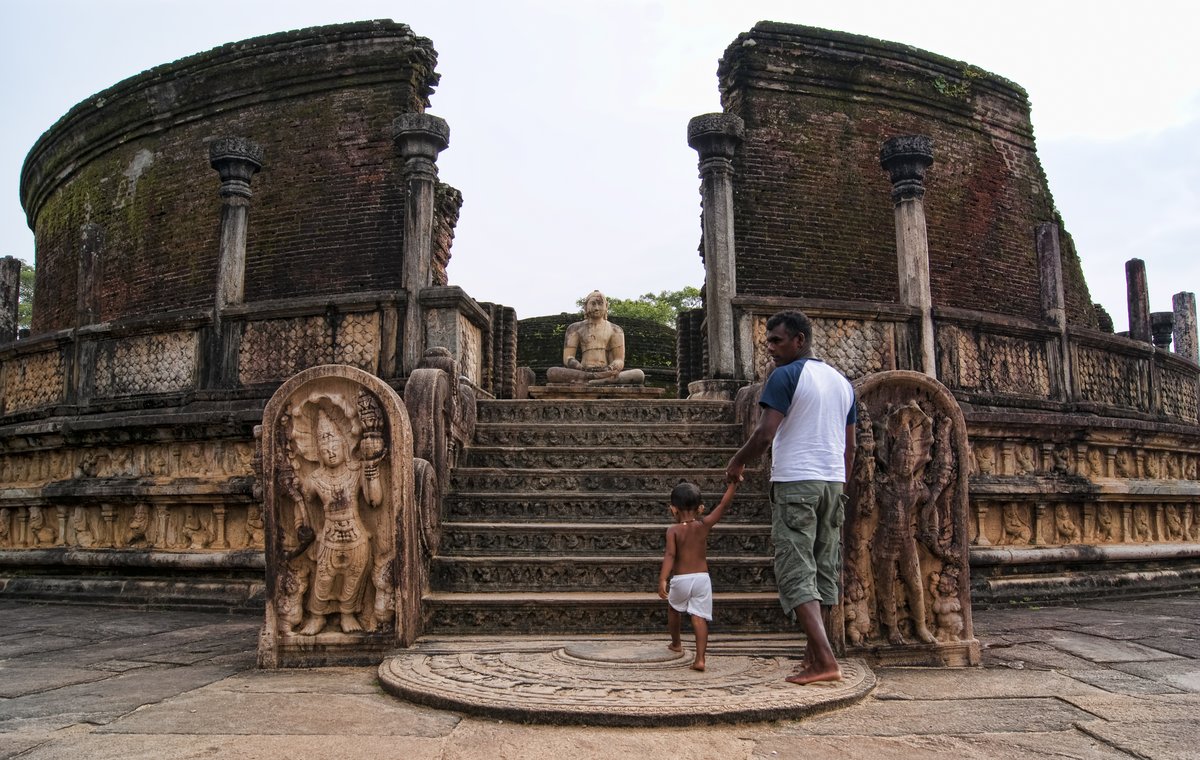
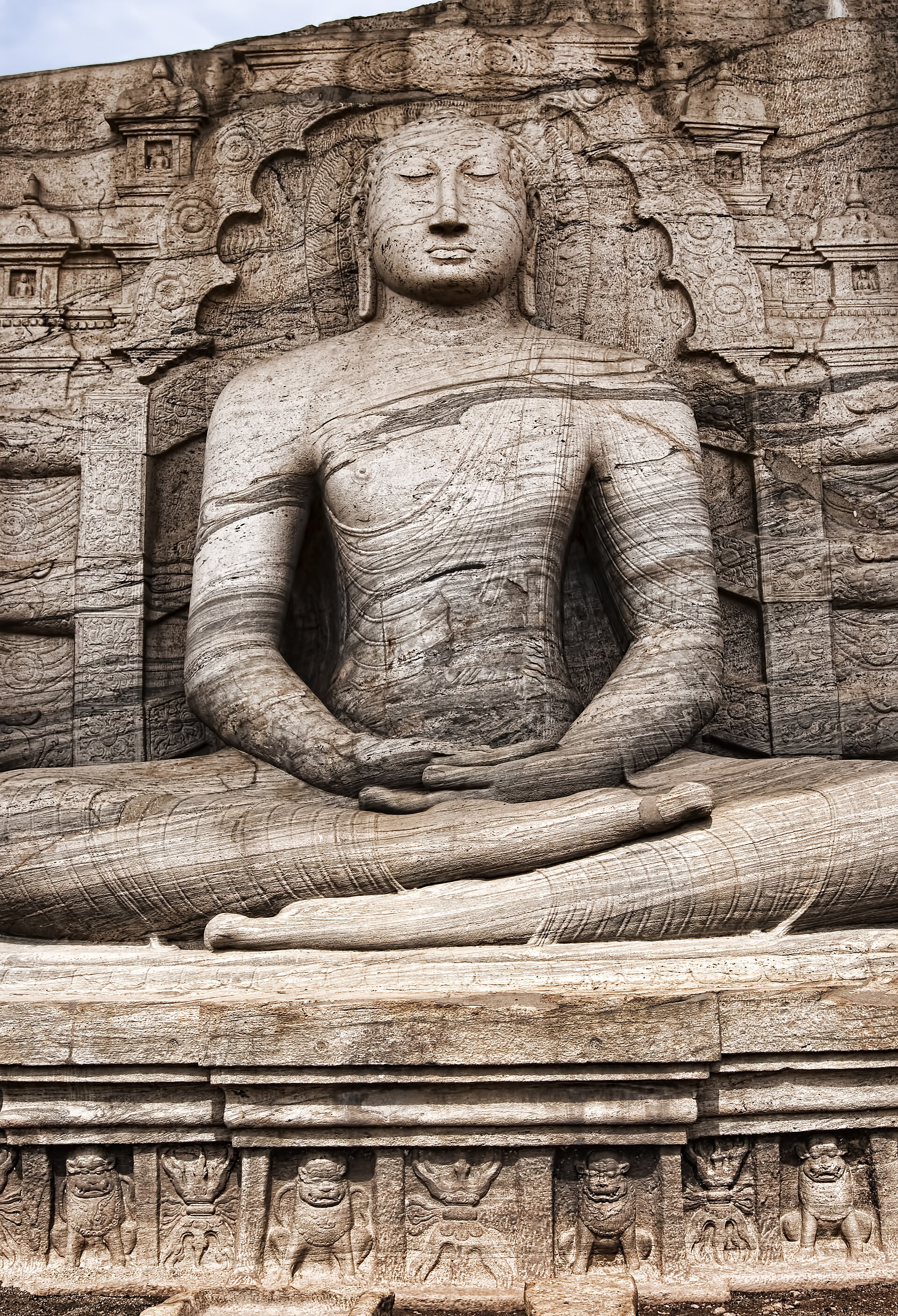
The ancient city is one of the best-preserved archaeological sites in South Asia, and it is the most rideable of Sri Lanka’s capitals. The Royal Palace of King Parakramabahu, the Vatadage circular relic house, the Rankoth Vehera stupa and the Gal Vihara — four Buddha statues carved directly into a single granite rock face — are not ruins in the dusty sense. They are structures that have stood for nearly a thousand years and still stop people mid-sentence.
The review data shows exactly what guests keep coming back to. “View” appears in 1,518 Polonnaruwa reviews, “clean” in 1,108, “breakfast” in 1,012, “friendly” in 833, “host” in 812, “food” in 721, “lake” in 502 and “bike” in 306. That keyword pattern tells the whole story of a good Polonnaruwa stay: a lake view, a spotless room, a breakfast worth waking for, a bike to ride to the ruins, and a host who makes it feel personal. Guests write about cycling between monuments under the shade of ancient trees, watching the light change over Parakrama Samudra at dusk, and eating rice and curry at a family table rather than in a hotel dining room.
What surprises people most is how much there is beyond the ticket gate. The Parakrama Samudra reservoir — an engineering feat from the 12th century that is still irrigating the district today — borders the town and turns gold at sunset. And the area is the front door to Minneriya and Kaudulla National Parks, where the famous elephant gathering happens in the dry season.
3. What catches people off guard
Across the 5,238 Polonnaruwa reviews — including 403 that score below 6/10 — five patterns recur often enough to be worth knowing before you book.
The midday heat is the single most underestimated factor. The archaeological park is exposed, the shade between monuments is sparse, and travellers who start mid-morning consistently describe coming back exhausted and dehydrated. The ticket office opens at 7 AM for a reason: the light is spectacular, the temperature is manageable and the site is nearly empty. Ride before 10 AM or you will not enjoy it.
The photo-versus-reality gap is the biggest complaint in the budget tier. “Room” appears in 565 negative reviews and “old” in 97, with recurring reports of checking into rooms smaller, darker and more worn than the listing photographs suggested — sometimes in a different part of the property entirely. The smaller, family-run homestays match their photos far more reliably than the larger legacy hotels. Read recent guest-uploaded photos, not the gallery.
Touts at the entrance gate are persistent. Unofficial “guides” and tuk-tuk drivers cluster near the ticket counter and car park offering inflated tours, and some guests report being followed. The site is well signposted with informative tablets and the ticket includes museum access, so you do not need a guide — and if you want one, book the official Archaeological Department guide at the ticket counter itself, never from someone who approaches you in the car park.
Remote properties mean you are a captive diner. A number of the best-reviewed places sit genuinely out of town — beautiful, quiet, and with nothing within walking distance. Guests who didn’t realise this ended up paying property prices for every meal, or relying on the guesthouse kitchen every night. If you want to walk out for dinner, book within reach of the main road or in town.
Insect, mosquito and dampness complaints cluster in cheaper rooms. “Mosquito” appears in 87 negative reviews, alongside reports of bugs in hallways, damp smells and tired bathrooms. Polonnaruwa is a dry-zone town beside a reservoir, so mosquitoes are a fact of life — the properties that manage it well are the ones whose recent reviews mention nets, sealed rooms and maintained AC. Check that before you book the cheapest listing.
Watch the checkout bill. A small but repeated pattern in the data is surprise additions: an AC surcharge never mentioned at booking, a breakfast that was supposedly included being charged, laundry priced far above town rates. Ask what is included before you confirm, especially if the room rate looks unusually low.
4. Where the best of Polonnaruwa is
Polonnaruwa splits into three usable pockets, and your choice shapes the whole stay. The town and old-town strip puts you within walking distance of restaurants, shops and the museum, and closest to the archaeological park entrance — the practical choice for a short stay. The lakeside belt along Parakrama Samudra trades convenience for the setting that generates all those “view” mentions: sunrise over the tank, birdsong, and a five-minute ride to the ruins. The jungle and paddy-field fringe — where the standout properties sit — is the quiet, nature-first option, with monkeys and squirrels at breakfast and a genuine sense of escape, at the cost of needing a bike or tuk-tuk for everything.
The property-type data is emphatic here, and it echoes what we found on Dambulla: the small-scale tier outperforms the big hotels. Polonnaruwa’s top twenty properties by rating are almost entirely homestays, villas and small resorts — Sahan Tourist House (9.36 across 517 reviews), Wildescape Polonnaruwa (9.52 across 401), Man Guest Polonnaruwa (9.14 across 334), Tishan Holiday Resort (9.21 across 262), Sunrise Lake Resort (9.53 across 182) — while the larger hotels sit lower in the table on inconsistent maintenance and service. Spend your money at human scale here and the satisfaction data rewards you.
5. When to visit Polonnaruwa
Polonnaruwa sits in Sri Lanka’s dry zone, so it is a genuinely year-round destination — but the experience shifts sharply by season. The dry season runs roughly May to September, when the ancient city is at its most comfortable and the nearby parks at Minneriya and Kaudulla host the elephant gathering, the largest wild Asian elephant concentration on earth. This is the best window for combining ruins with wildlife, but it is also the hottest — daytime temperatures push hard, which makes the dawn start non-negotiable.
December to March is the northeast monsoon window: greener landscapes, dramatic skies, and the most pleasant temperatures of the year for cycling, at the cost of occasional heavy afternoon showers and slightly muddier trails. For a general picture of how the island’s seasons interact, see our best-time-to-visit guide. The practical rule is simple: whatever month you come, ride the ancient city at 7 AM, rest through the middle of the day, and return for the lake at sunset.
6. Where to stay — top picks from real reviews
- Wildescape Polonnaruwa (9.52/10) — 401 reviews and the destination’s clear standout. A jungle-side boutique property where guests describe the service as “Michelin starred” and one visitor rated it “a 13 out of 10”. A pool, exceptional food, and staff who arrange Ayurvedic massages and safaris. Check availability → Wildescape Polonnaruwa
- Sahan Tourist House (9.36/10) — 517 reviews make it the most-reviewed high scorer in town. Guests praise big comfortable rooms, balconies for the evening breeze, reliable hot water and good-quality rental bikes for the ruins. Check availability → Sahan Tourist House
- Sunrise Lake Resort (9.53/10) — 182 reviews and the best lake-view stay in the data: guests write about watching the sunrise over Parakrama Samudra from bed, with a modern room and a nature-loving owner ten minutes from the ancient city. Check availability → Sunrise Lake Resort
- Tishan Holiday Resort (9.21/10) — 262 reviews of a quiet garden property with a large, immaculate pool, peacocks calling across the paddy fields, and a hands-on owner who arranges everything. A calm base with a tuk-tuk or short bus ride to the ruins. Check availability → Tishan Holiday Resort
- Man Guest Polonnaruwa (9.14/10) — 334 reviews for a family-run guesthouse overlooking rice fields, with bicycles for exploring the ancient city and breakfast served with a view of the paddy. Check availability → Man Guest Polonnaruwa
- HOTEL Pearl White Residency (9.79/10) — 153 reviews and the best-rated larger property in town, delivering clean, comfortable, well-run rooms for travellers who want hotel facilities without hotel inconsistency. Check availability → HOTEL Pearl White Residency
- Aroma Villa Homestay (9.64/10) — 53 reviews of warm, home-cooked hospitality where guests say the food and the hosts were the highlight of their stay. Check availability → Aroma Villa Homestay
- Geethani Tourist Home Polonnaruwa (9.16/10) — 191 reviews and a long-standing budget favourite with a genuinely friendly family at the helm and easy access to the site. Check availability → Geethani Tourist Home
The pattern is unmistakable, and it matches almost every other Sri Lankan destination in our data: the homestay, villa and small-resort tier is where the satisfaction lives, while the “hotel” label guarantees nothing about upkeep. Book by recent review quality, not by star rating or price band.
7. What it actually costs
Polonnaruwa is one of the better-value stops on the Cultural Triangle circuit, and the review data backs it up. Realistic figures for a mid-range traveller:
- Accommodation: US$15–30 a night for a well-reviewed private room with AC in a homestay or guesthouse; US$35–70 for the boutique and boutique-resort tier such as Wildescape or Tishan; US$80+ for the top lakeside properties. Breakfast is usually included at the homestay level.
- Meals: US$2–4 for a local rice-and-curry or breakfast; US$5–9 for a guesthouse dinner of seafood or curry with rice; US$1–2 for short eats. The standout properties’ in-house kitchens are often cited as the best value in town.
- The ancient city ticket: around US$25–30 for foreign adults and a fraction of that for South Asian visitors, covering the whole archaeological park and the museum. The ticket is genuinely valid for the day — keep it with you, as it is checked at individual monuments.
- Bicycle rental: US$2–4 for the day, and worth every cent — the single best way to see the site. Tuk-tuk day hire runs US$20–30 if you prefer the breeze.
- Safari to Minneriya or Kaudulla: US$30–50 per person for a shared half-day jeep safari, arranged through your guesthouse.
A realistic daily spend is US$35–60 per person for mid-range travellers including a safari, dropping well below US$30 if you are sleeping cheap and eating where the locals do. Budget US$100–150 for a two-night stay with ruins, a safari and meals.
8. Getting there and around
Polonnaruwa sits on the main eastern corridor, which makes it pleasantly easy compared to most of the island. From Dambulla or Sigiriya, the drive is roughly 1.5 hours and the classic Cultural Triangle route runs Anuradhapura → Sigiriya/Dambulla → Polonnaruwa. From Kandy it is approximately 3–3.5 hours by road, and from Colombo around 5–6 hours depending on the route.
By rail, Polonnaruwa has its own station on the Batticaloa line, with trains from Colombo taking roughly 5–6 hours and continuing east towards Batticaloa and the east coast — a useful link if you are routing onward rather than doubling back. Buses are cheaper and more frequent; the express services from Colombo and Kandy both stop in town.
Once you are there, a bicycle is the transport of choice. The archaeological park is flat, the roads between monuments are quiet, and the distances are comfortable — guests who rent bikes describe the ride itself as a highlight of the trip. For the lakeside, the parks and longer hops, tuk-tuks cost US$1–3 for short trips and around US$20–30 for a half or full day. Guesthouses almost always arrange bikes, safaris and drivers on request.
9. The bottom line
Polonnaruwa rewards travellers who give it a night and start it at dawn. The ancient city is the finest cycling experience in Sri Lanka, the Gal Vihara is arguably the best stone carving in the country, and the lakeside at sunset is the quiet moment most people remember longest. The data is clear about how to get the most from it: book in the homestay and small-resort tier that dominates the top of the ratings, arrive the night before, ride at 7 AM, skip the touts at the gate, and check the checkout bill. Do that, and Polonnaruwa stops being the stop between Sigiriya and Dambulla and becomes the Cultural Triangle highlight you tell people about. For the wider wildlife picture in this part of the island, our parks comparison will help you decide what to add.
Data: BYC.lk analysis of 5,238 verified guest reviews of Polonnaruwa properties, retrieved August 2026. Property-level averages, keyword frequencies and satisfaction distributions drawn from the full Polonnaruwa review corpus; ticket, safari and transport pricing reflects published 2026 rates.
Have a specific question about your Sri Lanka trip?
Ask BYC at byc.lk — free, honest, no upsell. Ever.
Ask BYC Your Question →