Colombo to Galle Train 2026: Times, Fares and Whether It Beats the Bus
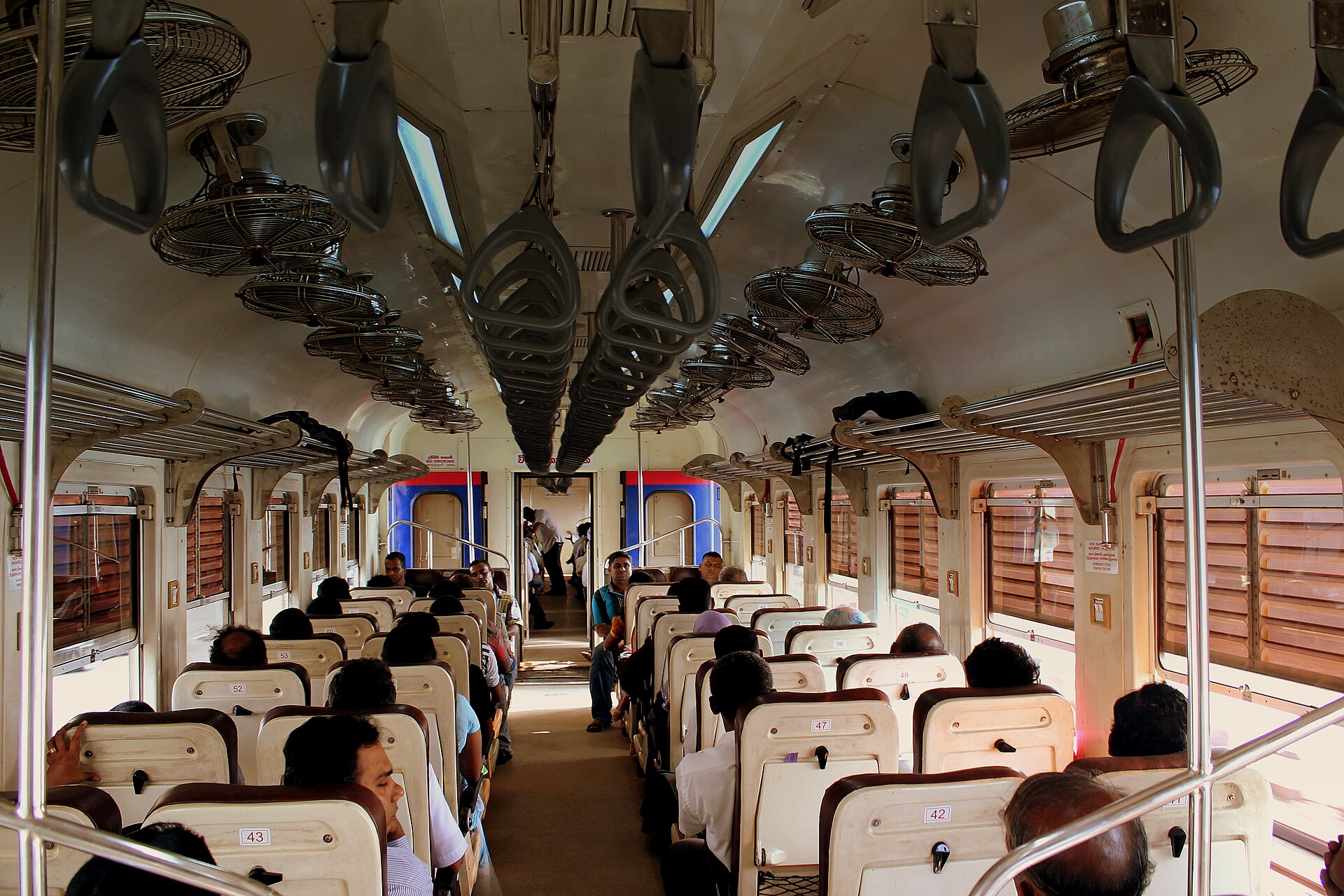
The train pulls out of Colombo Fort and within twenty minutes the city has given way to coconut palms, then to the sea. For most of the next two hours the track runs so close to the Indian Ocean that the surf is a few metres from your window. It is not the famous hill-country train — and that is exactly why it deserves more attention than it gets.
If you are heading south to Galle, the railway is one of the few genuinely great-value decisions on the island. Here is what the 2026 service looks like, what it costs, and when a bus or driver is the smarter call.
The short answer
Yes — the Colombo Fort to Galle train is running normally in 2026, with 11 services a day on a weekday. The fastest takes about 2 hours 7 minutes; the average is around 2 hours 37 minutes. A second-class ticket costs roughly 300 to 600 LKR ($1 to $2), which makes it the cheapest comfortable way to reach Galle, and first class runs to about 1,200 to 1,500 LKR ($4 to $5). The catch is not the train. It is that the coastal line is a commuter railway as much as a tourist one, so afternoon and evening services fill with Colombo workers and unreserved carriages can be standing-room between Colombo and Kalutara.
What is worth doing
- Ride the sea wall between Mount Lavinia and Kalutara. This is the stretch that makes the coastal line special. The track is laid directly on the shoreline, and for roughly forty minutes the ocean is close enough that spray reaches the windows on a rough day. Sit on the right-hand side travelling south. It is the single best free view on the island and it lasts long enough that you will stop reaching for your phone and just watch.
- Get off at Mount Lavinia if you have a spare afternoon. Thirty minutes from Fort, Mount Lavinia has a long crescent of beach and the colonial-era Mount Lavinia Hotel above it. It works as a half-day from Colombo or a soft landing after a flight — the sea is swimmable December to April, and the sunset from the headland is a fine introduction to the island. Our Mount Lavinia guide covers the beach and where to eat.
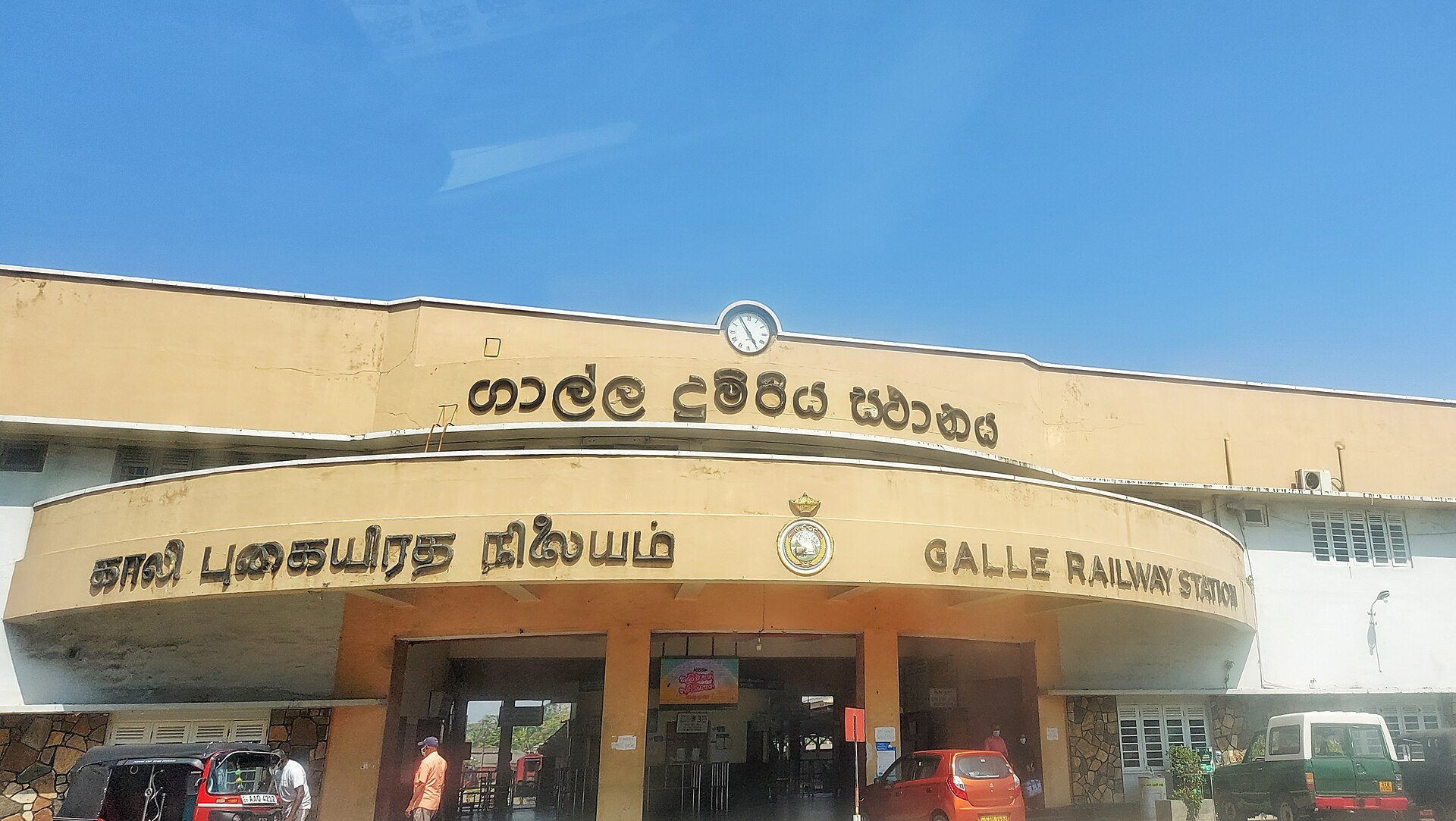
- Use Galle as a base, not just a photo stop. The train drops you a short walk from the Fort, which genuinely lives up to the hype: Dutch ramparts, a lighthouse, boutique shops inside centuries-old walls, and a sunset ramparts walk that costs nothing. Give it a full day and use Galle as the base for the beaches either side. Our Galle guide maps the Fort properly.
- Push on to Unawatuna, Weligama or Mirissa. From Galle station, tuk-tuks and buses run down the coast in fifteen to forty minutes. The train continues past Galle to Matara, so you can stay aboard and get off further south without changing transport — useful if your guesthouse is in Weligama or Mirissa, both near the line.
- Combine it with a stop at Hikkaduwa. Hikkaduwa is on the line, about an hour and a quarter from Colombo and forty minutes north of Galle — the easiest coral-reef and turtle spot to reach by train, and a natural way to split the journey into two short legs.
- Do the return trip at sunset. A late-afternoon train back towards Colombo, the sun dropping into the sea on your left, is a different experience from the morning run — worth timing deliberately if you travel the route only one way by rail.
Getting around
Where to board. Most Colombo–Galle and Colombo–Matara services start at Maradana before calling at Colombo Fort. Boarding at Maradana gives a much better chance of a seaward-side seat, since the train is near-empty when it starts. If Fort is more convenient, arrive early and walk down the platform — the front carriages fill last.
The timetable in practice. On a typical weekday there are 11 departures from Colombo Fort, from a first train around 06:50 to a last train around 19:30. Express services cover the distance in about 2 hours to 2 hours 20 minutes; the semi-express and stopping services take closer to three hours, and one evening service runs to three hours forty minutes. The 08:35 and 15:50 departures are the quickest of the day. Weekends and public holidays are more crowded and slightly slower.
Ticket prices (2026). Third class is around 180 to 200 LKR (under $1). Second class unreserved is about 300 LKR ($1), and second class reserved about 400 to 600 LKR ($1.25 to $2). First class, where a first-class car runs, is about 1,200 to 1,500 LKR ($4 to $5). There is no observation saloon here the way there is on the hill-country route — this is a working railway, and the classes are simpler.
Reserved versus unreserved. Reserved second class guarantees a seat and is the sensible choice with luggage or on a Friday, Sunday or holiday. Unreserved is fine mid-morning on a weekday. Third class is genuinely acceptable for a two-hour ride, but it is the carriage most likely to be standing-room.
How to book. Reserved seats can be booked up to 30 days ahead through the Sri Lanka Railways portal (seatreservation.railway.gov.lk), the official Railways app, or major station counters; unreserved tickets are bought on the day. Our train ticket booking guide walks through the portal step by step, including the OTP problem that trips up first-time bookers.
What to avoid. Avoid the 16:47 to 17:51 window if you can — that is peak commuter time out of Colombo. And do not confuse this line with the Main Line: the coastal railway does not run to Kandy, Nuwara Eliya or Ella. As our line status guide explains, the Main Line's Colombo–Kandy section is still being repaired in 2026.
What to budget
One of the pleasures of this route is how little it costs. Here is a realistic travel-day picture.
- Train ticket: 300 to 600 LKR ($1 to $2) second class. Add roughly 1,200 to 1,500 LKR ($4 to $5) only if you find a first-class car.
- Getting to Colombo Fort: a tuk-tuk from central Colombo is 500 to 900 LKR ($1.60 to $3); a local bus costs a few hundred rupees.
- Accommodation in Galle or the south coast: guesthouses $15 to $35 a night, boutique Fort properties $60 to $150, beach villas higher in the December-to-March peak.
- Meals: $3 to $6 for a rice-and-curry lunch or a local kottu, $10 to $20 for a Fort seafood dinner, $2 to $4 for breakfast.
- Activities: Galle Fort and lighthouse walks are free; a Mirissa whale-watching trip runs $25 to $40; a Weligama surf lesson $15 to $25; a tuk-tuk day around the coast $15 to $25.
- Getting around the south coast: local buses 50 to 150 LKR (under $1) per hop; a Galle–Unawatuna tuk-tuk is $3 to $4.
All-in, a comfortable day — mid-range guesthouse, three meals, a tuk-tuk or two and one paid activity — lands around $55 to $90 per person. A budget traveller on the train, local buses and street food can hold it under $30. See our 2026 Sri Lanka cost guide for how this fits a wider trip.
WATCH OUT FOR
The sea-view side is not obvious from the timetable. Travelling south, the ocean is on the right-hand side; on the return leg it flips to the left. Board early and choose deliberately, or you may spend two hours facing inland.
Some resellers charge a large markup for the same seat. The identical reserved seats are available through the official portal and at station counters for a fraction of those prices. The only real case for an agent is if the official portal is failing you — which, given the OTP quirks, does happen. Expect a modest handling charge, not a doubled fare.
The Fort is not the beach. Galle Fort is a walled town with no safe swimming beach inside the ramparts. Book a Fort hotel expecting sand and you will be taking a tuk-tuk fifteen minutes to Unawatuna. Decide which you want before you book.
Afternoon and evening trains are commuter trains. On weekdays, services after about 16:30 carry Colombo workers home down the coast — busy enough that standing with a backpack for two hours is a real possibility. Take a mid-morning train if your schedule allows.
The waves are not always for beginners. The south coast has strong currents and seasonal swell. The calm, swimmable window is broadly December to April; outside it the sea can be rough and several beaches have dangerous rips. Swim where locals swim or where a lifeguard is present. Our monsoon and season guide explains which coast is in season when.
Do not assume the train reaches every beach. The line serves Colombo, Mount Lavinia, Kalutara, Hikkaduwa, Galle and Matara, among others — but many of the south coast's best-known beaches are a bus or tuk-tuk ride from a station. Plan the last leg rather than expecting to step off the platform onto the sand.
GOOD TO KNOW
The coastal line runs all year, so unlike the hill-country route it is not affected by mountain weather. The best time for the south coast itself is the December-to-April dry season, when the sea is calm; the June-to-September south-west monsoon brings rain and bigger surf to exactly this stretch, so plan the beach half of your trip around it.
Weekday mid-morning is the sweet spot: fewer commuters and the best chance of a seat on the seaward side. If you are booking a reserved seat, do it as soon as the 30-day window opens for travel on a Friday, Sunday or public holiday — Sri Lanka's full-moon Poya days are public holidays and the trains are noticeably busier.
Buy unreserved tickets on the day and keep cash handy — card payment at smaller stations is unreliable. Keep your ticket: inspectors walk the carriages.
Allow more time than the timetable suggests at both ends. Colombo Fort is a large, busy station, and at Galle the walk from the platform to the Fort gate is ten to fifteen minutes on foot. Coastal trains can run ten to thirty minutes late, so do not build a tight connection onto your arrival, and choose reserved second class if you have a large suitcase — unreserved luggage space fills quickly.
WHERE TO STAY
The train delivers you to Galle, and the south coast around it is where the island's best-reviewed stays cluster. Across more than 16,000 Galle reviews and 8,000 Hikkaduwa reviews in our guest corpus, a handful of properties stand out for consistency rather than for a single lucky season. Book the Fort side if you want the walled town on foot, or the beach side if you want to wake up to the surf.
- Olinda Galle (Galle) — A Fort-area favourite scoring 9.76 across nearly 600 reviews. Guests repeatedly single out the staff and the calm, well-kept rooms, and it is the kind of place where the team helps with the small logistics — tuk-tuks, restaurant bookings, onward plans — that make a short stay easy. A reliable first choice for the Fort.
- Ginganga Lodge (Galle) — Scoring 9.82 on 265 reviews, this is the pick for travellers who want green and quiet just outside the town. The lodge sits in a garden setting, and reviewers describe it as a peaceful base within easy reach of the Fort and the beaches. Good for couples and anyone who wants to retreat from the heat at the end of the day.
- The Sun House (Galle) — A restored colonial house in the Fort at 9.65 across around 200 reviews. This is the choice for character: high ceilings, antiques, and a courtyard, with guests praising the atmosphere and the sense of staying somewhere with history rather than a generic hotel room.
- The Residence Hikkaduwa (Hikkaduwa) — The standout of the south coast on our data at 9.95 across more than 300 reviews. It is the natural stop if you want to break the rail journey at Hikkaduwa for reef snorkelling and turtles. Guests consistently rate the service and the rooms at the very top of the region.
- Riff Hikkaduwa (Hikkaduwa) — A larger beachfront property at 9.59 on close to 600 reviews, and the volume favourite here. Its location directly on Hikkaduwa's beach makes it the easy pick if the sea is the main event. Book well ahead for the December-to-April window.
Before you reserve anywhere on the coast, our what to know before visiting Galle guide covers the Fort-versus-beach trade-off and the practical details most listings leave out.
The bottom line
The Colombo to Galle train is one of the last genuinely cheap thrills left on a travel route this well known. For the price of a coffee in most cities you get two hours of ocean, a city that rewards a proper stay, and an arrival a short walk from one of Asia's finest old towns. Take the mid-morning service, sit on the seaward side, and let the coast do the rest.
Last updated: September 25, 2026. Timetable and fares are the 2026 figures from Sri Lanka Railways; check the official portal before travel as schedules can change.
Plan your south coast trip with BYC at byc.lk — free, honest, no upsell. Ever.
Have a specific question about your Sri Lanka trip?
Ask BYC at byc.lk — free, honest, no upsell. Ever.
Ask BYC Your Question →