How to Book Whale Watching in Sri Lanka — What 363,148 Reviews Show
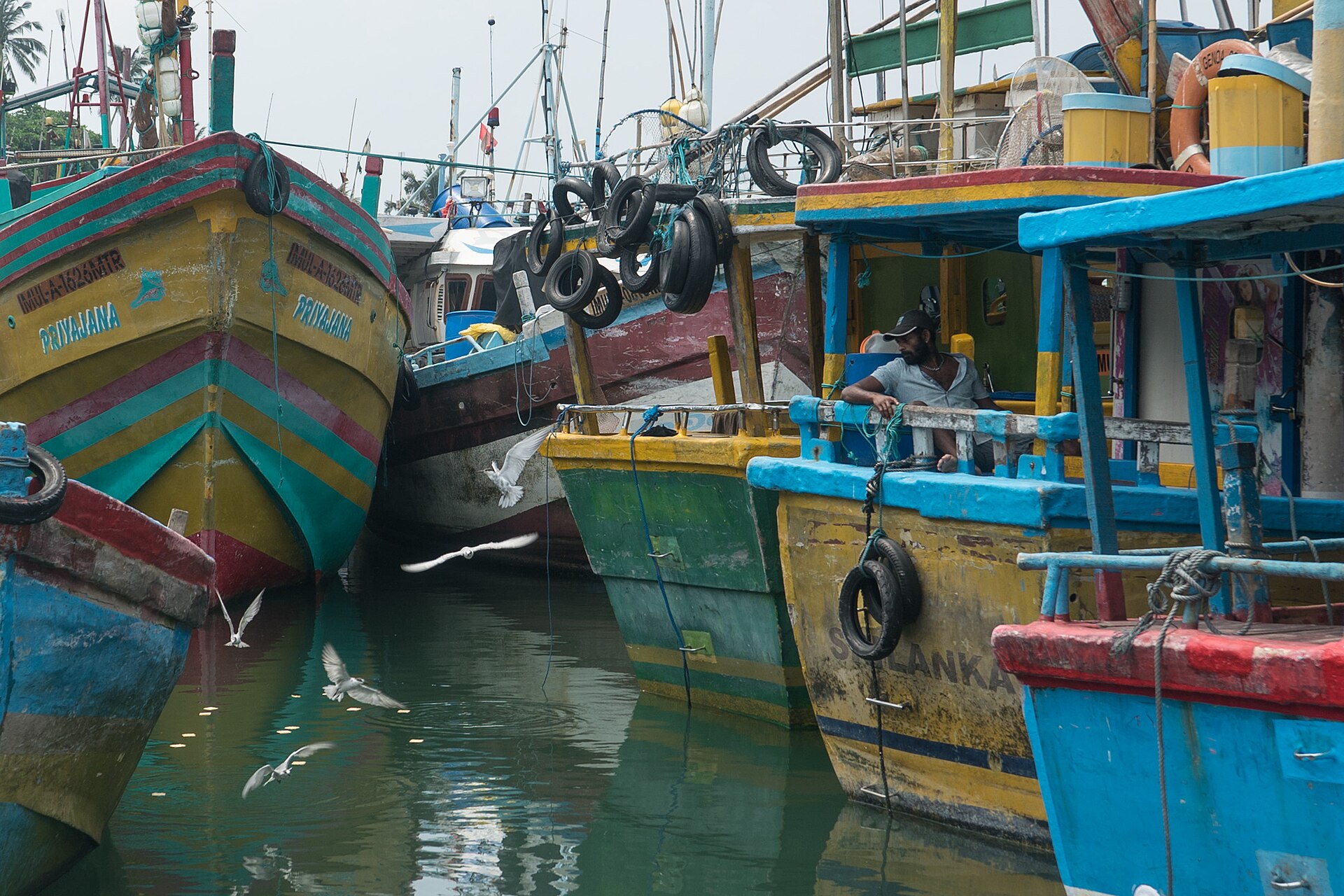
The alarm goes at 5:40am in Mirissa and you are standing on a concrete quay in the dark, holding a paper wristband and a plastic bag with two slices of bread in it. Around you, thirty other people are doing the same. Nobody has told you which boat is yours. A man is shouting a number in Sinhala. Somewhere out past the breakwater, the biggest animal that has ever lived is surfacing every eight to ten minutes — and at this moment that feels entirely theoretical.
Almost every traveller who does this trip does it the same way: they research the whale, the season and the coast, and then hand the actual booking to whoever is standing nearest. Across 378 guest reviews that mention whale watching in our corpus of 363,148, 207 of them (55%) describe the place they were staying arranging the trip — booking it, driving them to the harbour, holding breakfast back until they return. The whale is why people come. The morning is what people write about.
The short answer
Book the whale trip through your accommodation, not at the harbour, and book it before you arrive or on your first evening — then confirm three things in writing: the departure time, whether the price includes harbour fees and pickup, and what happens to your money if the boat does not sail or no whale is found. In our data the group of guests whose stay arranged the trip averages 8.85/10 against 8.45/10 for those who mention the trip without their stay arranging it, and the share rating it 9 or 10 rises from 72.5% to 82.6%. That is not proof that one booking channel is better than another — the two groups are self-selected, and the ones praising a host are already happy guests. It is proof that the part of the morning your host controls is the part that most often goes right or wrong. Get that part sorted and the whale is the easy bit.
What's worth doing
- Ask your host, not the beach. The single most repeated story in the corpus is a host doing something small and unexpectedly well: a 5.45am tuk-tuk to the harbour, a breakfast plate covered and kept warm, a packed bag of fruit and a bottle of water, a room held past checkout so you can shower when you get back damp. One guest recorded their host “offered me a late breakfast when I returned”; another described a breakfast package being handed over before dawn; another was allowed a late checkout specifically because the whale trip ran long. 21 reviews describe this kind of flex around the trip — a small number, but it is the difference between a good morning and a wiped-out day.
- Go on your second morning, not your first. Arriving on an overnight flight and boarding a boat at 6am is how people end up seasick and miserable. Give yourself a full night in Sri Lanka, then sail. It also gives you one evening to watch the sea from the beach, which is a genuinely useful forecast.
- Take the smaller boat, even at a higher price. You are paying for distance from the animal and room to move. A boat with twenty passengers lets you stand at the rail; a boat with sixty means you watch the whale over somebody's shoulder. Ask the capacity in numbers, not adjectives.
- Book the morning that leaves first. Seas are calmest at dawn and the light is best for spotting a blow. Almost every operator runs 6:00–6:30am departures and returns by 10–11am, which leaves the whole rest of your day intact — beach, breakfast, sleep, or the drive to Ella.
- Bring the boring things. Reef-safe sunscreen, a hat with a chin strap, a dry bag, and motion-sickness tablets taken 30–45 minutes before boarding. Sit towards the back if you are prone to queasiness; there is less pitch there.
- Pair it with the afternoon you are already near. From Mirissa the rest of the day is Coconut Hill at sunset and a seafood dinner on the sand. From Nilaveli it is Pigeon Island snorkelling, fifteen minutes by boat. A whale morning plus either of those is one of the best single days the island offers.
Getting around
To the harbour. In Mirissa, the harbour is walking distance from most of the village — guests repeatedly mention stays a three-minute walk from the boats, which is worth more than it sounds at 5:40am. If you are further out, a tuk-tuk to the harbour costs LKR 500–1,000 (USD 2–4) and your host will usually book it the night before. Do not plan to find a tuk-tuk on the street at that hour; the drivers who work that shift are booked by guesthouses.
Getting to Mirissa itself. From Colombo, a private car via the Southern Expressway takes about 2.5 hours and costs USD 80–100; the public bus from Colombo Fort runs 3.5–4 hours for LKR 400–600 (USD 1.50–2). From Galle or Weligama, a tuk-tuk costs LKR 500–2,000 (USD 2–7). The coastal train is scenic and slow — 3.5–5 hours, LKR 400 second class.
Getting to the east coast. Trincomalee and Nilaveli are 260 km from Colombo: five to six hours by private car (USD 100–130), six to seven hours by public bus (LKR 500–800, USD 2–3), or the overnight train from Colombo Fort. Whale and dolphin boats leave from Trincomalee harbour and from Nilaveli, where several guesthouses own or share boats.
What to avoid. Do not accept a trip sold on the beach at a discount with no paperwork, and do not pay a deposit to anyone who cannot tell you the boat's name. If you are quoted a price at the harbour on the morning, assume it does not include the harbour fee and the pickup, both of which often appear at check-in. Ask for the total, in rupees, before you hand anything over.
What to budget
Prices below are 2026 figures. The trip itself is the one line where shopping around actually pays, because it is a single large purchase with real range.
| Line | Realistic 2026 cost | Notes |
|---|---|---|
| Shared whale boat, per person | USD 35–80 | Includes breakfast and pickup in most cases; confirm harbour fee |
| Private charter, whole boat | USD 200–400 | Worth it for 6+ people; splits to roughly shared-boat prices |
| Harbour / entrance fee | USD 10–20 | Sometimes extra, sometimes included — ask which |
| Tuk-tuk to harbour | USD 2–4 | Often free if your host arranged the trip |
| Guesthouse double, Mirissa | USD 25–50 | AC, breakfast included; doubles in December–March |
| Boutique beachfront, Mirissa | USD 80–150 | Book 6–8 weeks ahead for peak season |
| Rice and curry, local spot | USD 1.50–3 | Lunch, generous, everywhere |
| Beachfront dinner | USD 5–10 | Grilled fish rarely exceeds USD 8 with sides |
| Scooter rental, per day | USD 7–10 | Bring an IDP; helmets are compulsory |
A realistic day, per person. A budget traveller doing one whale trip and otherwise eating locally spends USD 60–90: room USD 30, food USD 15, boat USD 40, local transport USD 5. Mid-range with a boutique room and two restaurant meals lands at USD 120–180. The whale morning is roughly half the day's spend, which is why it is the line worth getting right. Families should note that children are usually half price on shared boats, and that a private charter is often the cheaper option for four or more.
WATCH OUT FOR
The boat that is “cancelled” because it never left. In our data, the clearest pattern among the handful of genuinely bad whale-trip stories is a morning that collapsed at the quayside with an explanation that did not hold together — a pickup that did not come, then an announcement that the trip was off because there were no whales, then no alternative, no refund and no way to check. One guest described exactly this sequence and rated their stay 1/10, which is the only place in the corpus where the trip alone takes down an entire review.
The out-of-season trip still on sale. The worst version of this mistake is a boat sold in the shoulder weeks when sightings are genuinely poor. Whale presence around Sri Lanka moves with the coasts: the south coast season runs roughly November to April with December–March the reliable core, and the east coast takes over May to October. An operator running in the gap is not necessarily dishonest, but the odds are not in your favour — and nothing spoils a 6am start like a four-hour search that finds nothing.
The promise nobody can keep. No ethical boat guarantees a whale. A “100% sighting” promise is a signal about the operator, not the animals — it usually means they will keep the engine running and keep chasing. Ask instead what the success rate has been this month, and what happens if nothing is found. The honest answers are “most mornings, but not all” and “a second attempt, not a refund”.
The crowded fleet. One guest in Nilaveli counted “50+ boats chasing a pod of dolphins” on their trip. It is not the norm everywhere — the east coast generally runs a much smaller fleet than Mirissa — but if your idea of the morning is watching animals behave normally, ask how many boats the operator expects to share the sighting with. If the answer is vague, ask again.
The single-digit sample trap, which we are as guilty of as anyone. Only 5 reviews in the whole corpus describe the boat or the sighting itself going wrong — too few to build a failure rate from, and we are not going to pretend otherwise. These are descriptions of patterns, not a percentage. The thing that does have a large sample is the arranging pattern at the top, and that is why the advice leans on it.
Your own morning. Do not book the trip on your departure day. Boats return around 10–11am, wet and tiring, and a 5:40am start plus a suitcase is a bad combination. Whale morning, slow afternoon, travel the next day.
GOOD TO KNOW
Which coast, which month. This one decision does more for your sightings than any operator choice, and it is entirely in your control. In our corpus, whale-mentioning reviews come overwhelmingly from the south coast — 193 from Mirissa alone, 21 from Weligama — with the east coast represented by 46 from Trincomalee and 35 from Nilaveli. Those are mentions, not trip counts, but they map cleanly onto where people actually go in which months: south from November, east from May.
The east coast quietly scores higher. Among whale-mentioning reviews, Mirissa averages 8.50/10 across 193 reviews, while Trincomalee averages 8.96 and Nilaveli 9.23. The sample is much smaller on the east coast and the two are not measuring the same months, so read this as a hint rather than a ranking. The probably-real reason is simple: fewer boats on the water and a ten-minute run to deep water instead of a longer one.
Get the refund rule before you pay. The rule that matters is not the one for “no sighting” — it is the one for “boat does not sail”. Rough seas and mechanical problems are the realistic cancellation scenarios, and they should produce a refund or a free move to another morning without an argument. Ask which. If the answer is a shrug, book elsewhere.
Dress for water, not for the beach. Open boats, spray and a two-hour return leg. A dry bag for phone and camera is the single most useful item you can bring, and a light rain shell earns its place more mornings than you would expect.
Late November is opening time, not peak time. Seas in the first weeks of the south-coast season are variable, improving as December arrives. Hold your trip to the end of your stay rather than the beginning, so a blown morning can be rebooked.
WHERE TO STAY
These are stays where guests repeatedly credit the accommodation with making the morning work — not the cheapest, and not a ranking of the island. All figures are from our review corpus.
Era Holiday House (Mirissa, 9.83/10 from 168 reviews) — Guests describe the owners booking the whale trip and then driving them down to the harbour first thing. One family noted their whale trip was booked through the house at a lower price than they had been quoted elsewhere, and arrived back to a breakfast waiting.
D Canal House (Mirissa, 9.63/10 from 397 reviews) — A small, garden-set property where the team organises trips and transport, and where guests returning from a whale morning describe breakfast being held back for them. The pool is the thing most reviews lead with, which matters more than it sounds after four hours on open water.
Mimoza Mirissa (Mirissa, 9.35/10 from 543 reviews) — Three minutes' walk from the whale boats, which is the single most useful feature a Mirissa stay can have at 5:45am. Multiple guests mention a late breakfast arranged for their return and onward travel sorted at the same time.
Coco Mount Mirissa (Matara side, 9.68/10 from 164 reviews) — The family here handles the whole excursion end to end and hands you breakfast when you get back, an hour after normal service. Guests describe being looked after to the point of being moved to another guesthouse when the rooms were full.
Blu Marine Nilaveli (Nilaveli, 9.53/10 from 572 reviews) — The east-coast option, fifty metres from the beach, where the team arranges whale and Pigeon Island trips including pickup, and where one recent guest specifically noted “no hidden charges” on the boat price — the exact thing this article has spent 1,500 words telling you to ask about.
The bottom line
The whale is not the hard part. The hard part is a 6am departure, a filled breakfast plate, a harbour fee nobody mentioned and a boat that may or may not sail — and every one of those is arranged, or not, by whoever you booked the room with. Choose the stay that has done this a hundred times, ask the three questions, and the morning takes care of itself.
Then it is just you, a calm sea, and eight minutes of waiting for the next blow.
If you have not yet decided which coast to be on, that is the decision to make first: the honest verdict on whether the trip is worth it covers season against coast, and what to know before visiting Trincomalee explains the east-coast alternative that scores so well in our data. On the south coast, Mirissa vs Unawatuna vs Weligama shows which base puts you closest to the boats at 5:40am. If your dates are settled, November is when the south-coast season opens. And for the rest of the budget, the 2026 cost guide is the price check.
Planning your whale morning? Ask BYC at byc.lk — Free and honest. Some links are affiliate links and never change our advice.
Have a specific question about your Sri Lanka trip?
Ask BYC at byc.lk — Free and honest. Some links are affiliate links and never change our advice.
Ask BYC Your Question →