South Coast Sri Lanka in September & October: Is the "Monsoon" Really That Bad? (2026 Review Data)
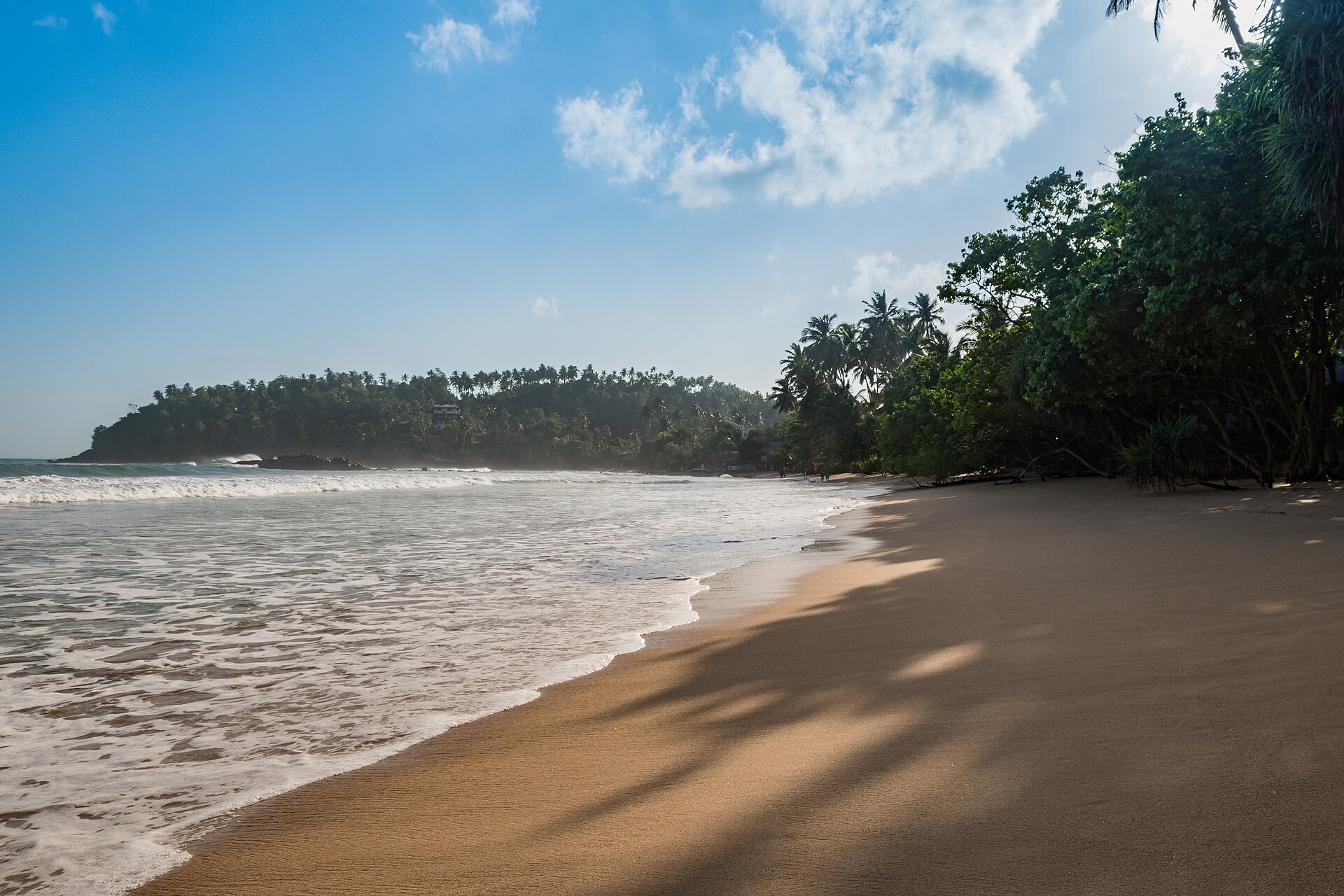
No — do not cancel your September or October trip to Sri Lanka's south coast. Travel there in the shoulder season and you get half-empty beaches, rooms at 30–40% off peak, and rain that behaves like an afternoon interruption rather than a washout. What you give up is beach-lounging reliability and the party scene, not the trip. The single honest caveat: you cannot plan a beach holiday around the sea — the waves are big and the currents strong, so swimming is often out. Go for the culture, the empty cafes, the photo-friendly green landscape and the value; treat the beach as scenery, not a swimming pool.
That is the short version of a debate that plays out on travel forums every September, and it splits travellers cleanly in two. One camp insists the “rain” in the apps is a myth — clear mornings, one downpour in the early afternoon, cleared by evening, and the best-value weeks of the year. The other camp arrives to wild seas and grey skies, feels the beaches are unusable, and wonders what they were promised. Both are telling the truth. The difference is what you came for.
This is a question we can answer with evidence rather than vibes. Across our database of 353,633 real guest reviews, 74,712 are from the south-coast belt — Mirissa, Unawatuna, Galle, Weligama, Hikkaduwa, Tangalle and Bentota. We counted how that review volume moves through the year, read what shoulder-season guests actually wrote, and checked it against the seasonal mechanics. Here is the full picture.
Last updated: September 18, 2026.
The short answer
September and October are the value season on the south coast, not the dead season. Our review volume from the south-coast belt drops to its annual low in June (509 reviews) and stays thin through September (737) and October (781), against December’s 1,497 and February’s 1,774. A thinner season means fewer people, softer prices and staff with time for you — reviewers write about having beaches “more or less to yourself” and hotels where “there were almost no other guests.”
The trade-off is the sea, not the sky. The southwest monsoon is retreating through September and the inter-monsoon brings rain into October, but the practical pattern in reviews is a clear morning, a wet spell in the afternoon, and an evening that clears. Guests who came for culture, forts, food, tea country and quiet beaches rate their trips highly; guests who came to swim and lounge in the sun sometimes go home disappointed. Match your expectations to the season and the south coast in September or October is one of the smartest-value trips in Asia.
Notice what the data is not saying. This is not the rainy-season wasteland the weather apps imply, and it is not the sun-drenched peak either. It sits in between — and in between is where the bargains live.
What’s worth doing — and what to skip
Shoulder-season travel on the south coast rewards a different itinerary from the peak season one. The activities that shine now are the ones that do not depend on a flat, swimmable sea.
- Galle Fort — the standout shoulder-season day. The Dutch-era ramparts, the lighthouse, the museums and the cobbled lanes are at their best when the tour groups have thinned out. Rain barely touches a fort day: you duck into cafes, boutiques and galleries and carry on. Reviewers rate Galle highly across the year, and the town’s charm is weather-proof in a way a beach is not.
- Whale watching from Mirissa (November onward, book for late October carefully). The season formally opens around November, when the seas calm and blue whales and dolphins return to the continental shelf. Early-season trips are possible but the water can still be rough, and cancellations are common — if whale watching is your priority, lean towards mid-November rather than early October.
- The hill country, which is arguably better now. The tea estates around Ella and Nuwara Eliya look greener and more atmospheric in the mist, and the waterfalls run fuller. One traveller captured it perfectly: the highlands in the rains look “better, not worse.” It is also markedly cooler than the coast, which is a mercy in humid weather.
- Temples, tea factories and the interior. Kandy’s Temple of the Tooth, the tea-factory tours and the Cultural Triangle run largely independent of coastal weather, and they are quieter and cheaper than in peak season.
- Lagoon and river boat trips. Calm lagoons and river channels — around Bentota, Balapitiya and Tangalle — work on days when the sea is too rough, and reviewers repeatedly describe these as highlights, with boat rides, mangroves and birdlife.
- Cafes, food and the local rhythm. This is genuinely the season to eat well and slowly. Restaurants have space, kitchens have time and the seafood is superb. The shoulder months are when the south coast feels like a place people live rather than a resort strip.
- Skip: sunbathing and swimming as a plan. Be honest about this one. Reviews from September and October are full of the same note — “swimming is not possible in the off-season due to the very strong currents,” “the sea was too wild to swim.” Strong rips make the water dangerous for casual swimming, and flags and lifeguards are inconsistent. Enjoy the beach as scenery, use hotel pools for swimming, and you will be far happier.
Getting around
Transport is easy in the shoulder season precisely because the crowds are gone — you can often decide your next move the day before, which is impossible in December.
- The coastal train. The Colombo–Galle line hugs the sea for much of the route and is a genuine highlight; the famous near-the-water stretch south of Colombo is worth timing. It is slow, cheap and scenic, and in the quiet months you can usually get a seat. For the full picture, see our airport-to-Galle train guide.
- Private driver or taxi. For door-to-door flexibility — and for staying dry on a wet afternoon — a private car is the most comfortable way to move between coastal towns. Budget roughly US$10–25 for a short coastal hop and more for longer legs; apps like PickMe and Uber cover the larger towns.
- Tuk-tuks for short hops. Agree the fare before you get in. Outside the main towns there is no meter, and this one habit prevents most of the arguments travellers report.
- Getting between coast and interior. Galle and Mirissa to the hill country is a half-day by road. In the shoulder season, roads are quieter, though rain can slow the mountain sections — build in a little slack.
What to budget
This is where the shoulder season earns its reputation. Accommodation is the big saving; food and transport are cheap all year.
- Accommodation: the headline saving. Travellers describe the shoulder months as offering 30–40% off peak rates, and it shows in what you get for your money. A room that costs US$80–150 in peak season can run US$50–90 now, and genuinely good boutique stays that sell out in December are bookable at short notice.
- Meals: a rice-and-curry plate or a street-food meal is US$2–5; a proper restaurant meal US$8–15; a seafood dinner on the coast US$10–20. Hotel breakfasts are usually included.
- Transport: a private driver runs roughly US$50–70 a day including fuel; short tuk-tuk hops are a few dollars; the coastal train is almost nothing.
- Activities: temple and fort entries are modest; whale watching is roughly US$40–60 per person; a lagoon boat trip is a similar range.
- Contingency: keep US$150–300 for a wet-weather change of plan — a night in a nicer hotel, a taxi instead of a walk, an extra umbrella.
Put together, a comfortable day on the south coast in the shoulder season — a good room, three meals and a taxi or two — runs roughly US$70–120 per person, which is a fraction of what the same trip costs in peak season. The value is the whole point.
WATCH OUT FOR
- The sea is the real hazard, not the rain. Strong currents and large surf in the southwest monsoon make casual swimming dangerous. Reviews from this season are unusually consistent about it: the sea was “too wild to swim,” swimming “not possible.” Swim in your hotel pool, watch the water from the sand, and never ignore a red flag — where there is one.
- Afternoon rain is the daily pattern — plan around it. The common rhythm is a clear morning, a downpour for an hour or two in the early afternoon, and clearing by evening. Front-load outdoor plans into the morning, keep afternoons for forts, cafes, museums or a nap, and you will rarely lose a day.
- Weather apps exaggerate. Forecast apps show a rain icon for almost every day and scare people into cancelling. Travellers who went anyway repeatedly say the app “scares you a lot” and the reality was fine. Treat the forecast as a probability, not a verdict.
- Humidity is genuinely high. One blunt review of the season was simply “way too humid.” Pack light, breathable clothing, expect damp laundry, and prefer accommodation with good air-conditioning.
- Some businesses close. A minority of cafes, bars and guesthouses shut for the off-season, and the beach-party scene on the south and west coast winds down. Most places stay open, but check before you set your heart on a specific venue.
- Train lines and road works. Post-monsoon, some hill-country rail sections can be disrupted. Check the current status before you build a journey around a specific train, and have a road alternative in mind.
GOOD TO KNOW
- Pick your coast by month. The island has two monsoons, so “best time” only means something once you have chosen a coast. If a warm, swimmable sea is non-negotiable for late September or October, the east coast and the dry-zone interior are the better bet; the south coast is the value-and-culture choice.
- Shoulder season is a fantastic time for the south coast’s towns. Galle, Mirissa and the smaller fishing villages are at their most relaxed, and travellers describe the emptiness warmly — “very chill, there aren’t any tourists.”
- Book the good places anyway. In September and October you can usually book at short notice, but the best-reviewed boutiques still fill on weekends and around holidays. A little lead time gets you the room you actually want.
- Carry layers for the interior. The hill country is cool and can be genuinely cold at night in the rains. A light jacket earns its place in your bag.
- Bring a proper rain shell and dry bag. A compact umbrella and a dry bag for your phone and camera turn a wet afternoon from a nuisance into a non-event.
- Expect a different kind of beautiful. The shoulder season is green, dramatic and misty. Photographers often rate it above the peak-season glare — the trade is that you photograph the weather as well as the view.
- Match your base to the season. Consider a couple of nights on the coast and several in the hill country or Cultural Triangle, where the weather is at its best and the value is just as strong.
WHERE TO STAY
Properties below are drawn from our review data — positive shoulder-season and off-season mentions only, with the review-backed reason each earns its place. All are strongly rated for the quiet months.
- Hikkaduwa — Serendipity Lake. Rated near-perfect, with guests writing that they visited in “off-season” when “it wasn’t busy” and the team still arranged massages and boat trips on request. A well-run west-coast stay that handles the quiet season gracefully.
- Hikkaduwa — Riff Hikkaduwa. A September favourite: a “beautiful and quiet sandy beach” with panoramic sea views from the pool, and an honest review note that swimming is out in the off-season because of the currents — exactly the expectation-setting this season needs.
- Galle — The Fort House. A Fort stay reviewers call excellent value in the off-season, perfectly placed next to the Cargills supermarket and the fort’s lanes — ideal for the weather-proof Galle day.
- Bentota — Thaala Bentota. Guests who “arrived during the offseason where there are less guests” were greeted with a traditional drummer and lamp-lighting ceremony — a reminder that attentive service often improves, not suffers, when the crowds thin.
- Mirissa — Paradise Beach Club. A superb shoulder-season base right on the beach, with reviewers on October stays praising the location, pool and gardens and the roughly five-minute walk to everything.
- Weligama — Tinara River Inn. One of the highest-rated small stays in the entire south-coast dataset, consistently praised for warm hosting and comfort — a calm base in the quiet months.
The bottom line
Do not cancel your September or October trip to Sri Lanka’s south coast — just plan it for the right reasons. The data is clear: this is the value season, with review volume at its annual low, rooms at 30–40% off, empty beaches and unhurried service. What you cannot count on is a warm, flat, swimmable sea — the monsoon swell makes the water rough and often unsafe, and that is the one expectation you must drop before you fly. Come for Galle Fort, the green hill country, the food, the temples and the sheer quiet; plan your days around a clear morning and a wet afternoon; and the south coast in the shoulder season will give you one of the most affordable, most atmospheric, least crowded trips you could take. The forecast will look bad. The trip will not be.
For the wider picture, see our Sri Lanka in September guide and Sri Lanka in October guide, compare coasts in our east coast vs south coast by month breakdown, read the full south coast travel guide, and pick your base with Mirissa vs Unawatuna vs Weligama, our Galle guide and the what to know before booking Mirissa piece.
Have a specific question about your Sri Lanka trip?
Ask BYC at byc.lk — free, honest, no upsell. Ever.
Ask BYC Your Question →