What to Pack for Sri Lanka: A 2026 Packing List That Works for Families
Three weeks in Sri Lanka, two small children, one suitcase each — and a forecast that keeps saying "heavy rain." It is the moment every family trip starts: standing over an open suitcase, wondering what earns its place. The good news, from 300,000+ guest reviews of real trips: Sri Lanka rewards the light packer, and almost everything you forget can be bought locally for pocket change.
The short answer
Pack for two climates and one attitude: light, layered, and ready to buy the rest locally. A family of four should aim for under 30 kg of luggage — one large soft bag or two medium ones, plus a daypack per adult. The non-negotiables are few: insect repellent, a light rain jacket each, one warm layer for the hills, sturdy sandals, sunscreen, a universal adapter, and a baby carrier if you have a toddler. Everything else — sarongs, mosquito coils, laundry, even nappies — is available locally for a fraction of the price at home. Pack for the coast's heat, the hills' chill, and the honest possibility of rain, and you will use every item.
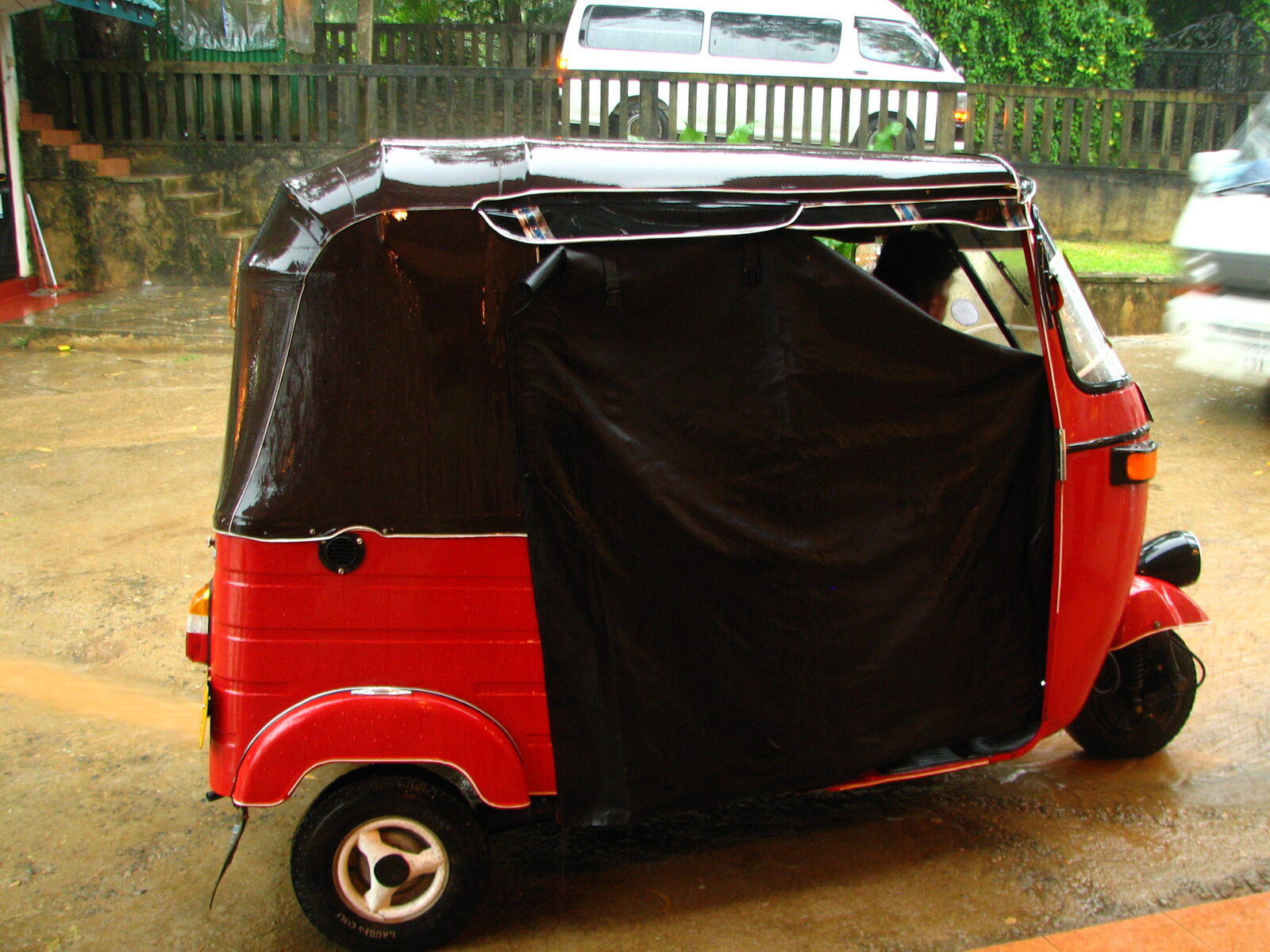
Rain is part of the deal in monsoon season — a tuk-tuk driver sheets up before a shower. Photo: McKay Savage, CC BY 2.0, via Wikimedia Commons
What's worth packing
- Insect repellent — the single most-mentioned item in our review data. Mosquitoes come up in thousands of guest reviews, from beach bungalows to jungle lodges; the consensus is blunt: bring repellent. A DEET-based lotion (30% is plenty) for skin plus a plug-in or coil for the bedroom beats anything at the resort gift shop. Dawn and dusk are the bite hours; repellent on before dinner, not after.
- One warm layer per person — non-negotiable for the hill country. Nuwara Eliya and Ella sit above 1,000 m and nights drop to 10–15°C. Time and again reviewers write some version of "I hadn't realised it gets cold at night in the hills." A fleece or light puffer plus long trousers fixes it.
- A light rain jacket each and one dry bag. October is Sri Lanka's inter-monsoon: showers arrive fast and leave fast, the south-west getting the heaviest of it. A packable rain shell beats an umbrella (hotels lend those too), and a 10-litre dry bag protects phones, passports and kids' spare clothes on boat trips and waterfall hikes.
- Sturdy sandals and one pair of proper walking shoes. The classic combo: quick-dry sandals for beaches and towns, grippy trainers for Sigiriya's 1,200 steps, Little Adam's Peak and temple courtyards. Flip-flops are a hotel-room luxury, not a sightseeing plan.
- Sunscreen — bring your own, because choice is thin and prices are high. Pharmacy shelves stock it, but the SPF range is limited and a bottle runs $8–15 — double the price at home. Sunburn through cloud cover is a classic mistake; tropical UV is fierce even under grey skies. Bring a full-size bottle per adult, plus a kids' formula.
- A universal adapter and a power bank. Sri Lanka uses Type D, G and M sockets at 230 V / 50 Hz — UK-style three-pin G is most common in hotels, but round-pin D appears too. A universal adapter covers all three. The power bank is for long train rides and safari days.
- Modest clothing for temples — one sarong solves it. Temples require covered shoulders and knees, and it is hot. A sarong weighs nothing, costs $2–5 from any market stall, and doubles as a beach wrap, towel, picnic blanket and breastfeeding cover. Buy one on day one and you are dressed for every temple in the country.
- The kids' medicine kit — the one thing not to improvise. Bring children's paracetamol suspension, oral rehydration sachets, a thermometer, plasters and any prescription medicine in original packaging. Pharmacies are everywhere and pharmacists are excellent, but brands differ — do not spend your first afternoon hunting for a familiar fever syrup.
- A baby carrier — yes; a stroller — maybe. The carrier wins: temples have steps, Galle Fort has cobblestones, trains have gaps, and Sigiriya is a climb. A carrier works everywhere; a stroller works at beach resorts and paved promenades only. If you bring one, make it cheap and foldable — it will stay at the hotel most days.
- Snacks and comfort items for the kids. Familiar biscuits, a favourite small toy and a tablet loaded with shows save the day on the 7-hour Kandy–Ella train and long transfers. Sri Lankan food is wonderful but spicy — a hungry, tired child does not care about culinary authenticity at 6 p.m.
Getting around
You will move between four or five bases over three weeks, and how you pack decides how pleasant the trip is. The hill-country train (Kandy to Ella, about 7 hours) is the highlight, but luggage space is genuinely small: racks above the seats and a cramped end-of-carriage area. Two soft bags travel fine; a hard-shell suitcase is a stress you do not need. Book ahead — the observation car sells out — and board early for rack space.
Most families use a private driver ($50–65 per day, fuel included — see our driver guide) or self-drive (from $25–35 a day). Short hops are tuk-tuk territory: $1–3 for most town rides, and drivers happily fold a stroller or balance a bag on the seat. Airport to Negombo is 20 minutes ($10–15 by taxi or app ride). What to avoid: long bus journeys with kids and luggage — buses are cheap, fast and not stroller-friendly — and any hill-country driving after dark, when unlit roads, mist and rain make the switchbacks risky.
What to budget
Daily costs for a family of four in 2026 sit comfortably in the $130–200 range for a mid-tier trip, excluding flights:
- Accommodation: $60–120 per family per night. Family rooms in guesthouses and homestays from $25–40; mid-range hotels and resorts $60–120; top-end family suites $150+. The homestay tier — where the reviews are warmest — is the sweet spot for families.
- Meals: $35–60 per family per day. Rice and curry at a local restaurant is $3–5 a plate and the best food in the country; a family dinner with drinks runs $15–25. Western-style cafes in Ella and Mirissa cost more.
- Activities: $30–80 per family per day, averaged. Temples and viewpoints $5–10; a safari $40–60 per adult; whale watching $30–50; the scenic train a couple of dollars. Kids are free or half-price at most sights.
- Transport: $25–60 per family per day. A private driver is the big line item but removes all logistics; tuk-tuks are pocket change.
- Shopping for what you forgot: cheap. Sarong $2–5; mosquito repellent $3–6; a packet of nappies (30) $8–12; laundry service $2–5 a load at most hotels — you can pack for five days and wash weekly, which is the real packing secret.
WATCH OUT FOR
- Monsoon rain is real — respect it, don't fear it. In August 2026 the hill country has seen serious flooding, with schools closed across the tea districts and road washouts in places. In the wet window (roughly May–September on the south-west, October–November island-wide), check Disaster Management Centre alerts and ask your hotel about road conditions before long hill-country legs. The east coast — Trincomalee, Passikudah, Arugam Bay — stays largely dry through October and is the smart wet-season base.
- Mosquitoes in the room, not just outside. A recurring theme in the review data is the room with a mosquito problem the property did not solve. Bring your own repellent and a plug-in; do not assume the hotel provides one.
- The hill-country chill catches people off guard. Packing only for tropical heat is the most common mistake in the reviews. Nuwara Eliya nights are genuinely cold — reviewers say so repeatedly, often grateful for a heater they did not expect to need.
- Temple dress codes are enforced. Shoulders and knees covered, shoes off, hats off. A man in shorts will be turned away at the Temple of the Tooth — politely, but turned away.
- Sunburn through clouds. Overcast days in the tropics still deliver strong UV. Reapply; the kids especially.
- Power can flicker. Load-shedding is rare in tourist areas in 2026 but not extinct in the deep south and east — a power bank and headlamp cover the worst of it.
- ATM fees and card surcharges. Many ATMs charge a withdrawal fee and some shops add a card surcharge. Carry a mix of cash and card, with small notes for tuk-tuks and market stalls.
GOOD TO KNOW
- Nappies are easy to find — in the towns. Food City, Keells and Cargills stock them in Colombo, Negombo, Kandy, Galle and Ella, but sizes and brands vary. Bring enough for the first 2–3 days plus any rural legs, then restock at the big stores. Wipes, formula and baby food are similarly available in the main towns.
- Laundry is cheap and fast. Most hotels and guesthouses wash clothes for $2–5 a load, often same-day. Pack for five days and rotate — reviewers consistently call this the best packing decision they made.
- Get an eSIM before you land. Data is cheap and coverage is good; a tourist eSIM means no SIM-hunting at the airport with tired kids (see our eSIM guide).
- Breastfeeding in public is fine. Sri Lanka is family-oriented and nobody will blink; feeding rooms are rare, so a sarong or light cover makes you comfortable anywhere.
- Book the train and key hotels ahead in peak season. December–March fills up and the observation car sells out days ahead. In October you will have more room, but the train still books out.
- Cash is king in the countryside. Cards work in Colombo, Kandy and Galle; smaller towns are cash-only. Withdraw in the cities.
- Pharmacies are everywhere and pharmacists are excellent. They can supply most non-prescription needs; just bring prescriptions in original packaging.
WHERE TO STAY
These five family favourites span the classic three-week route, and each earns its place from what guests actually say:
- Villa Dominikku, Negombo — 9.8 from 600+ reviews. Reviewers call the welcome "the warmest welcome to Sri Lanka," with clean, spacious air-conditioned rooms and an abundant homemade breakfast from the host family. Land, sleep, and start the trip properly — it is 20 minutes from the airport.
- Golden Rock Retreat, Sigiriya — a perfect 10.0 from 400+ reviews. Both Lion Rock and Pidurangala are reachable on foot, with bikes free for guests — no dawn taxi scramble with small children. Guests rave about the family owners, the fruit trees, and "a truly authentic and delicious Sri Lankan meal."
- Fern Hill Cabins, Ella — 9.8 from 400+ reviews. One family review says it all: the kids loved the hammock and the projector movie night while parents soaked in the valley views from the cabin. Family-run, spotless, and the breakfast gets named in review after review.
- Neem Tree House, Yala — 9.4. A reviewer who stayed "as a family of five" praises the three en-suite bedrooms, the clean, well-kept pool and hosts who could not do enough. A calm, private base before or after the safari — exactly what tired children need.
- Coco Mount Mirissa, Mirissa — 9.9 from 140+ reviews. "The best stay in all Sri Lanka: rooms are huge and well cared for, the family that runs it is wonderfully attentive, and the breakfast was the best of the trip." Beach minutes away, and the south coast's family-friendly pace to finish on.
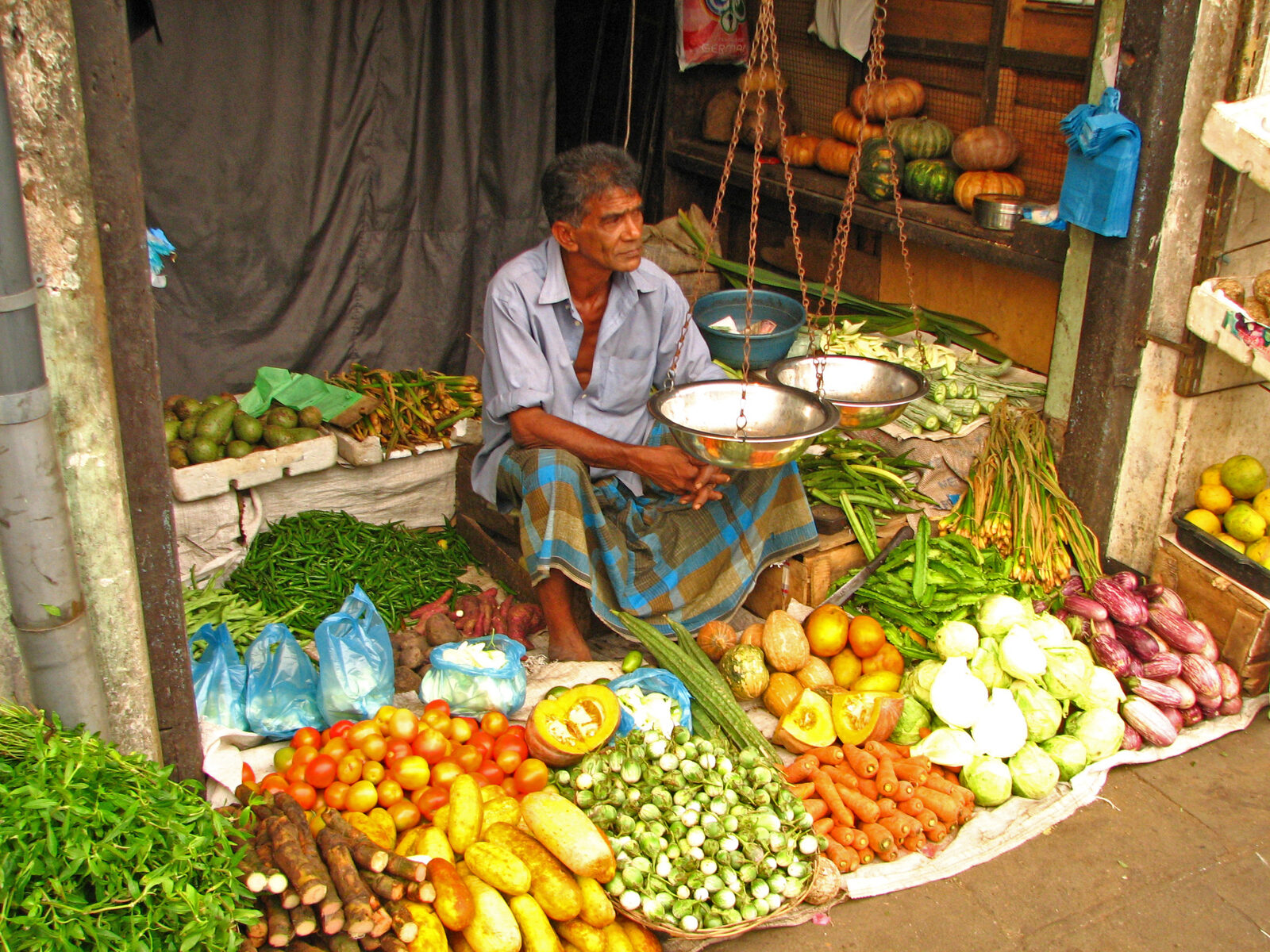 A Kandy market stall — nearly everything you forget, you can buy here for less than you think. Photo: McKay Savage, CC BY 2.0, via Wikimedia Commons
The bottom line
Pack light, pack layers, and trust the island for the rest. Sri Lanka in 2026 is one of the easiest countries in Asia to travel with children — the food is fresh, the people are warm, and every town has a supermarket, a pharmacy and a laundry. The trip is not about what is in your suitcase; it is about what you do with it unpacked. Zip up, leave space, and go.
Have a specific question about your Sri Lanka trip?
Ask BYC at byc.lk — free, honest, no upsell. Ever.
Ask BYC Your Question →