Hotel Construction Noise in Sri Lanka: How to Spot It Before You Book
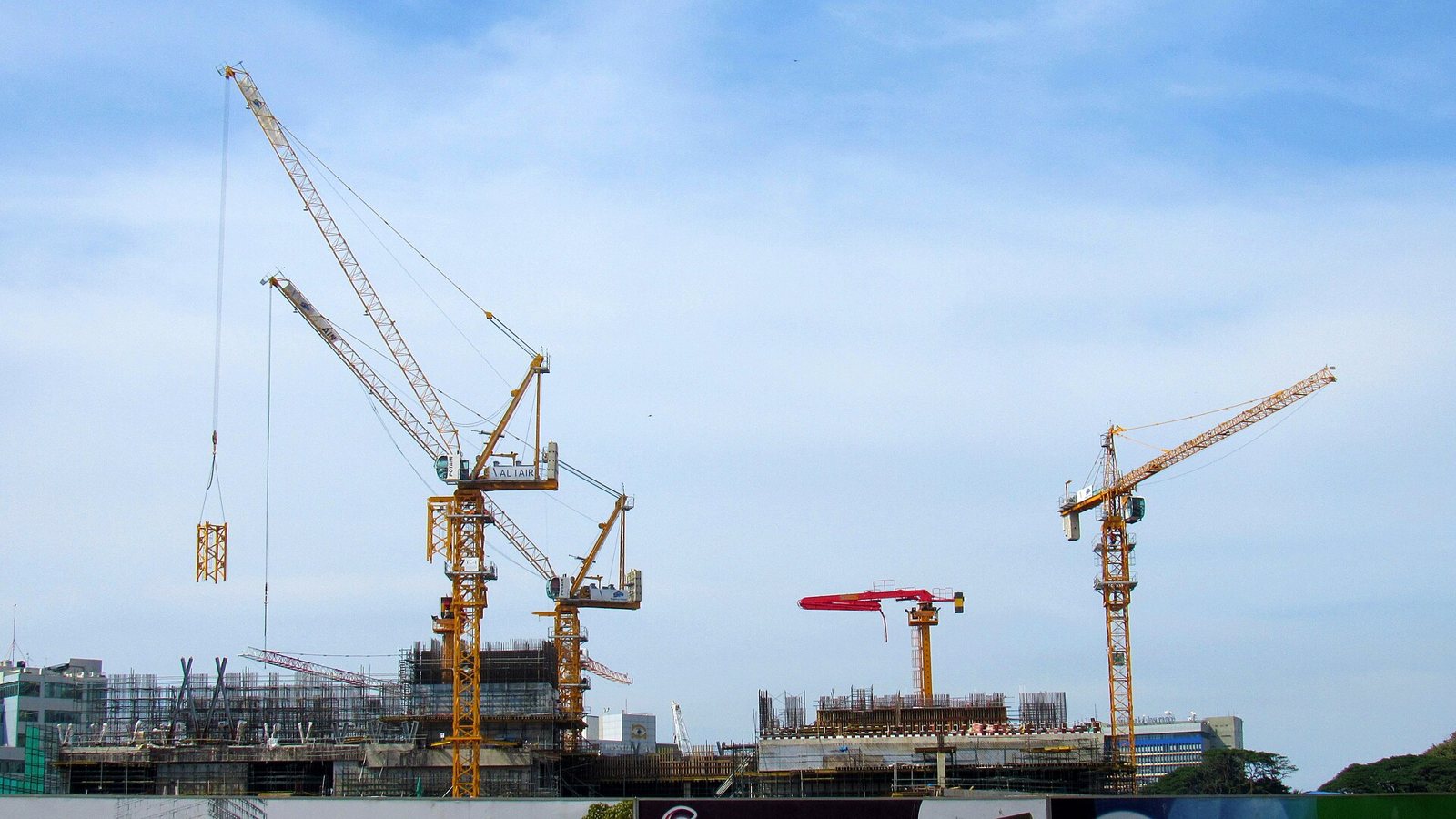
You booked the balcony. The photographs were taken before the scaffolding went up. You arrive at four in the afternoon, the driver turns off the main road, and the first sound you hear is a hammer above your head. Nothing has gone wrong with the hotel exactly — the room is clean, the family is kind, the breakfast is what everyone promised. But the thing you actually paid the extra money for has been taken away, and nobody told you.
That is the most specific, most repeated disappointment in the Sri Lanka hotel data. Across the reviews that mention building work, renovation, construction or drilling, guest scores collapse by almost three points compared with everything else in the corpus. And the collapse is not really about noise. It is about being surprised.
Last updated: November 17, 2026. Review figures are drawn from BYC’s own corpus of 363,148 scored guest reviews of Sri Lankan properties; transport and accommodation costs are 2026 estimates and should be confirmed locally.
The short answer
In Sri Lanka, building work at or next to tourist accommodation is not an occasional bad-luck story. It is a standing condition of travel, and the way to survive it is to ask about it directly at the moment of booking and to buy the flexibility to walk away.
Guests who mention renovation or construction in their reviews score their stay 5.95 out of 10, against 8.64 for the corpus as a whole — a gap of 2.69 points. Two in five of those reviews score 4 or below, against 6.7% across everything else. But the review text itself is clear about where the anger sits: not at the hammering, at the fact that nobody said beforehand that hammering was going to be part of the holiday. Reviews that explicitly complain they were not warned average 2.42 out of 10 — among the lowest-scoring sentences in 363,148 reviews.
So the useful question is not “which hotels in Sri Lanka are under construction right now.” It is “how do I find out before I pay, and what do I do when I’m already there.” That is what the rest of this page answers.
What’s worth doing
- Ask the question that cannot be answered vaguely. “Is there any building work within sight or earshot of this room right now?” beats “Is the hotel finished?” every time. The second invites a yes/no about the hotel’s own frontage; the first covers the empty plot next door, the villa going up across the valley and the new wing one floor above yours. Ask it in the platform message thread so you have it in writing, and ask it again for the specific room type you are booking — two rooms in the same property can have completely different exposure.
- Read the low reviews as a near-dated signal, not as a verdict. A construction mention in a review from three months ago is worth more than every glowing review since. Filter to 1–5 scores, sort by newest, and read only the last ninety days. This is the single highest-yield five minutes in trip planning, and our region risk data shows how differently it pays off in different parts of the island.
- Prefer properties with a small room count and an owner on site. It is not sentiment. A twelve-room guesthouse with the owner living downstairs has one building project at a time and a personal incentive to move you. A large resort has capital works running in phases and a front desk following a policy. When research for this page looked at properties with 200 or more reviews scoring 9.8 and above, the ones with no construction complaints at all were overwhelmingly small, owner-run places — including the specific properties listed further down.
- Book the room type you actually want, then confirm the room number outcome. The worst-documented version of this problem is not noise at all: it is paying for the room in the photographs and being walked to a temporary room because the photographed one is being rebuilt. If the view is the reason for the booking, say so in one sentence in your booking message — “we have booked specifically for the balcony view; please confirm the room has one and is not facing works” — and keep the reply.
- Give yourself a same-day exit. On a two-week trip, one bad night is a footnote. On a single-night stopover in Colombo, it is the whole stay. The practical fix is to make the first and last night of any trip the most flexible part of the booking, and to keep at least one night of the itinerary on a free-cancellation basis throughout.
- Photograph the problem while you are there. Dust on the balcony chairs, scaffolding outside the window, the window that will not shut. A booking platform, an insurer or a card issuer all respond to dated images and a written complaint made the same day, and almost nobody does it — which is precisely why the complaints that do exist are so bitter.
Getting around
Your exposure to building work follows the shape of your route, so it is worth knowing where the island is currently loud.
The hill country is the single most construction-heavy area in the data. In Ella, reviews mentioning construction appear at a rate of roughly 5.3 per thousand — more than double Colombo’s 2.6 — and the properties involved score 6.17 on average against an Ella baseline in the mid-8s. Kandy and Nuwara Eliya share the pattern; Galle and Colombo produce more renovation mentions per review than anywhere else. A hill-country town with a view, a steep access lane and a building boom is exactly where a new guesthouse appears next door to your balcony between one season and the next.
- Colombo city hotels: the corridor properties along Galle Road and around Fort are the most exposed, because hotel refurbishment cycles and new tower builds overlap. City hotels also tend to run works during the day rather than around guests, which is better for sleep and worse for a daytime nap. Two nights in Colombo is plenty; more than that, book the stay on value rather than on the view.
- Hill-country guesthouses: the highest risk in the corpus, and the highest reward when it is right. Many are family properties adding rooms on the same steep plot. Ask specifically about “new rooms under construction” and expect the honest answer to sometimes be yes.
- Beach towns (Mirissa, Unawatuna, Weligama): smaller new-build projects, but the noise travels in the off-season when the street empties and a single drill is the loudest thing in town. This is also where balcony-and-view bookings go wrong most often.
- Cultural Triangle (Sigiriya, Dambulla, Habarana, Polonnaruwa): the calmest of the mainstream circuits. Small cabana and homestay properties sit on land that is not being densified, and it shows in the data.
- Getting around: private driver for a day is roughly US$55–75; a tuk-tuk for a short in-town run US$2–4 (LKR 600–1,200); the Kandy–Ella train remains the cheapest scenic leg at under US$5 for second class. None of this costs more because of building work — but a bad first night does change the shape of a day, so keep one buffer morning in any hill-country stop.
What to budget
Building work does not change what a night costs. It changes what the night is worth, which is why the right response is to spend slightly more on flexibility rather than slightly more on luxury.
- Accommodation: guesthouses and homestays US$25–55; mid-range hotels US$60–120; boutique and hill-country view properties US$100–200. Expect to pay US$8–20 more per night for a free-cancellation rate — treat that as insurance, not as waste.
- Meals: US$4–8 for a local rice-and-curry lunch, US$10–20 for a mid-range dinner, US$2 for tea and short eats. A hotel breakfast you cannot enjoy because of noise is a real cost, so on a hill-country stop keep a backup breakfast option in town.
- Activities: safari jeep half-day US$40–60 per vehicle; Sigiriya US$35; whale watching US$30–45; a tuk-tuk day out US$25–35.
- Contingency: carry one night’s cost as a moveable reserve, roughly US$60–120. The single best use of that money is a same-day move to a second property, which is far cheaper than a ruined three-night booking and much cheaper than the version where you stay and seethe.
- Insurance and payment: pay by credit card where you can — card acceptance is good in hotels even where it is patchy elsewhere — and check that your travel insurance covers “uninhabitable accommodation” rather than assuming it does.
Watch out for
These are patterns, not accusations against individual properties. None of the properties named anywhere on this page is named for a construction complaint; the names further down are the ones that came through the corpus without them.
- “The photographs were taken before.” The most common trigger for a 3-out-of-10 review is a room whose real condition has diverged from its listing images — a new build added quickly, a temporary room rented while the photographed one is rebuilt, a balcony that now faces a wall of green mesh. Ask for a recent photo of the specific room, not the property.
- Hearing it only at check-in. “There is some work nearby, it will finish soon” delivered at the desk is the sentence behind most of the lowest scores in this dataset. If it is disclosed before payment, guests are remarkably forgiving; if it is disclosed after, they are not.
- Works that start at seven and finish at nineteen. Guests describe hammering, sawing and drilling running through the usable hours of the day, every day, including weekends. A property that tells you works run 09:00–17:00 has usually negotiated with its contractor; a property that says “just a few weeks” usually has not.
- Being moved to a cheaper room instead of out. A higher floor does not fix a construction site next door, and guests consistently report asking to move and being offered another room on the same side. Ask instead to be moved to a different aspect, and if that does not exist, ask to leave without penalty.
- Paint and chemical smells, not just noise. Fresh renovation carries solvents, and reviews describe throat and lung irritation in rooms recently painted. If you are sensitive, this is worth naming explicitly — it is easier to be moved for a health reason than for a noise complaint.
- Dust on the surfaces everyone forgets. Balcony railings, pool decks and outdoor bathrooms sit directly under construction dust. It is the most-frequently mentioned side effect after noise, and the easiest thing to check within a minute of arriving.
- The proud new “recently built” room. A rushed new build shows up as sockets that do not work, a door that will not lock, mosquitoes through gaps, and a shower that floods the floor. A room described as newly built is not automatically a room that has been tested by a guest.
Good to know
- Timing matters more than luck. Works cluster in the drier months of the west and south coast and in the run-up to the December–January high season, when owners want new rooms online. If you are travelling in November and early December, ask the question twice. A monsoon timing guide tells you which coast is wet; the same reasoning tells you which coast is being built.
- Weekday check-ins get better outcomes. Front desks have more room to move you on a Tuesday than on a Friday, and weekday opening rates for upgrades are better. If your arrival is fixed, arrive earlier in the day rather than later — before the housekeeping and room-move capacity is used up.
- Ask at check-in, not on arrival at the door. One line: “Before we settle in — is there any work going on at or next to the property this week, and does it affect our room?” Asking once, politely and immediately, is normal behaviour, and it establishes that you will notice.
- Write the complaint while you are still there. Same-day written messages to the property, with photographs, get resolved far more often than post-trip reviews. If the answer is no, ask for the refusal in writing — that message is what a card issuer or platform needs.
- Book direct for the last word on the room. A small property that handles its own bookings can confirm a room number. Where that is possible, ask for it explicitly.
- Treat a very good score with a small review count carefully. New properties with high averages and few reviews are often mid-build, with the new wing still to come. Depth of review history is not a guarantee, but it is evidence.
Where to stay
These are properties that carry substantial review histories in BYC’s corpus with no building-work complaints in the text. They are not a guarantee about this week — ask the question anyway — but they are the places where the risk is lowest and the surrounding experience is strongest.
- Golden Rock Retreat, Sigiriya — 9.98 from 487 reviews. Guests consistently name the outdoor bathroom and the walk to Lion Rock and Pidurangala as the reason the stay felt unusual; one described cycling from the property on the free bicycles to the rock and enjoying the ride as much as the destination. Coming through hundreds of reviews without a single construction mention in the Cultural Triangle is the strongest signal on this page.
- Still Waters Artistry, Negombo — 9.93 from 738 reviews. The most-cited reason is arrival: guests describe being met after midnight by a host who was waiting, and an unusually quiet plot close to the airport but not on the flight path. For a first or last night, that combination of quiet and proximity is what you want.
- Selyna Sky Terrace, Kandy — 9.80 from 368 reviews. Reviewers return to the same detail: breakfast on the terrace above the city, with the whole hill town laid out below. On a hillside where new buildings appear quickly, a terrace view at that scoring average across 368 reviews is worth noting.
- Green Nature Paradise, Ella — 9.88 from 244 reviews. In the most construction-heavy region in the corpus, this property’s reviews are about views, breakfast and the host driving guests into town rather than traffic. Guests repeatedly describe being treated with unusual generosity.
- Elegant Lake Yala Safari House — 9.91 from 685 reviews. Reviewers credit the host with arranging the safari and showing them the area, and the garden setting is named again and again. A quiet base for the park rather than a building site beside one.
If you want the broader shortlist, the value hotel ranking and the destination ranking by guest satisfaction both use the same corpus and the same method.
The bottom line
Building work is part of travelling in a country that is visibly improving itself, and the guests who handle it best are not the ones who avoid it — they are the ones who ask one direct question before they pay and keep the answer. Do that, hold one night’s budget as a moveable reserve, and the worst case becomes a story rather than a ruined week. Sri Lanka rewards that small amount of preparation with stays that people write about for years — and, on the evidence of these hundreds of thousands of reviews, in places quieter than you might expect.
Have a specific question about your Sri Lanka trip?
Ask BYC at byc.lk — Free and honest. Some links are affiliate links and never change our advice.
Ask BYC Your Question →