Is Kandy Worth Visiting? An Honest 2026 Answer From 26,772 Reviews
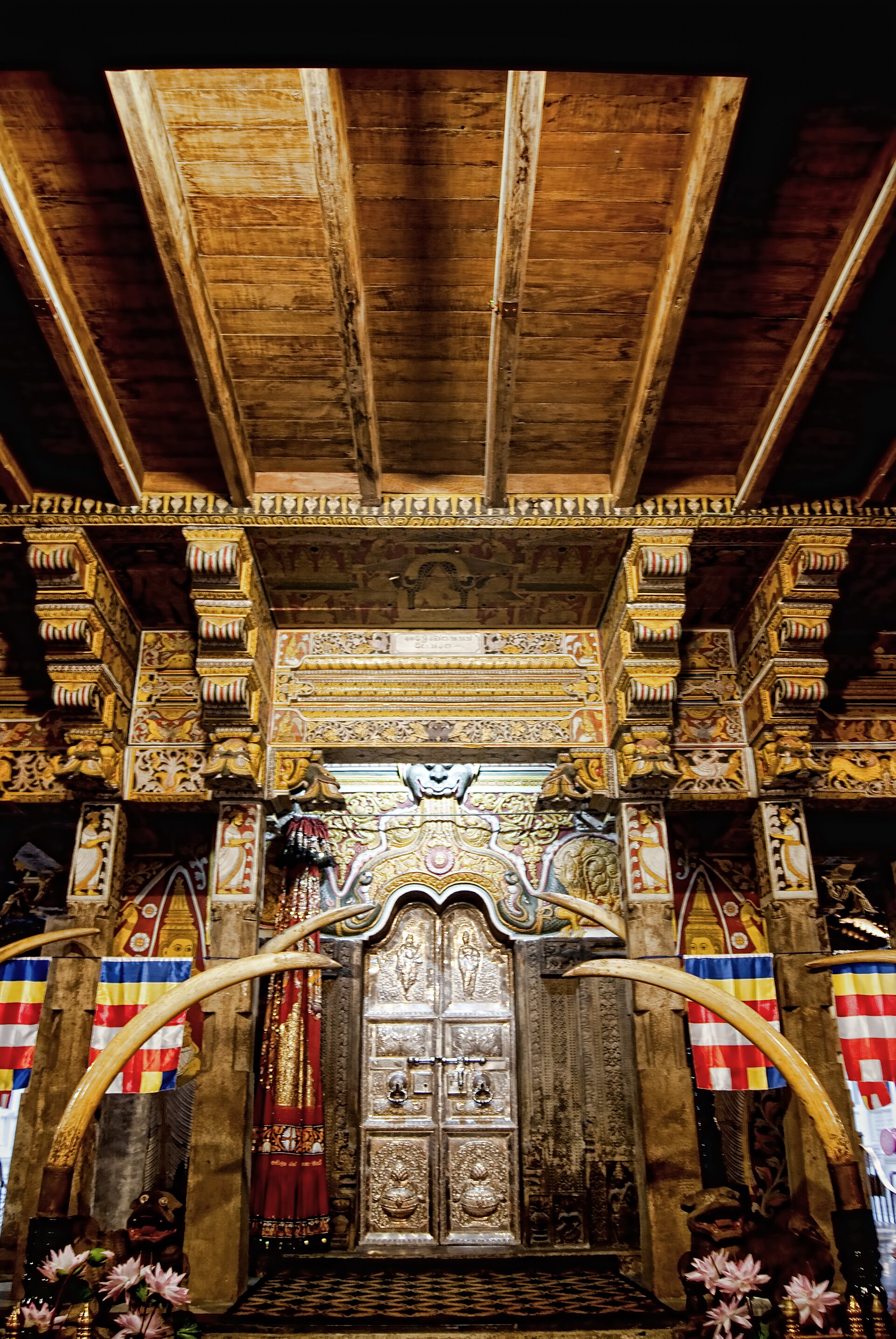
The train climbs out of the wet lowlands, the tea bushes start, and then the temperature drops five degrees in the space of a tunnel. You arrive in a city wrapped around a lake, ringed by hills, with drums echoing off the water at dusk. Kandy is the stop almost every Sri Lanka itinerary includes — and the stop almost every traveller describes differently afterwards. So is it genuinely worth the two nights, or is it a box you tick on the way to Ella?
We looked at how people actually write about Kandy after the fact, across 26,772 verified guest reviews in the BYC corpus. The pattern is clear, and it splits almost entirely on one thing: whether you came for the temple and the hills, or arrived expecting a beach town with a nice lake.
The short answer
Yes — Kandy is worth visiting, for two nights, as the cultural anchor of a hill-country trip. The Temple of the Tooth is the most sacred Buddhist site in the country and genuinely worth an evening; the lake walk and the hills above it give you the best sunset in the central highlands; and the surrounding day-trips — the Botanical Gardens, the tea country and the start of the famous railway — are all within easy reach. What Kandy is not is a beach or a resort town. It is a working city of 130,000 people with real traffic, a busy centre and a lake you admire rather than swim in. Guests who understood that scored the region 8.61 out of 10; the ones who booked it as a relaxation stop are heavily over-represented in the scores below 6. Come for culture and altitude, not for sand, and it earns its place on your route.
Our Kandy destination guide covers the nuts and bolts; this page answers the bigger decision — whether to stop, and for how long.
What's worth doing
- The Temple of the Tooth (Sri Dalada Maligawa), at evening puja. The reason Kandy exists as a destination, and the reason it is a UNESCO World Heritage Site. Go for the 6:30pm puja, when the drums start, the inner chamber doors open and the complex fills with worshippers carrying lotus flowers. Arrive 30 minutes early, dress modestly — shoulders and knees covered, shoes off — and give it a full two hours rather than a rushed one. The foreign-adult ticket was revised on 1 July 2026 to roughly LKR 3,000 (about USD 10), with a reduced rate of about LKR 2,500 for SAARC nationals, Thailand and Myanmar; locals enter free or nearly free. Cameras are charged separately inside.
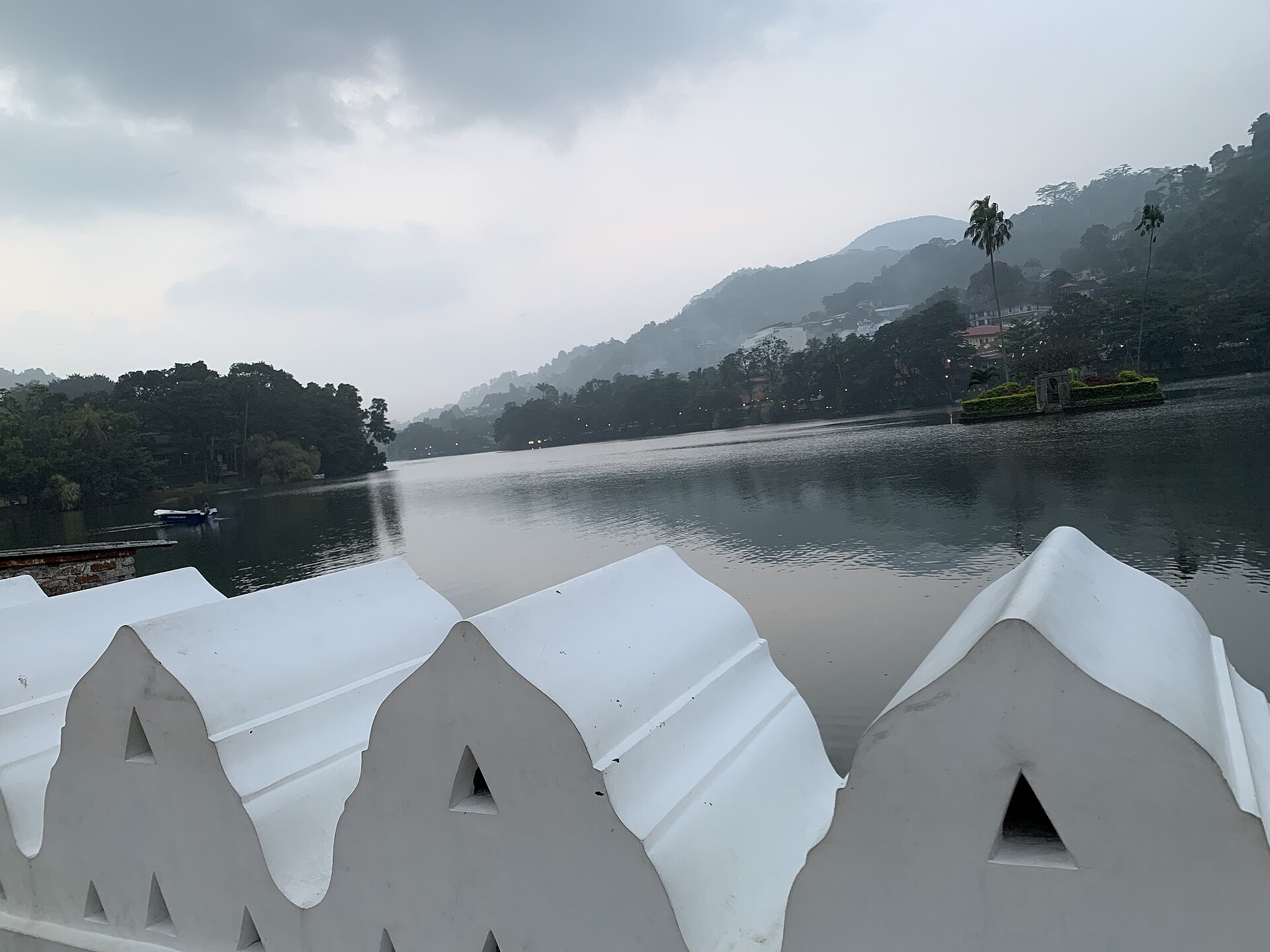
- Walk the full perimeter of Kandy Lake at dusk. The path runs a little over 3 km — 45 minutes at an easy pace — and it is the best free thing to do in the city. Start around 5:30pm: the cloud wall comes down over the hills, the reflections go pink, and the town slows down. The island in the middle, once a royal bathing pavilion, is the photo.
- Peradeniya Royal Botanical Gardens. One of the finest botanical gardens in Asia: 147 acres, a giant bamboo grove, an avenue of royal palms and a 350-year-old Java fig. It is about 6 km from the centre, half a day done properly, and best in the morning before the coaches arrive.
- Ride the train, in either direction. Kandy is the gateway to the island's most famous rail journey. The Kandy to Ella train through tea country is the classic leg, but even the shorter run to Nanu Oya is one of the great train rides in Asia. Note that the Colombo–Kandy section has been subject to engineering work in 2026, so check the line status the day before you travel.
- The hills above the city. Kandy's best views are not in the centre. Arthur's Seat and the Upper Lake viewpoint, reachable by tuk-tuk in fifteen minutes, look down on the lake and the temple with the Hantana hills behind. Go for sunrise or sunset; the driver will wait.
- The cultural show and the craft markets. Kandyan drumming and dance performances run nightly for a few dollars; touristy but genuinely enjoyable, and a good introduction to what you then see performed for real at the temple.
- Combine it with a tea estate day. The road towards Nuwara Eliya climbs through the tea belt, and a half-day loop to a working factory and tasting room is the most popular day-trip from the city. It pairs naturally with the train if you are heading south.
Getting around
Kandy's geography is the thing that surprises people: the centre sits in a valley, and everything is on a slope. That shapes every transport decision you make.
Getting there. From Colombo the train is the scenic and cheapest option — roughly 2.5 to 3.5 hours, with second-class tickets in the low hundreds of rupees. A private car or taxi over the expressway takes about 2.5 hours and runs USD 45–80 for the vehicle; an air-conditioned intercity bus is a dollar or two. Most travellers arrive by train and leave by train.
Around the city. Tuk-tuks are the default and should cost 300–600 LKR (about USD 1–2) for most in-town hops — the lake to the temple, the temple to the railway station. Agree the price before you get in. For the Botanical Gardens expect around 1,000–1,500 LKR (USD 3–5) each way, or a local bus for pennies.
What to avoid. The centre is congested from mid-morning to early evening, and a tuk-tuk crossing town at 5pm can take three times as long as the same trip at 8am. Avoid accepting a "city tour" package from a driver who approaches you at the station — the attractions are cheap and close together, and a self-planned half-day costs a fraction of a bundle. For the wider picture see our getting around Sri Lanka guide.
What to budget
Kandy is one of the better-value stops in the hill country. An honest per-person day:
- Accommodation: USD 15–35 per night for a good guesthouse or hillside homestay; USD 45–90 for a comfortable mid-range hotel; more for the classic colonial properties. The best-reviewed places in our corpus sit in the middle of that range, not the top.
- Meals: USD 5–10 for a rice-and-curry lunch and a local dinner; USD 15–25 for a restaurant meal in the centre; a few dollars for tea and short eats. The hill-country food is cheaper and better than the coastal resorts.
- Activities: the Temple of the Tooth at about USD 10, the Botanical Gardens a few dollars, the lake walk free, a cultural show USD 5–10. Budget USD 15–25 for a full sightseeing day.
- Transport: tuk-tuks at USD 1–2 per hop; a half-day tuk-tuk around the city and the viewpoint USD 10–15. Arriving by train costs a few dollars; a private transfer from Colombo USD 45–80 per vehicle.
- Total: roughly USD 45–80 per person per day mid-range, or USD 25–35 if you stay in a homestay, eat local and use buses. Our 2026 Sri Lanka cost guide puts this in the context of a full trip.
WATCH OUT FOR
- Booking it as a beach stop. This is the single biggest source of disappointment in the reviews. Kandy has a lake, not a swimming beach, and the water is not for swimming. If you want sand, you are in the wrong town — come for the culture and move on to the coast afterwards.
- Three nights with nothing planned. Two nights is the sweet spot: one for the temple and the lake, one for the gardens and the hills. A third night without an excursion is when reviews start describing Kandy as "fine but a bit dull".
- Traffic and noise in the centre. Kandy is a real, busy city. Rooms on the main roads can be noisy well into the evening, and guests mention traffic and horns far more often than crowds. If you are a light sleeper, book a hillside property a few minutes out rather than a central address on a main road.
- Rain at any time of year. Kandy sits in the wet zone and can rain in any month; the hill air is what keeps it cool. Reviews mention rain constantly — more than any theme except temperature. Carry a light rain jacket and treat showers as normal, not as a ruined day.
- The temple dress code enforced at the gate. Bare shoulders and knees mean you may be turned away or forced to rent a sarong at the entrance. Bring your own cover-up. Shoes must come off, and there is a shoe counter — keep small change.
- "Guides" who attach themselves at the temple. Hiring a licensed guide deliberately, at the entrance, for an agreed price, is a good idea. Being walked along by a self-appointed guide who then names a price is not. Decide before you arrive.
- Paying for a "lake view" you do not get. Several properties market a lake view that is really a distant glimpse over rooftops or a hillside. Check recent photos and ask the property directly before booking.
- Overpaying for the train. Reserved seats on the hill line are sold through the official railway portal and station counters for a few dollars; some resellers charge several times that for the identical seat. Our train ticket booking guide walks through the official route.
GOOD TO KNOW
- When to go. Kandy is year-round because of its altitude, but the driest and most comfortable months are broadly January to April and July to September. The Esala Perahera — one of the oldest Buddhist pageants in the world — runs for ten days in late July and August; it fills the city, so book accommodation months ahead and expect premium prices.
- Poya days and public holidays. Full-moon Poya days are public holidays and the temple is busier and more atmospheric. Alcohol sales are restricted on Poya days across the island. Our season and monsoon guide explains how the two monsoons split the island.
- Where Kandy fits your route. It is the natural first stop after Colombo and the gateway to the Kandy to Ella railway and the tea country. If you are weighing up the hill towns, our Ella vs Nuwara Eliya comparison helps you decide where to base yourself after Kandy.
WHERE TO STAY
Across 26,772 Kandy reviews, the properties that consistently score highest are almost all small, hillside and personally run — not the big central hotels. A few stand out for consistency rather than for a single lucky season (all figures from properties with 300+ reviews in our corpus):
- Selyna Sky Terrace — 9.81 across 349 reviews, the highest-rated established property in the region. Guests single out the host, Selyna, by name for advising on what things should cost and where to go, and the terrace views over Kandy. A short tuk-tuk ride from the centre, which is exactly the trade-off most reviewers say they wanted.
- No63 Amy's — 9.68 across 324 reviews and the pick for anyone who wants a quiet, well-run base away from the traffic. Repeatedly praised for spotless rooms and a genuinely helpful host, with guests returning the compliment on how easy the onward logistics were arranged.
- Sun Dove Suite — 9.53 across 644 reviews, a larger-sample favourite with a superb terrace over Kandy and parking that guests with their own vehicle rate highly. The Italian and English reviews both highlight the host's restaurant recommendations, which is a consistent theme here.
- Kandy Living Homestay — 9.40 across 737 reviews and the best-reviewed homestay in the region, with only a handful of rooms, so it feels genuinely homely. Guests rave about the home-cooked local dinners and the cooking classes; this is the stay to book if you want the Kandyan food experience rather than a hotel buffet.
- SWP Eco Lodge, Kandy — 9.07 across 674 reviews, an eco-conscious property in a green setting a little out of the centre. The pick for travellers who want quiet, trees and a lighter footprint without giving up comfort, and a sensible base for the Botanical Gardens side of town.
Before you reserve, our what to know before visiting Kandy guide covers the practical details and the pre-booking checklist covers the hillside-versus-centre trade-off that decides most stays.
The bottom line
Kandy is worth visiting — just not for the reasons the postcards imply. Give it two nights, go to the temple at evening puja, walk the lake at dusk, and use the city as the door into the tea country and the railway. Come for the culture and the cool hill air rather than for a beach, and it will be one of the stops you remember rather than one you merely tick. And if your trip continues south, the train out of Kandy is the best possible way to say goodbye.
Last updated: September 27, 2026. Temple prices reflect the 1 July 2026 revision; transport and accommodation figures are 2026 estimates and should be re-checked before travel.
Plan your hill-country trip with BYC at byc.lk — free, honest, no upsell. Ever.
Have a specific question about your Sri Lanka trip?
Ask BYC at byc.lk — free, honest, no upsell. Ever.
Ask BYC Your Question →