Is Self-Driving in Sri Lanka a Good Idea? An Honest 2026 Guide
Picture this: the window down, tea-country air pouring in, and the road to Nuwara Eliya curling ahead with no driver, no schedule, no one to wait for. You stop for a waterfall, a fruit stall, a viewpoint that simply demands it. That is the self-drive fantasy — and in Sri Lanka it is actually achievable, with paperwork, real costs, and a few driving realities most guides glide over.
The short answer
Yes — self-driving in Sri Lanka is a genuinely good idea for confident drivers, and this year it is easier than ever. The expressway network keeps growing, pump prices have been stable for months, and rentals start at around $25–35 a day. But it is not for everyone: you drive on the left, you share the road with assertive buses and darting tuk-tuks, and you should absolutely not drive after dark. For a couple or a small group covering 150–250 km a day, self-drive typically costs 20–30% less than a car with a driver — and it turns the journey itself into part of the holiday.
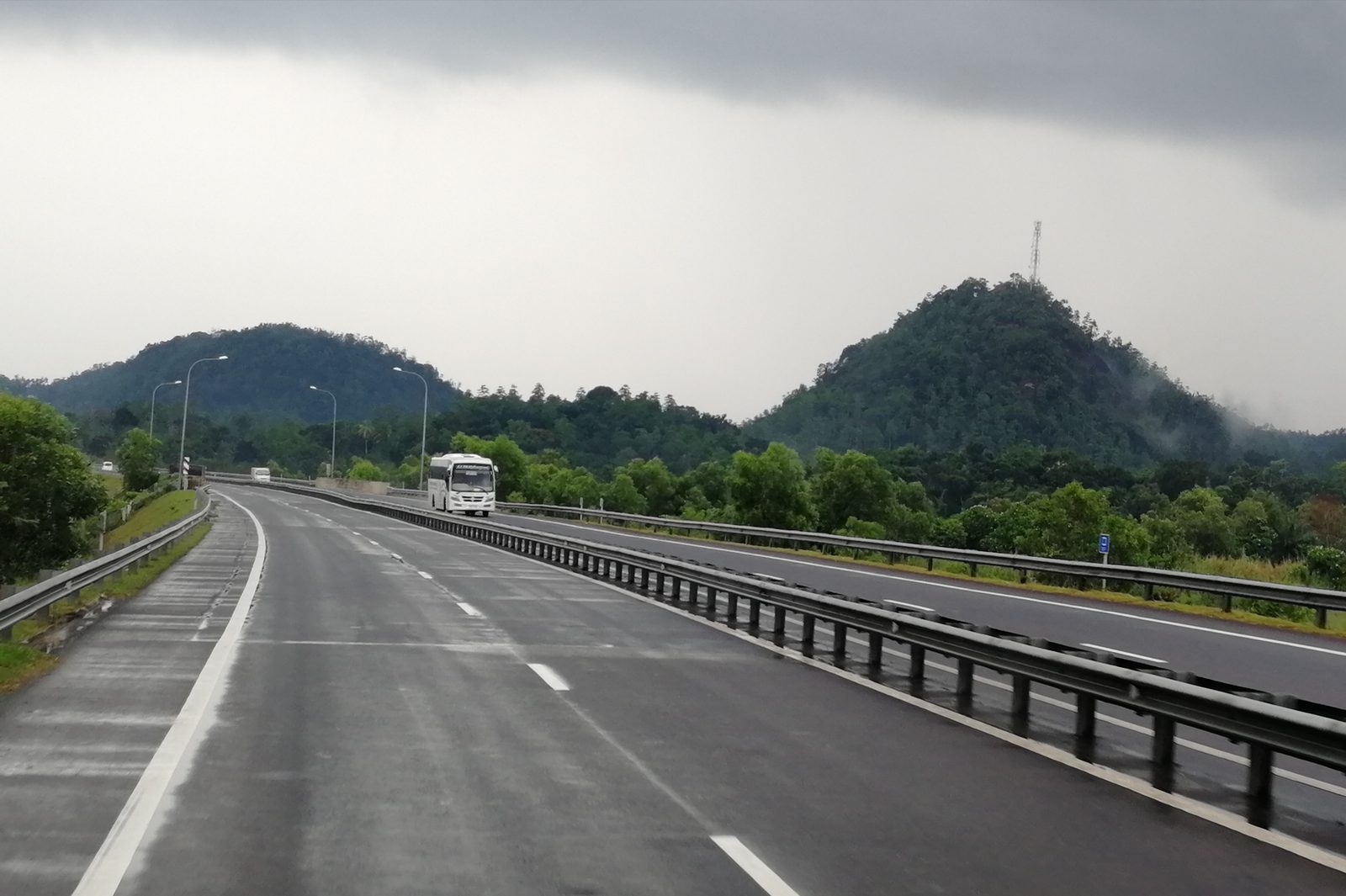
The Southern Expressway — Sri Lanka's smooth, modern toll road network is what makes self-driving viable in 2026. Photo: Sājidh Buhary, CC BY-SA 4.0, via Wikimedia Commons
What is worth doing
- The hill country loop — Kandy to Nuwara Eliya to Ella. The single most rewarding drive in the country. From Kandy you climb through tea estates on the A1 and A5, past Ramboda Falls, into the cool air of Nuwara Eliya (about 3 hours with photo stops), then continue to Ella via the Demodara loop and the famous Nine Arch Bridge (another 2–3 hours of switchbacks). Expect hairpins, mist, and views that make you pull over every ten minutes. Slow driving — and that is exactly the point.
- The Cultural Triangle on the new expressway. The Central Expressway now carries traffic from Mirigama through Kurunegala to Dambulla, cutting hours off the old Colombo–Dambulla crawl. From a Dambulla or Sigiriya base you can hit the cave temple at opening time, climb Lion Rock at 7 a.m. before the heat and queues, and cycle the ruins of Polonnaruwa in an afternoon. Your own car means you control the timing — and sunrise at Sigiriya is worth every early minute.
- The south coast run — Galle to Mirissa to Tangalle. The A2 hugs the coast for most of the way, and the Southern Expressway gives you a fast escape back to Colombo when you need one. Stop for the fort walls of Galle at golden hour, whale-watching boats in Mirissa, turtle hatcheries near Kosgoda, and a dozen quiet coves a tour bus would never find.
- Spontaneous stops, full stop. This is the quiet superpower of self-drive. Roadside fruit stalls selling king coconut for less than a dollar, waterfalls you can hear from the road, a village temple festival you happen upon, a viewpoint on no map. Tour itineraries cannot do this. A rented car can.
- The train-and-car combo. Have both the famous scenic railway and your own wheels. Drive to Nanu Oya station, park, and ride the train to Ella and back on the most photographed stretch of track in the country — or take it one-way and fetch the car later. The best of both worlds, and a lovely break from driving.
- The east coast, if you have the time. Passikudah, Trincomalee and Arugam Bay are 5–7 hour drives from Colombo — but with your own car you can break the journey in places like Batticaloa. In August, while the south-west gets wet, the east is in full dry-season glory.
Getting around
Roads in Sri Lanka are dramatically better than their reputation. The expressway network now spans 312 km: the E01 Southern Expressway runs Colombo to Hambantota, the E02 Outer Circular rings the capital, the E03 zips you to the airport, and the E04 Central Expressway is open in stages from Mirigama through Kurunegala to Dambulla, tolled on the newest sections since late 2025. The final Colombo-side link (the Kadawatha–Mirigama section) is still under construction — it passed 53% completion in early August 2026 — so the last stretch out of the capital uses the ordinary A1; allow extra time leaving Colombo in the morning.
Road improvements ahead: in a mid-August 2026 pre-Budget review, the President directed the Ministry to resume all road development projects suspended since the 2022 economic crisis and to prioritise rural roads flagged at District Coordinating Committee meetings. Under a Rs. 402 billion 2026 Budget allocation, the expressway programme also continues to expand — the Kadawatha–Mirigama link, the Pothuhera–Galagedara Central Expressway section, the Port Access Road, the proposed Kurunegala–Galewela section, and the Ruwanpura Expressway are all in progress. Practical effect for self-drivers: more of the island keeps getting fast, well-surfaced routes, but the biggest near-term wins are still on the main corridors rather than remote B-roads.
What it costs to move: Expressway tolls are modest — a car pays roughly Rs. 300–700 (about $1–2) for a Colombo–Galle run, collected at booths; keep small notes because change is not always available. Fuel is the bigger line item: petrol (92 octane) sits around Rs. 434 per litre (about $1.30) and diesel around Rs. 407 (about $1.20). A small hatchback does roughly 12–14 km per litre — about $0.10 per km, so $18–22 for a solid 200 km day. A-class roads are generally well surfaced; B-roads are narrower and best avoided for long hauls.
What to avoid: Night driving, full stop — outside the cities most roads are unlit, and animals, cyclists and pedestrians appear without warning. Avoid Colombo rush hour (roughly 7:30–9:30 a.m. and 4:30–7:30 p.m.). And ignore your GPS when it offers a shortcut down a B-road: the A roads are slower on paper and faster in reality.
What to budget
These are honest 2026 numbers for two people sharing a car — the most common self-drive setup:
- Car rental: ~$18 per person per day. A Suzuki Alto or Toyota Vitz-class hatchback rents for $25–49 a day depending on the company and season; a Toyota Premio-style sedan runs $40–55; a compact SUV $55–75. Most quotes include 100 km per day, with overage at roughly $0.40–0.50 per km.
- Fuel and tolls: ~$11 per person per day. Budget $20–25 per day for a 200 km day with a couple of toll runs, split two ways.
- Accommodation: $25–60 per person. Guesthouses and homestays from $25; boutique hotels and resorts from $50. The best value in the country is the homestay tier — and the guest reviews agree.
- Meals: $15–25 per person. Rice and curry at a local restaurant costs $3–5 and is the best meal in Sri Lanka; a proper dinner with a drink runs $8–12; western-style cafes in Ella and Mirissa cost more.
- Activities: $5–30 per person. Temples and viewpoints $5–10; a safari $40–60; whale watching $30–50; the scenic train ride is a bargain at a couple of dollars.
All-in, a couple sharing a car should plan on roughly $130–200 per day for the two of you, or about $65–100 per person. Compare that with a private driver at $50–65 per day plus fuel — self-drive wins on cost when there are two or more of you, and it is the only way to get the spontaneous-stop experience at all.
WATCH OUT FOR
- The deposit and the excess. Expect a refundable deposit of $300–400 (or Rs. 30,000–50,000 with local firms) and standard third-party insurance only — meaning you are liable for damage to the car, up to the deposit. Do a slow video walkaround of the whole car before you drive off, and again at return. Disputes over scratches are the single most common self-drive complaint we see in the review data.
- The 100 km-per-day clause. Hill country days blow past 100 km without trying, and at $0.40–0.50 per extra km a 220 km day adds $50+. Ask for an unlimited-km rate if you plan long routes — it is often cheaper than it sounds.
- Fuel policy tricks. Insist on full-to-full: note the gauge at pickup and return the car full. A few operators quote a full tank and charge for it at inflated rates regardless of what you use.
- Buses, tuk-tuks and animals. Sri Lankan buses drive hard and expect you to move; tuk-tuks pull out without indicators; and cows, dogs and the occasional elephant treat the road as theirs, especially near national park boundaries around dusk. Drive defensively and you will be fine — drive distracted and you will not be.
- Hill country hairpins. The climbs out of Kandy and into Ella are steep and tight. Use a low gear going down instead of riding the brakes, and let faster traffic pass on the straights.
- Checkpoints. Police checkpoints are common on A roads. Carry your passport, your International Driving Permit and the rental agreement — that combination sails through every time.
GOOD TO KNOW
- The paperwork is simple but mandatory. You need a valid home licence plus an International Driving Permit — or a temporary Sri Lankan driving permit from the Department of Motor Traffic (around Rs. 1,000 for 30 days). The airport AA office can endorse your IDP in about 30 minutes for roughly Rs. 4,000, and most rental companies will arrange it for you. Sort it at pickup, not at a checkpoint.
- Book ahead in peak season. December–March and August are busy, and the best-value cars go first. A few days of lead time makes a real difference to price.
- Airport delivery is worth it. Most companies will bring the car to Bandaranaike International Airport for $10–20, which beats a taxi into Colombo and back out again.
- Age rules. Most companies require drivers to be 23+, and some classes need 25+. Check before you book if you are under 25.
- Offline maps are your friend. Google Maps works well, but download the Sri Lanka offline map and get a local eSIM with data — you will use it constantly for parking and fuel stops.
- City driving is the hard part, not the hills. Colombo and Kandy have one-way systems and scarce parking. Use your hotel's parking, then walk or take a tuk-tuk.
- Fill up before the hills. Petrol stations are plentiful on A roads but thinner and earlier-closing in the highlands. Start any mountain day on a full tank.
- August timing. If you are here for the Kandy Esala Perahera, expect heavy traffic around Kandy — plan around procession nights. The east coast, meanwhile, is at its dry-season best.
WHERE TO STAY
Self-drive changes where you can stay — you are no longer tied to the tuk-tuk radius. These five sit perfectly on the classic loops, and each earns its place from what guests actually say:
- Kandy Living Homestay — 9.4 from nearly 700 reviews. Guests consistently single out the cooking class, which one reviewer called "a wonderful way to learn the basics of Sri Lankan cooking," paired with a genuinely warm welcome. Set back from Kandy's traffic with space to park, it is the ideal first night after the drive up from the airport.
- Arambhaya Boutique Hotel, Kandy — 9.1. Reviewers praise the staff so specifically that names come up again and again — one guest wrote that the hotel's tuk-tuk driver "was the best driver of all time." For tired drivers, that kind of organised team is gold.
- Lush In Ella — 9.9. "Unbelievable views, spotless and cosy, and the included breakfast was absolutely excellent," reads one review after another. Perched above Ella with the valley spread out below, it is the classic reward at the end of the hill-country road.
- Winwood Ella — 9.5. Guests love the wooden chalets and balconies set among the trees, "close to the centre yet quiet." You can leave the car parked and walk into Ella's restaurants and bars in the evening — a genuine luxury after a day of switchbacks.
- Suriya Guest, Nuwara Eliya — 9.4. A characterful house a 15-minute walk from Victoria Park, praised for its "very good meals and breakfast" and spotless rooms. A cosy, well-priced base for the tea-country leg of the loop.
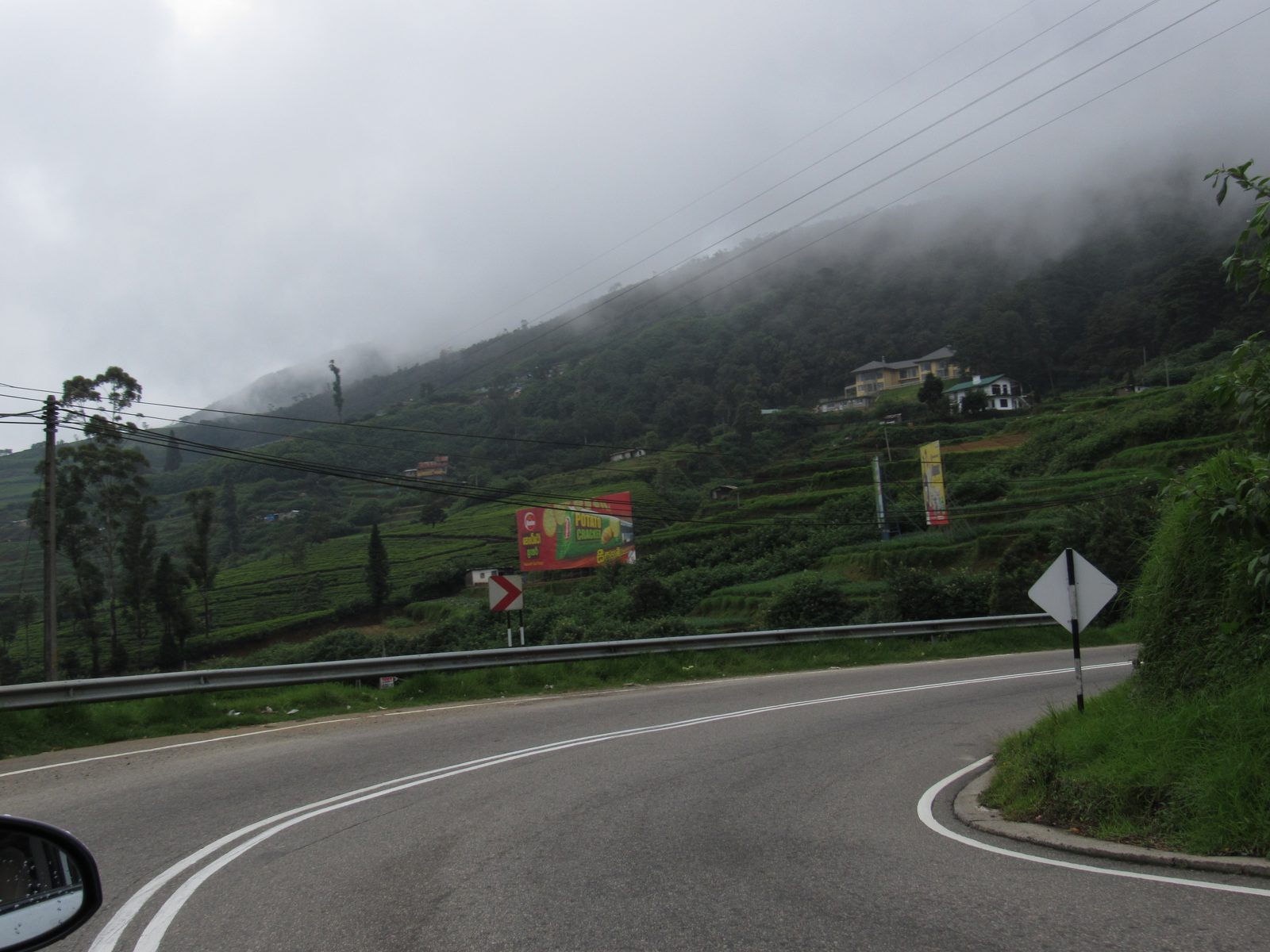 Tea country along the road near Nuwara Eliya — the kind of view that makes the hill-country drive unforgettable. Photo: Prabothd, CC BY-SA 4.0, via Wikimedia Commons
The bottom line
Self-driving will not suit everyone — if you would rather watch the scenery than watch the road, hire a driver and do not look back. But for drivers who enjoy the journey itself, Sri Lanka in 2026 is the best it has ever been: new expressways, stable fuel, honest rental prices, and some of the most rewarding roads in Asia. Sort the paperwork, respect the no-night-driving rule, and the island becomes yours to wander.
Last updated: September 9, 2026
Have a specific question about your Sri Lanka trip?
Ask BYC at byc.lk — free, honest, no upsell. Ever.
Ask BYC Your Question →