What Should I Wear to a Temple in Sri Lanka? The 2026 Etiquette Guide
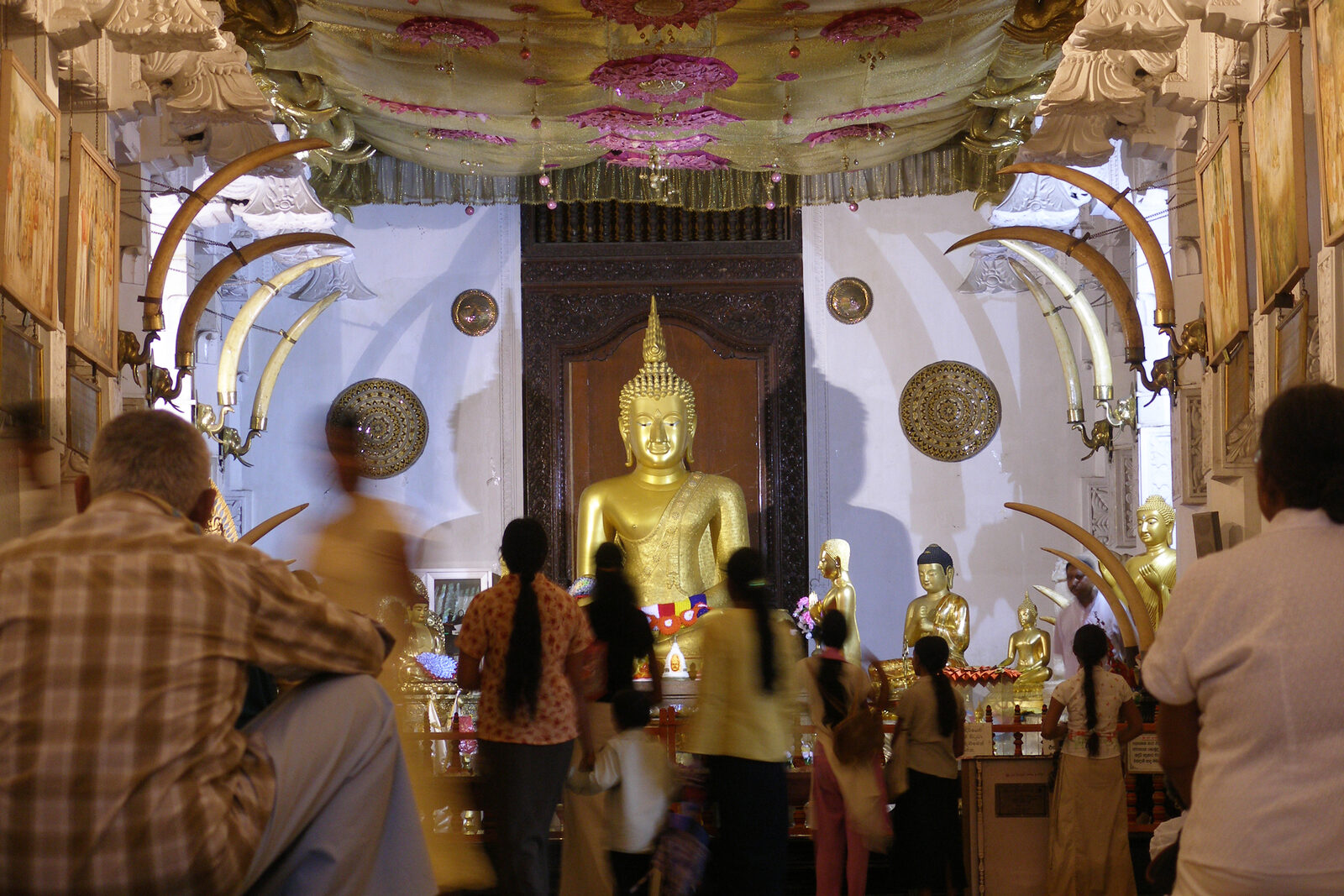
Cover your shoulders and your knees, take your shoes off before you enter, and never turn your back to a Buddha statue for a photo. Master those three rules and you already know 90% of Sri Lankan temple etiquette — and you will be welcomed warmly at every shrine on the island, from a dusty roadside dagoba to the Temple of the Tooth in Kandy.
Almost every visitor gets something wrong at a temple, and almost always by accident: a sun dress that looked modest in the hotel mirror, a pair of shorts that suddenly feel very short when you reach the gate, a selfie taken at exactly the wrong angle. None of it is a scandal — but knowing the rules in advance means you spend your visit looking at the temple instead of being quietly corrected at the entrance.
Last updated: September 14, 2026.
The short answer
Dress for a temple the way you would dress for a respectful family visit: shoulders covered, knees covered, shoes off, and a lightweight scarf or sarong in your bag as backup. That single rule — shoulders and knees — applies identically at every Buddhist temple in Sri Lanka, whether it is an unmarked village shrine or the UNESCO-listed Temple of the Sacred Tooth Relic.
Pack one “temple outfit” per person and carry it every day you might see a shrine. Lightweight linen or cotton trousers, a cotton scarf for bare shoulders, and a sarong that can wrap over shorts or a skirt. In 35°C heat these items are not a burden; they are the difference between walking in comfortably and being handed a musty loaner sarong at the gate.
What makes this more than a dress-code question is that Sri Lankan temples are not museums. They are living places of worship where the Buddha is felt as genuinely present, and where local families may be praying beside you. The rules exist because of that, and they are followed consistently by everyone around you. Getting them right is a small courtesy that goes a long way — our review data carries thousands of warm mentions of how welcoming and polite Sri Lankans are to visitors, and that goodwill is easiest to repay by simply turning up dressed appropriately.
What's worth doing
- Wear the temple outfit, don't buy it at the gate. Dress before you leave your guesthouse. Major temples do provide sarongs at the entrance (free or LKR 50–100), but wrapping a borrowed sarong over a bikini or short shorts is still conspicuous and uncomfortable. Arriving already covered is calmer, cooler and cleaner.
- Carry a cotton scarf in your day bag every day. A single lightweight scarf solves bare shoulders for anyone, in seconds, at any shrine you stumble across. In Sri Lanka you will pass temples when you least expect it — a small scarf is the cheapest piece of travel insurance you will ever pack.
- Learn the one gesture that matters: palms together. The ayubowan greeting — palms pressed together at chest height with a slight bow — is how you greet monks and how you respond to a temple warden. It costs nothing, needs no words, and is unfailingly well received.
- Walk the stupas clockwise. Buddhist dagobas and stupas are circumambulated clockwise, keeping the sacred structure on your right. This applies at the great stupas of Anuradhapura and Polonnaruwa and around the shrines of the Temple of the Tooth. If you walk the path, walk it with the flow — not against it.
- Offer a flower, light a lamp. Stalls outside major temples sell small trays of frangipani or lotus (LKR 50–200). Placing one respectfully at the base of a statue is exactly what Sri Lankan devotees do — a genuine gesture, not a tourist gimmick. Where coconut-oil lamps are available, an attendant will usually show you how; follow their lead.
- Observe a puja quietly. If drumming and chanting signal a ceremony in progress, step to the side and watch. Your presence as a respectful observer is welcome; noise, pushing and flash photography are not.
- Ask before photographing people. Photographing the grounds, the dagoba and the architecture is fine almost everywhere. Pointing a lens at a praying devotee without asking is not — one polite gesture and most people are happy to be photographed.
Getting around
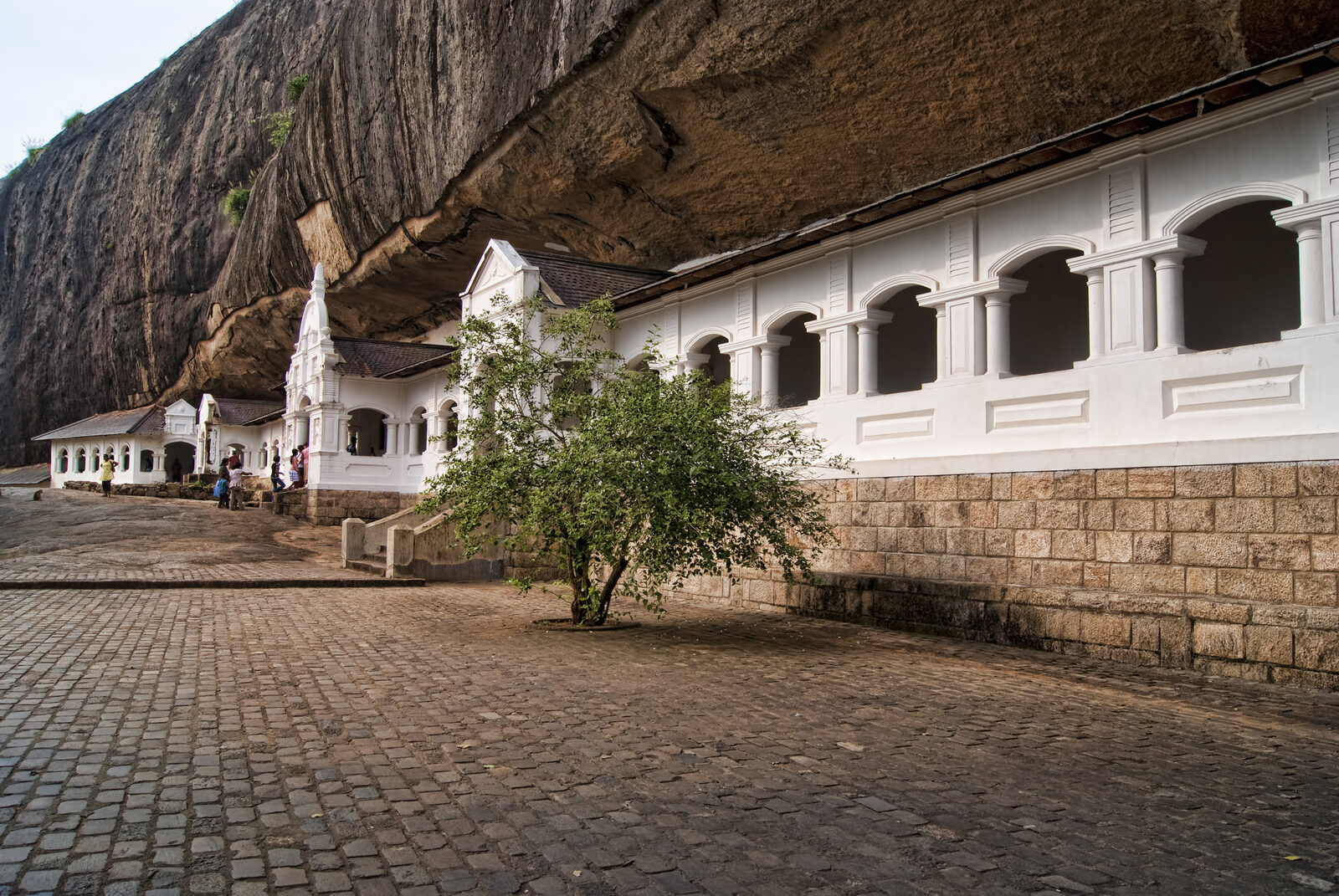
Temple visits cluster naturally into the routes you are already travelling, and none of them need special transport. The Cultural Triangle — Anuradhapura, Polonnaruwa, Sigiriya and Dambulla — is the densest temple country in the country, best explored from a Sigiriya or Dambulla base by tuk-tuk or a hired car with a driver (roughly $35–55 for a full day). Kandy is the single most important temple city, an easy stop on the Colombo–Kandy train or a private transfer (about $45–70 from the airport).
For moving between the big sites: a private car with driver runs roughly $0.35–0.55 per kilometre, with full-day hire in the $50–80 range; a tuk-tuk for short hops within a town is commonly $2–5 once fares are agreed; and intercity buses are extraordinarily cheap at $0.50–3 for most routes, though slower and more crowded. For Anuradhapura’s sprawling sacred zone specifically, a tuk-tuk for the day (about $20–30) is close to essential — the compound is far too large to walk between stupas.
The one rule that governs all of it: remove your shoes at the marked point before entering any sacred area, and be ready to do it repeatedly. At Anuradhapura you will take shoes on and off all day as you hop between dagobas; a light cloth bag for your footwear saves constant re-tying. On bare rock at Dambulla or Midday sun at Mihintale’s steps, the stone can be genuinely hot — a pair of thin cotton socks is a small, brilliant addition. Shoe-keeping services at major temples cost LKR 20–50 (under $0.20) and are worth it.
What to budget
Temple etiquette is nearly free; the temple tickets are where the real spend sits. Honest 2026 numbers per person, in USD:
- Village and town temples: free to enter. A small donation (LKR 20–200, about $0.10–0.70) is welcomed but never demanded, and skipping it is not rude.
- Shoe keeping & sarong hire: $0.10–0.50 at major sites. Save it all by carrying your own scarf and wearing the right shoes.
- Major temple & heritage tickets (foreign adults): Temple of the Sacred Tooth Relic in Kandy around $10–15; Dambulla Cave Temple around $10–11; Anuradhapura Sacred City around $30; Polonnaruwa Ancient City around $30; Sigiriya Rock Fortress around $35. SAARC-national rates are consistently lower, and children under six usually enter free.
- Flower offerings: $0.20–0.70 for a tray of frangipani or lotus at the stalls outside.
- A full temple-focused day: allow $30–60 including a driver or tuk-tuk, one major-site ticket and incidentals — very achievable if you mix one paid UNESCO site with a couple of free local temples.
The pattern worth noticing: the big UNESCO sites are priced at international museum levels, while the temples Sri Lankans actually worship at every day are free. The most memorable visits are often the free ones — so do not assume the entry-fee list tells you which temples are worth your time.
WATCH OUT FOR
Every one of these is a small, avoidable trap — the kind of thing that puts a dent in an otherwise lovely day:
- Shorts, whatever their length, are still shorts. The rule is knees covered — full stop. Knee-length shorts will still be flagged at the strictest sites. Pack trousers or a wrap you can tie around the waist.
- Sleeveless tops and cap sleeves do not count as covered. The whole shoulder needs to be covered, including strap tops, tank tops and cap-sleeve T-shirts. A scarf draped over both shoulders fixes it instantly — keep one on you.
- Tight leggings are refused at the strictest sites. Kandy, Anuradhapura and Dambulla are known for this: it is the body-hugging fit, not the fabric length, that is the problem. Loose trousers or a skirt are the safe call.
- Turning your back to the Buddha for a selfie. This is the single most common tourist error and causes real offence. The Buddha faces outward; posing with your back to the statue reads as disrespect. Stand beside the statue, never in front with your back turned.
- Touching statues, monks or pointing with one finger. Do not rest a hand on a Buddha statue even for a photo, do not attempt to shake hands with or touch a monk (particularly if you are a woman), and never point a single index finger at a statue or a monk — gesture with the whole hand, palm up.
- Sunglasses and hats indoors. Both come off before entering any covered shrine — sunglasses worn indoors are read as dismissive in Sri Lankan culture generally, not just at temples.
- Self-appointed “guides” and donation pressure. At busier sites, unofficial guides sometimes attach themselves and steer visitors toward a specific donation box or a person with an open hand. Official donation boxes are clearly labelled and fixed in place. A polite “no thank you” and continuing to walk works perfectly well.
- Wearing black at the most sacred sites. Black is associated with mourning in Sri Lanka, so it is best avoided at the inner shrines of the Temple of the Tooth and at Sri Maha Bodhi in Anuradhapura. White, by contrast, is what devotees wear on poya (full moon) days.
- Treating a temple as a photo backdrop. People are praying. Keep voices low, keep movement calm, and let the ritual have its space. Photograph in a break between ceremonies, not through one.
GOOD TO KNOW
- White is a compliment on poya days. Sri Lankan Buddhists wear white on poya — the monthly full-moon holiday, when temples are at their busiest and most beautiful. Wearing white shows awareness, and the ceremony is genuinely worth timing a visit around; just expect crowds.
- Early morning beats every other hour. Every temple on the island is cooler, quieter and better lit at opening. Arrive early, beat the tour groups and the midday heat, and you will have the place largely to yourself.
- Different faiths, slightly different rules. At Hindu kovils the shoes-off, shoulders-and-knees rules hold, and some inner sanctums are open to Hindus only. At mosques, shoes come off and women often need a headscarf; non-Muslims are usually welcome outside prayer times but should ask first. Churches are the exception — shoes generally stay on.
- Breaking a rule is not a catastrophe. If you slip up, a warden or a fellow visitor will simply point it out — put your shoes back on, cover a shoulder, step back from a statue — and that is the end of it. Polite, honest mistakes are read exactly as that. The whole point of knowing the rules is just to make the correction unnecessary.
- Bags are fine almost everywhere — with one exception. A normal day bag is expected at nearly every temple. The exception is the Temple of the Tooth in Kandy, where bag checks and metal detectors are standard, so build in a few extra minutes, especially before the evening puja.
- Cheap fix if you forget. Tourist towns near major temples all sell lightweight cotton trousers for LKR 500–1,000 (about $1.70–3.40), and sarongs are sold everywhere. Families: pack spare lightweight wraps so children in shorts can be covered with a quick tie around the waist.
- Carry socks for the rough sites. Barefoot on smooth, shaded stone is a pleasure. Barefoot on sun-baked rock at Dambulla at midday, or on the long, rough ascent at Mihintale, is not. Thin cotton socks are the quiet hack experienced temple-goers never travel without.
WHERE TO STAY
Named properties below are drawn from review data — positive mentions only, each with the specific, review-backed reason it earns a place as a temple-touring base.
- Geethani Tourist Home (Polonnaruwa) — reviewers repeatedly describe the location as “great for exploring temple complexes,” with a friendly, helpful host, a quiet position near the lake for sunset and a short walk to the ancient city and its museum — about as close to the ruins as a temple-focused stay gets without paying resort prices.
- Kandy Hills (Kandy) — a consistently high-scoring Kandy base where guests highlight “amazing views from the balcony,” spotless, spacious rooms and staff who are “friendly, welcoming and always ready to help” — a calm, well-run perch from which to walk down to the Temple of the Tooth and the lake.
- Kandalama Lodge (Dambulla) — guests describe it as an “ideal place to explore Dambulla Cave Temple, Sigiriya and the nature reserves,” with attentive staff and a pool that reviewers had “all to ourselves in the heat” — the natural base for the cave temples and the Cultural Triangle circuit.
- Simoya Nature Park (Dambulla) — a small, warm guesthouse where reviewers note hosts so attentive they left flowers in the rooms, praised the quiet setting “close to the cave temples,” and described it as feeling away from the bustle of the city while still a convenient walk to the caves.
- Sundaras Family Suites (Dambulla) — reviewers single out the staff, with one guest noting the manager “went above and beyond… even giving us a ride to Dambulla caves,” and describing the team as welcoming and professional throughout — an easy, family-friendly anchor for a temple-heavy northern run.
The bottom line
Temple etiquette in Sri Lanka is not complicated: cover shoulders and knees, take your shoes off, keep your back to nothing sacred, and greet people with your palms together. Get those four things right and every temple on the island opens up to you. Pack one lightweight temple outfit, keep a scarf in your bag, and treat each shrine as the living place of worship it is — then watch how differently a visit feels when you arrive prepared rather than corrected. See the great stupas at dawn, time a trip to a poya day in white, and let the island’s oldest traditions be part of the journey rather than an obstacle in it.
Planning the wider trip? See our getting around Sri Lanka guide for how the temple towns connect, our Polonnaruwa guide and Trincomalee guide for the specific sites, and our train ticket guide if you are routing through Kandy by rail.
Have a specific question about your Sri Lanka trip?
Ask BYC at byc.lk — free, honest, no upsell. Ever.
Ask BYC Your Question →