Which Sri Lanka Safari Park Should You Choose? (353,633-Review Guide)
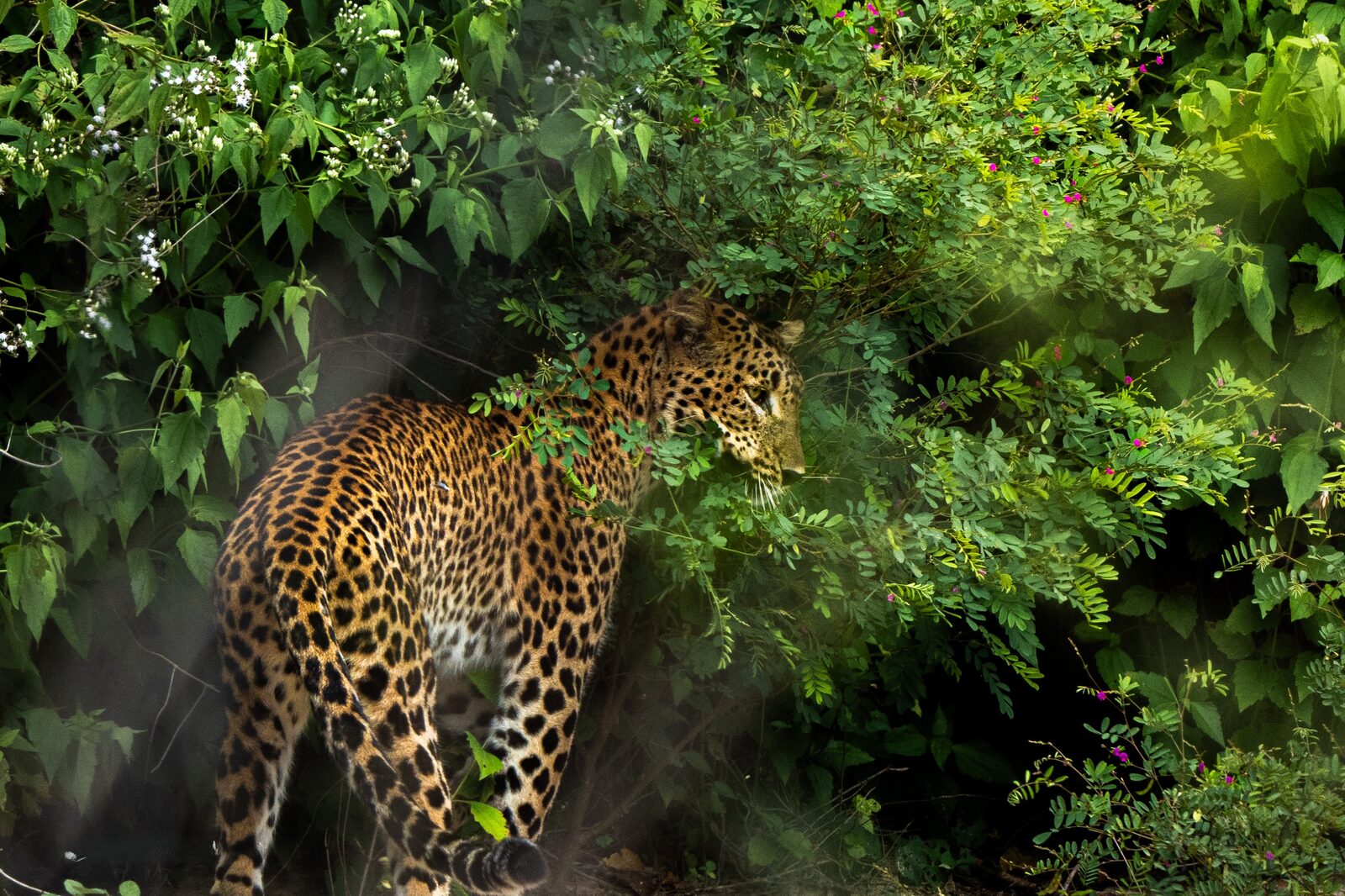
The answer depends on one question: do you want to see a leopard, or an elephant? Sri Lanka has more than twenty national parks, but almost every visitor ends up choosing between five of them — and the choice almost always comes down to which big animal you are chasing. Pick the right park and you will come home with the memory you flew here for. Pick the wrong one and you will spend a long, hot day staring at scrub while jeeps queue three-deep around a bush.
Every week, the same planning question surfaces in different shapes: a couple wants “the best park for wildlife,” a family wants an easy half-day with kids, a photographer wants solitude, a group of friends wants the famous park they have seen in pictures. They are all asking the same thing — which park? — and the honest answer is that Sri Lanka’s five headline parks are genuinely different products. Yala and Wilpattu sell leopards. Udawalawe and Minneriya sell elephants. Kumana sells wilderness and birds. We analysed 353,633 verified guest reviews — including more than 9,700 that mention safaris and hundreds that describe the parks by name — to build the decision framework below. Here is what actually separates them, what each costs in 2026, and where to sleep to make the early gate worthwhile.
Last updated: September 13, 2026.
The short answer
For leopards, choose Wilpattu over Yala if you value solitude and have two mornings to spend; choose Yala if you have a single half-day and want the highest odds, and can accept the crowd. Wilpattu is Sri Lanka’s largest and least-visited big-cat park, with leopard densities among the highest on the island and almost none of Yala’s jeep traffic — but the thick forest means each sighting must be earned, which is why two drives beat one.
For elephants, choose Udawalawe for guaranteed, year-round herds and Minneriya for the dramatic dry-season gathering. If you only have one park in your itinerary and you are not especially chasing a cat, Udawalawe is the reliable crowd-pleaser — elephants almost every drive, superb for families. Minneriya (and its neighbouring Kaudulla) delivers the famous “gathering” of 200–400 elephants, but only in the right months. Kumana, in the far southeast, is for birders and genuine wilderness lovers who are happy to see few other vehicles and treat leopards as a bonus rather than the goal.
The reassuring part: you do not have to choose between them all. Yala, Udawalawe and Kumana sit on the southern/eastern arc; Wilpattu and Minneriya sit on the northern route. Most travellers will pick one cat park and one elephant park, and that covers the island’s two great wildlife experiences without duplicating the same day twice.
What's worth doing — park by park
Here is what each of the five headline parks actually delivers, so you can match it to the trip you are planning:
- Wilpattu National Park — the leopard park that is not crowded. Wilpattu is Sri Lanka’s largest park, a mosaic of forest and villus — nearly sixty natural, sand-rimmed rain-fed lakes that draw the animals out into the open to drink. That is the magic: leopards, sloth bears, elephants and herds of spotted deer congregating on the villu banks, watched by perhaps one or two jeeps instead of ten. It sits in the northwest, an easy 45 minutes from Anuradhapura, which makes it the natural pairing for the ancient-city leg of a Cultural Triangle route.
- Yala National Park — the highest odds, and the biggest crowd. Yala’s Block 1 is famously believed to hold one of the densest leopard populations on Earth, and it is the park where your odds of a sighting in a single half-day are best. The trade-off is the traffic: in high season a single leopard can draw a dozen jeeps, and guests repeatedly describe that jostling. Yala is also partly closed for maintenance each year (usually around September), so always check its status before planning it in.
- Udawalawe National Park — elephants almost guaranteed, brilliant with kids. Udawalawe is the most reliable elephant park in Sri Lanka, with a resident population of several hundred and open grassland that makes sightings easy for the whole family. It pairs naturally with the Elephant Transit Home nearby, and its southern-edge location makes it a natural stop between the hill country and the coast. If a first safari with children is the goal, this is the park to book.
- Minneriya (and Kaudulla) — the great elephant gathering. In the dry season — roughly June to September, when the tanks shrink and the grass disappears elsewhere — Minneriya’s reservoir draws hundreds of elephants into one place in one of the largest wild elephant gatherings in Asia. Outside that window the park is quiet and much less compelling. Kaudulla, next door, hosts the gathering in adjacent months when the herds move over. Time it right and it is unforgettable; time it wrong and it is an ordinary drive.
- Kumana National Park — wilderness and birds, not a leopard hunt. Kumana sits in the far southeast — technically the eastern sector of the Yala complex — and is best known as a bird sanctuary, with a 200-hectare natural swamp lake (the Kumana Villu) where vast numbers of birds breed and roost. It holds leopards, elephants and buffalo too, but honest guides will tell you that leopards are rarely seen on a half-day drive here. Come for the emptiness, the birds and the sense of a park with almost nobody else in it.
A note on the smaller parks, because they matter for specific trips: Bundala, close to the southern coast, is a superb half-day birding park; Horton Plains is a highland walk, not a game drive; and Gal Oya, in the east, offers the unusual thrill of a boat safari. But for the traveller asking “which safari park?”, the five above are the real answer.
Getting around — and getting to the gate
The single biggest mistake in planning a Sri Lankan safari is underestimating the drive to the gate. These parks are not day-trip attractions from Colombo, and a 4:30 a.m. departure from the wrong town will leave you exhausted before the first sighting. The practical rule is simple: sleep within 30–60 minutes of your chosen park and be on the first jeep through the gate at dawn.
- Wilpattu: the main Hunuwilgama gate is about 45 minutes from Anuradhapura and roughly four to five hours from Colombo. A second gate at Eluwankulama serves the western/park-side lodges. Base in Anuradhapura (which also gives you the ancient city) or at one of the small Wilpattu-side nature lodges.
- Yala: the Katagamuwa and Palatupana gates are closest to Tissamaharama and Kirinda — both about 20–40 minutes away — with Yala and Tissamaharama the standard base towns. From Ella it is roughly a two-hour drive down; from the south coast, similar.
- Udawalawe: base in Udawalawe town or Ratnapura-adjacent lodges right beside the gate; the park sits about an hour from Ella and two from the south-coast beaches, which is what makes it an easy mid-route stop.
- Minneriya/Kaudulla: base at Habarana or Sigiriya, both 20–40 minutes from the gates and perfectly positioned for the Cultural Triangle. This is the easiest park to slot into a Sigiriya–Dambulla itinerary.
- Kumana: the gate is reached from Panama — the small village beside Arugam Bay, roughly 30–45 minutes away. Arugam Bay is the natural base, which makes Kumana a good add-on for east-coast travellers in the dry season.
You do not self-drive into these parks — you go in a tracked jeep with a driver-guide, arranged by your hotel, a local operator or a pre-booking platform. A jeep seats up to six, so sharing cuts the per-person cost sharply. Arrange your jeep the evening before: dawn slots are the ones that fill, and the difference between the 6 a.m. gate and the 8 a.m. gate is the difference between a leopard and a long hot drive.
What to budget
A safari is the one activity on a Sri Lanka trip with a lot of moving cost parts, so it pays to know what is actually in the total. Here is the honest 2026 picture, per person unless stated:
- Park entrance (foreign adult): the headline fee is around US$15–45 depending on the park — Wilpattu is at the lower end (about US$15 plus service charge and 15% VAT, so roughly US$25–30 all-in), while Yala’s fee is notably higher (around US$42–45 all-in). Children aged 6–12 pay roughly half; under-6s are usually free. SAARC nationals often pay a reduced rate.
- Jeep hire: US$45–65 per jeep for a half-day (roughly 5 hours) and US$80–110 for a full day, all-inclusive of the driver-guide, split across up to six passengers. Shared between four people, a half-day jeep works out to about US$11–16 each — the single best-value line in the whole safari budget.
- Driver-guide tip: budget US$4–10 per jeep, given at the end, more for a guide who genuinely spots and reads the bush well.
- Camera and park extras: some parks charge a small camera or video fee on top; bring a little cash for it rather than relying on cards at the gate.
- Getting there: a private car to the park gate runs about US$60–160 depending on distance, and pairs with a driver you may already have hired for the trip — a safari day simply folds into the itinerary.
Put together, a realistic half-day safari costs a solo traveller US$60–90 all-in, but drops to US$30–45 per person for a group of four sharing a jeep and a car. A full-day drive with two gate sessions is the best use of a long journey to a remote park — the marginal cost of the second half-day is small compared with the travel to get there.
WATCH OUT FOR
These are the recurring, real-guest pitfalls — patterns, not specific companies, and all of them avoidable:
- Booking the park before the season. The two biggest safari disappointments are Yala in its annual closure window (typically around September, for maintenance and visitor safety) and Minneriya outside the gathering months of roughly June–September. Both are entirely predictable — check the park’s status and the season before you commit your one safari day to it.
- The single-drive gamble. One drive in one park means one roll of the dice. If you can, give your cat park two mornings — the dawn drive is when leopards are moving and the light is best, and reviewers who give a park two drives consistently report far better outcomes than those who try to see it in one afternoon.
- The “leopard guarantee” pitch. No honest operator guarantees a leopard. Companies that promise a specific animal in their marketing are telling you they will drive fast and chase a radio call to someone else’s sighting. Choose a guide whose value is knowledge and patience, not a promise.
- Late gate arrival. Arriving at 8 a.m. because your hotel was an hour too far away is the most common self-inflicted safari wound. Sleep close to the gate, leave in the dark, and be among the first jeeps in.
- Thin-value jeep quotes. A suspiciously cheap jeep quote usually means an old vehicle, no proper tracker, or a driver who will spend the morning queuing at a crowd rather than reading the bush. Pay the normal range and check that the quote is for a private jeep, not a seat-share on a scheduled bus-route tour.
- Dressing for a beach, not a park. Dawn safari drives are genuinely chilly and dusty — layered neutral clothing, closed shoes, a buff or scarf, and a hat matter more than the jeep you book. Bright white and neon scare wildlife and photograph badly.
- Crowd-chasing at the famous park. The low-scored Yala reviews often describe exactly this: long waits, jostling vehicles and a fleeting view. If sharing one leopard with twelve jeeps would spoil your day, that is the clearest argument for choosing Wilpattu instead.
GOOD TO KNOW
- Book the jeep the night before, not on the morning. Dawn slots fill first, and the gate is a different experience at 6 a.m. Ask your hotel or the local operator directly — the properties that arrange safaris well are the ones reviewers single out, and the same guides return to guest after guest.
- Wildlife is weather- and season-dependent. Dry months concentrate animals at remaining water (great for sightings); the days after heavy rain scatter them into thick cover. For Minneriya specifically, the gathering is a dry-season phenomenon tied to shrinking water levels — outside it, the park is quiet.
- Two parks is usually the right number. One cat park (Yala or Wilpattu) and one elephant park (Udawalawe or Minneriya if it is the right season) covers the island’s two greatest wildlife spectacles without repeating the same day. Doing Yala and Wilpattu both, for example, is largely the same experience twice.
- Dawn beats dusk, every time. Both are good, but early-morning drives see more active animals and far better light for photography, and they set you up before the midday heat shuts the bush down.
- Pair the park with the place it sits beside. Wilpattu pairs with Anuradhapura’s ancient ruins; Udawalawe with the Elephant Transit Home and the hill country; Minneriya with Sigiriya and Dambulla; Kumana with quiet, uncrowded Arugam Bay; Yala with the southern beach belt. The best safari days are the ones that do two things well.
- Respect the rhythm of the park. Keep quiet, stay in the jeep, do not ask your driver to chase or crowd an animal — the best sightings come from patience at a villu or waterhole, not from speed.
WHERE TO STAY
Named properties below are picked from review data — positive mentions only, with the review-backed reason each works as a base for the park named beside it.
- Cloud Nine Lanka Resort Wilpattu (Eluwankulama / Puttalam) — a nature lodge beside the park’s western gate where reviewers repeatedly praise the safari organisation and the sense of being alone in the forest: one guest wrote that “each room is alone in the forest” and that “our Wilpattu safari was well organised.” A rare chance to sleep on the park boundary and be on the first drive of the day.
- Maho Boutique Hotel (Anuradhapura) — one of the highest-scoring bases near Wilpattu’s main gate, where guests specifically credit the staff with arranging “an excellent Wilpattu safari with a great guide” alongside temple tours — the ideal anchor for a two-park Anuradhapura & Wilpattu stay.
- Ceylonima Home Stay (Anuradhapura) — a warm family homestay where reviewers describe hosts who “arranged a safari to Wilpattu and a tour to Anuradhapura” and cooked unforgettable Sri Lankan food. Perfect for travellers who want the safari logistics handled and a genuine local welcome.
- My Village (Yala) — a safari-country favourite where guests describe drivers and guides arranged through the hotel as outstanding, with one reviewer noting their guide had worked in the park for a decade and knew so much. A strong base for the Yala leg.
- Atha Resort (Sigiriya) — the top-rated Sigiriya-area stay in our data and the natural base for a Minneriya or Kaudulla elephant drive; reviewers repeatedly praise staff who “made everything so easy for us booking our drivers and trips,” including the afternoon park run.
The bottom line
Choosing your Sri Lanka safari park is really choosing your headline animal and your tolerance for crowds. Want the best odds in a single half-day, and do not mind sharing the sighting? Yala. Want a leopard and the wilderness largely to yourself? Wilpattu, with two dawn drives. Want elephants and an easy, family-friendly day? Udawalawe. Want the great dry-season gathering? Minneriya and Kaudulla, in the right months. Want birds, emptiness and a park that feels like a secret? Kumana. Whatever you choose, sleep near the gate, take the dawn drive, and give it more than one chance — the island’s wildlife rewards the patient traveller, and the memories you bring home will be worth every early alarm.
For the surrounding detail, see our complete two-day Wilpattu plan, the Minneriya vs Yala comparison, our guide to Yala vs Udawalawe, the Yala closure and status guide, and our trustworthy-driver guide for getting to the gates.
Have a specific question about your Sri Lanka trip?
Ask BYC at byc.lk — free, honest, no upsell. Ever.
Ask BYC Your Question →