Rathnapura to Adam's Peak: The Long Pilgrim Route (2026 Guide)
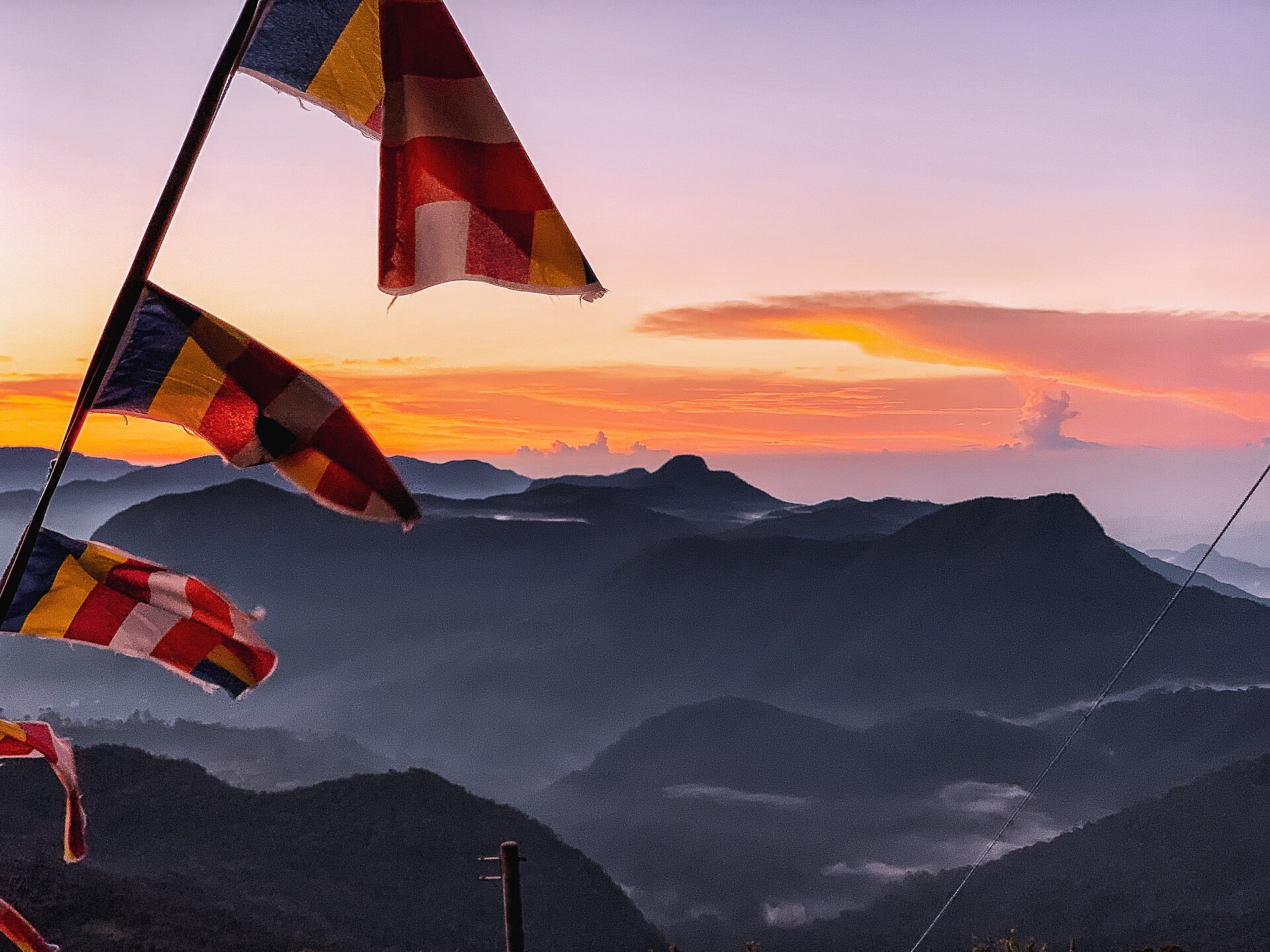
You are in Rathnapura, the gem town at the foot of Sri Lanka’s holiest mountain, and the road ahead disappears into cloud forest. Everyone online talks about the short route from Dalhousie — the one you reach from Hatton by train. But there is another way up, older and far quieter, that starts from almost exactly where you are standing. This is the Rathnapura–Palabaddala trail to Sri Pada, and it climbs roughly 2,000 metres through the Peak Wilderness Sanctuary. It is harder, longer and more atmospheric than the popular side — and for a certain kind of traveller, it is the whole point of coming up here.
Last updated: September 26, 2026.
The short answer
Yes, you can climb Adam’s Peak from the Rathnapura side — and for many travellers it beats the famous Dalhousie route. The Rathnapura trail is the classic historic pilgrimage path: about 8.5 km of mostly stepped climbing from the Siripagama trailhead, gaining roughly 2,000 m through genuine rainforest, and taking most people 8–12 hours return. It is more demanding than the shorter route, but it is also wilder, greener, and far less crowded.
Plan it as an overnight, not a day trip. The rewarding way is to start from the trailhead in the late morning, walk to one of the sheltered rest stops (ambalamas) such as Haramitipana by evening, sleep there, then push to the summit before sunrise. Climbing straight through from the road in one go to catch sunrise is possible, but only if you are fit, well-lit and well-prepared.
Timing is everything. The official pilgrimage season runs from the December full moon to the May full moon, when the trail is lit at night and small shops open along the way. Outside that window the climb is a serious, unlit jungle trek for the experienced only.
What makes this route special is not just the mountain at the top — it is everything between. The Peak Wilderness Sanctuary is one of the richest pockets of biodiversity in Sri Lanka, a UNESCO-listed rainforest that climbs from lowland jungle into moss-covered montane cloud forest. You pass a chain of peaks, cross ridges where the whole Rathnapura plain opens up beneath you, and finally meet the main trail just before the summit. Pilgrims have walked this way for centuries; some of the stone steps date back many hundreds of years, and the ambalamas you sleep in have sheltered travellers long before anyone wrote a review about them.
What’s worth doing
The Rathnapura–Palabaddala ascent itself is the experience — but it breaks into distinct stages that are worth understanding before you start:
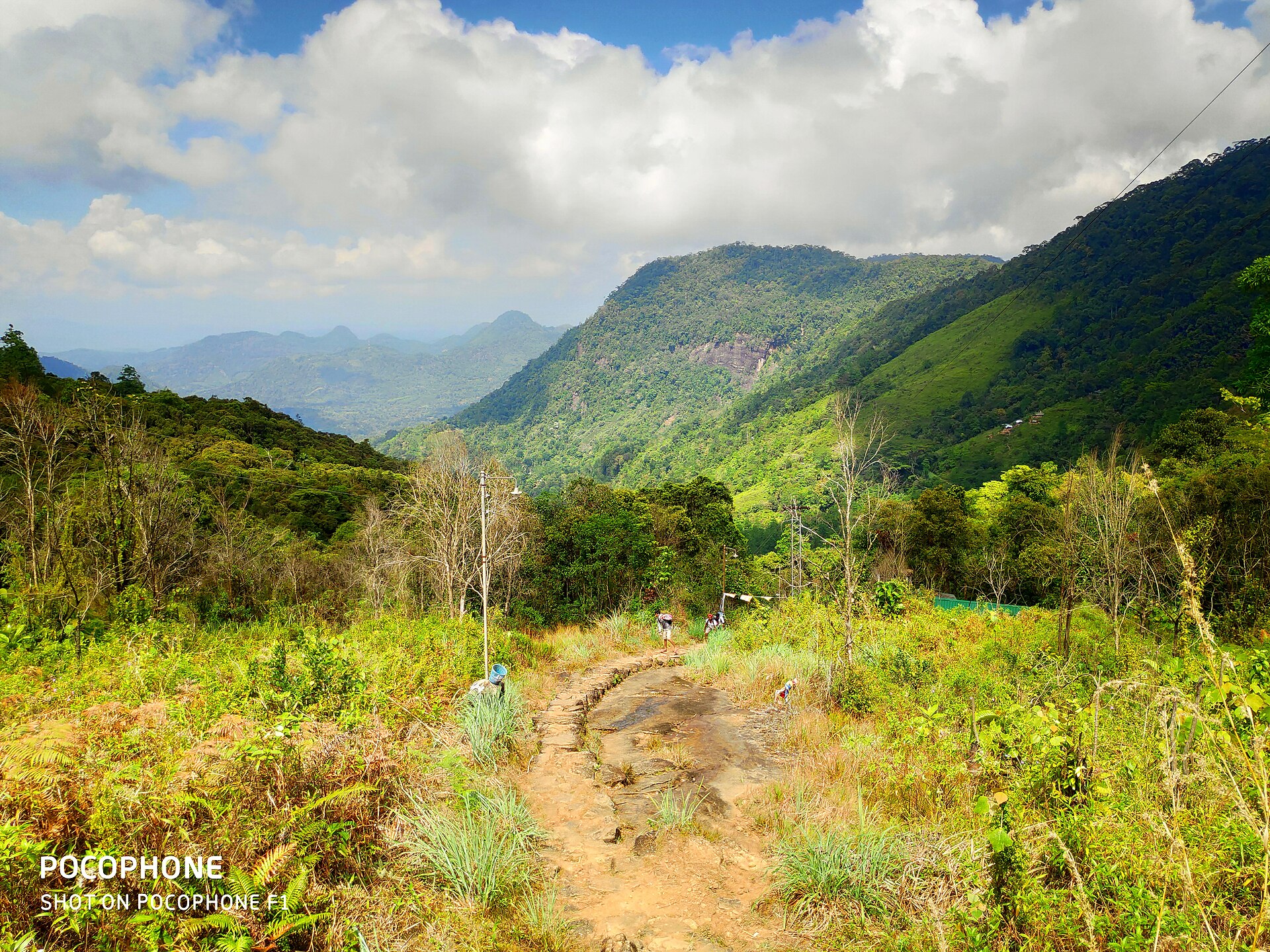
- The first climb, 0–4 km. From the Siripagama trailhead you begin with a long, steep stair climb — cement steps first, then uneven rock ones — gaining roughly 1,000 m in the first four kilometres. This is the section that surprises people most; pace yourself, use the handrails, and treat it as a warm-up rather than a sprint.
- The natural trails, 4–6.5 km. The steps give way to a genuine forest path that rolls up and over several lesser peaks. It is softer underfoot and scenically the richest part of the walk.
- Haramitipana, the meeting point. Where the Rathnapura trail joins the path coming up from Kuruwita/Erathna. This is the classic overnight stop — a shelter with the mountain rising pin-sharp ahead of you, and a good place to rest before the final push.
- The final stairs and the summit, from 6.5 km. Uneven stone steps lead to Adiyamalathenna, the last rest shelter, then the steepest section of all — the “Mahagiridamba” — lifts you the last 300 m onto the peak. If you are there for sunrise, this is where you want to be climbing by torchlight in the dark.
- The summit at dawn. Sri Pada is one of the great sunrises of Asia. On a clear morning the mountain throws a perfectly triangular shadow across the clouds below — the “shadow of the peak” that made this place sacred to pilgrims long before it became a bucket-list hike. The temple and the sacred footprint sit at the top, and the atmosphere at dawn, with devotees arriving and bells ringing, is something no short-route day-tripper gets to feel in the same way.
- The rainforest wildlife. The Peak Wilderness is a birdwatcher’s paradise — expect endemic species, butterflies and, in the lower sections, the occasional leech after rain. It is a reminder that this is a protected sanctuary, not a theme park.
Getting around
The trailhead is at Siripagama, reached from Rathnapura town by the B391 to Malwala and then the B265 up through Palabaddala. The whole drive is only about 22 km, but the mountain road is slow — allow 1.5 hours by private vehicle and closer to 2.5 hours by public transport. The trailhead itself is just 100 m from the Siripagama bus stop, which makes the cheap option genuinely workable.
- By tuk-tuk or private car from Rathnapura: the most practical option for a pre-dawn start. Expect roughly LKR 4,000–7,000 (US$13–23) for a tuk-tuk one way, or a little more for a car with a driver who waits. Agree the price before you set off — there is no meter.
- By local bus from Rathnapura: buses run toward Palabaddala and Siripagama through the day. The fare is a matter of a few hundred rupees — under US$1 — and the ride is an experience in itself, packed with pilgrims during the season. The catch is frequency: services thin out in the afternoon, so do not leave your return to the last bus.
- Getting to Rathnapura in the first place: the town sits about 100 km from Colombo on the A4, a 2.5–3.5 hour drive depending on traffic. Public buses from Colombo’s Pettah run frequently and cost a couple of dollars. Rathnapura has no railway station, so road is the only option.
- What to avoid: do not try to do the Rathnapura ascent and a same-day return to Colombo. The drive down from the trailhead in darkness, tired, on a winding mountain road is genuinely risky. Stay the night in Rathnapura or at an ambalama on the trail, and come down fresh.
What to budget
This is one of the best-value big experiences in Sri Lanka, because the mountain itself is free — there is no permit and no entrance fee for the trail. The real costs are transport, food and a night’s rest. A realistic split:
- Accommodation: US$12–35 per night in Rathnapura for a good guesthouse or boutique room, or US$30–70 for a comfortable hotel with a pool. Rooms right at the trailhead command less — often US$10–25. Sleeping at an ambalama is effectively free but entirely unserviced — bring everything.
- Meals: US$4–10 a day eating local. A rice-and-curry plate or kottu runs a dollar or two; guesthouse dinners are usually the best value and the best food. During the season, small stalls along the trail sell tea, roti and snacks at modest prices.
- Transport: US$10–25 total for the return trip to the trailhead by tuk-tuk, or under US$2 if you rely on the bus. Getting to Rathnapura from Colombo adds a few dollars by bus or US$40–70 by private car.
- Activities: effectively US$0 — the climb is free. Budget a few dollars for temple offerings if you wish, and a little for a hot drink or two.
- Practical extras: torch or headlamp batteries, a rain jacket, and a warm layer — items you may need to pick up in Rathnapura if you arrive unprepared.
All told, a two-day Rathnapura–Adam’s Peak trip lands around US$40–90 per person including a comfortable night’s stay, food and transport — a fraction of what a guided short-route package costs.
WATCH OUT FOR
These are the recurring traps on the Rathnapura route, and knowing them in advance is the difference between a great climb and a miserable one:
- The step count fools people. Because the first four kilometres are all stairs, many walkers burn out early by attacking them too fast. Go slow, use the rails, and you will still be fresh for the summit section.
- Do not attempt the route off-season unless you are experienced. Outside the December–May pilgrimage window the trail is unlit and the weather can turn fast. The Peak Wilderness is a real rainforest — monsoon months bring thunderstorms, and the trail becomes hazardous. Pick a dry month and start early if you go out of season.
- Leeches in the lower forest. After rain, the first section is leech country. Long socks and trousers tucked in help, and it is worth not wearing your best gear.
- The summit is cold and windy. Many people climb in T-shirt weather and arrive at a freezing, breezy summit with no layer. Carry a fleece or jacket and waterproof your phone and camera.
- Ambalama accommodation is basic. If you plan to sleep on the trail, understand that these are open shelters, not rooms. Bring a sleeping mat, warm layers and food — and never rely on a shop being open unless it is peak season.
- Do not believe the “short” time estimates. Some sources quote four or five hours for the ascent. For most reasonably fit travellers the Rathnapura side takes considerably longer. Build in slack, especially for the descent, which is hard on the knees.
GOOD TO KNOW
- Two trails meet before the summit. The Rathnapura (Palabaddala) route and the Kuruwita (Erathna) route converge at Galwangediya, near Haramitipana. You can combine them — up one, down the other — if you arrange transport at both ends, though that adds complexity.
- The season changes everything. From the December full moon to the May full moon, the trail is lit at night, ambalamas are staffed, and shops appear along the way. That is when a night climb to catch sunrise is both easier and infinitely more atmospheric — you will be walking with pilgrims, not alone in the dark.
- Avoid Poya days and long weekends if you want solitude. The Rathnapura route is quieter than Dalhousie, but full-moon days still draw large crowds of devotees. Wonderful for atmosphere, hopeless for peace and quiet. Choose a midweek day in a shoulder month for the emptiest trail.
- Water is generally safe. Streams along the route are commonly drunk untreated, and there is plenty of it — though carrying a bottle and a purifying option is sensible if you have a sensitive stomach.
- Book Rathnapura accommodation ahead in season. The town’s best-reviewed guesthouses fill up around peak pilgrimage dates and Poya weekends. The traveller who books a few days in advance gets the warm family stays; the one who turns up on the day takes whatever is left.
WHERE TO STAY
Properties below are picked from verified guest review data — positive mentions only, each with the reason reviewers give for choosing it as a Sri Pada base.
- Vegetable Garden House (Rathnapura area) — reviewers who stayed here specifically for the Adam’s Peak hike describe a genuinely welcoming family, excellent home-cooked food and remarkable value; several call it feeling “just like home” after a long climb.
- Water Side Residence — guests consistently note how close it sits to Adam’s Peak, clean and comfortable rooms with hot-water showers and lovely views, and an owner who gives helpful advice for the hike and the rest of the trip.
- Kalawathi Retreat Inn — praised for its beautiful views, a pool area guests call amazing, and a host family that looks after both room and food; the standout recurring theme is how good the meals are.
- Tea Breeze Motel — a small, well-liked spot that reviewers call the perfect place to start the hike, with a great breakfast waiting when you return from the peak and clean, comfortable rooms.
- Sun Mount Adams Peak — the recurring theme in reviews is the host’s exceptional communication and generosity, plus a brilliant location for the mountain and breakfast served on your return — all at a very reasonable price.
The bottom line
Climbing Adam’s Peak from Rathnapura is the road less travelled, and that is exactly why it is worth taking. You trade the convenience of the short route for rainforest, history and a genuine pilgrimage atmosphere, at a cost that is almost entirely transport and a night’s rest. Base yourself in Rathnapura, start in the late morning, sleep on the mountain or in town, and be on the summit for a sunrise that has drawn travellers here for a thousand years. If you are still weighing up whether the peak is worth it at all, our honest guide compares the climb itself, while Horton Plains, Nuwara Eliya and getting around Sri Lanka will help you slot it into the rest of your hill-country route.
Have a specific question about your Sri Lanka trip?
Ask BYC at byc.lk — free, honest, no upsell. Ever.
Ask BYC Your Question →