Can You Drink Tap Water in Sri Lanka? What's Actually Safe in 2026
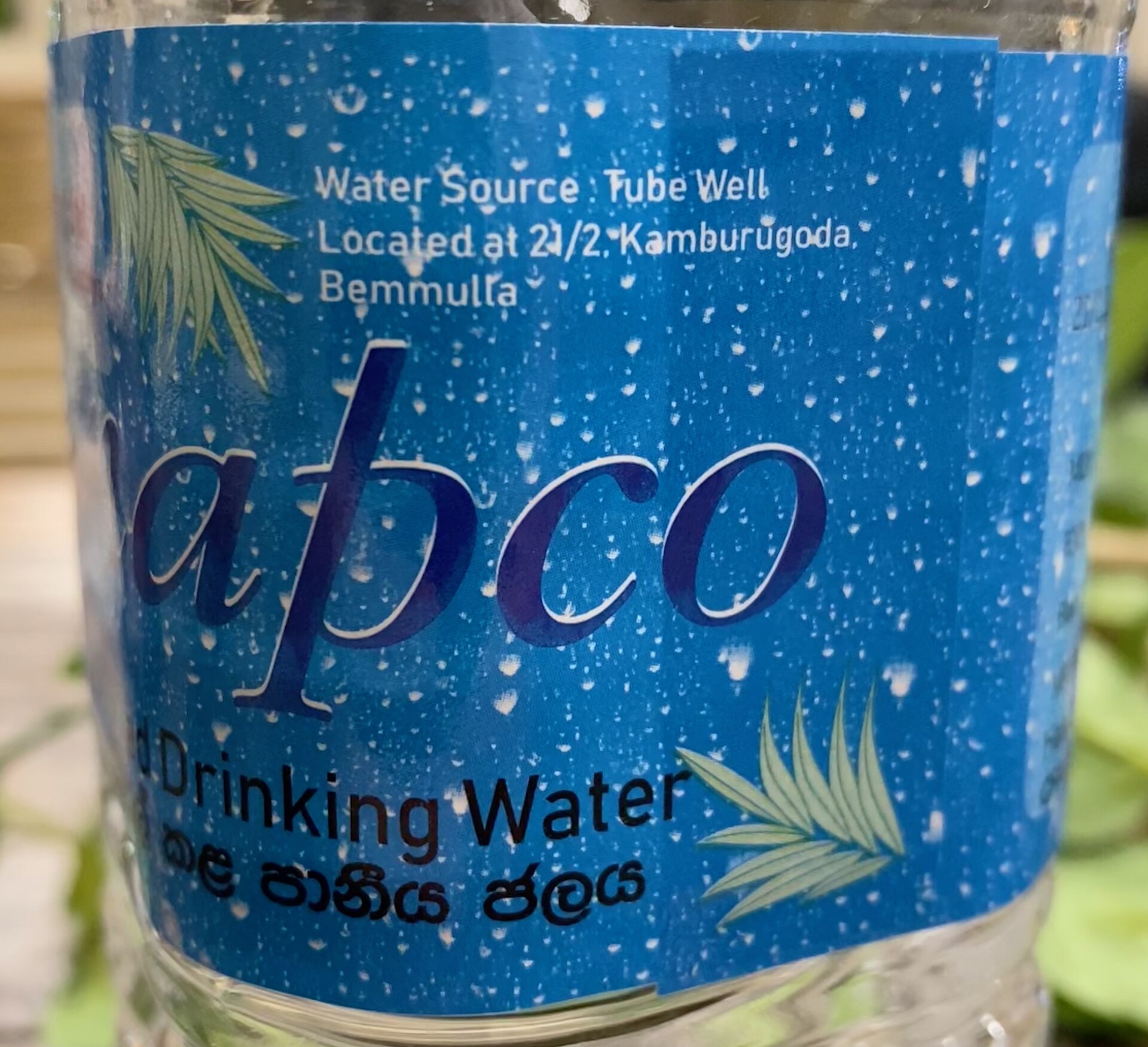
You land at Katunayake, get through immigration, and the first thing your body asks for is a glass of water. In the room an hour later there is a tap, a glass on the shelf, and a question you did not plan to spend time on: is this the one thing in Sri Lanka you should not do? Most people arrive with a vague rule — don't drink the tap water — and then apply it unevenly for two weeks, buying bottles they did not need and boiling kettles they did not have to.
The short answer
Do not drink untreated tap water in Sri Lanka. Drink sealed bottled water, boiled water, or filtered water from a source you trust — and in practice that is easy, cheap and available everywhere, because almost every hotel, guesthouse and cafe already provides it. Municipal supply is treated and millions of Sri Lankans drink it daily, but your risk is not the water leaving the plant — it is the pipe, the rooftop tank and the intermittent supply between the plant and your tap. Your gut has no history with the local microbial mix, so an organism a resident shrugs off can cost you two days of a ten-day trip. The reassuring part is that this is no hardship here: bottled water is price-controlled by the government, refilled from filtered dispensers in hundreds of properties we looked at, and boiled and offered free at more guesthouses than you would expect.
What's worth doing
Know the government's fixed price, and hold shops to it. This is the most useful fact in this article, because it turns a vague anxiety into a number. Sri Lanka's Consumer Affairs Authority sets a maximum retail price for locally bottled water by gazette, last revised on 10 June 2026 (Extraordinary Gazette 2492/29). A 1.5-litre bottle cannot legally be sold for more than LKR 150 — about 45 US cents at the reference rate we use throughout (1 USD = 332 LKR, early November 2026). A 500 ml bottle tops out at LKR 80. If someone quotes you LKR 400 at a beach restaurant you are being charged for the location, not the water; pay it if you want to, but know the shop 200 metres away is capped.
Treat the hotel jug as a real amenity, and ask before assuming. The best-value water comes free with the room, in one of three ways: bottles left daily, a dispenser in the corridor or dining area you can refill from, or a jug of boiled and cooled water. All three are safe, none is universal, so the useful question at booking is short: is the drinking water in the room filtered or boiled, and can I refill my bottle? Hosts answer instantly and honestly, because they know it matters.
Fill your own bottle at filtered dispensers. This is where Sri Lanka quietly outperforms many destinations. Guests in our data describe refilling from property kitchens, outdoor dispensers and filtered taps — one Weligama hotel is singled out simply for keeping cold filtered water outside the rooms. A reusable litre filled twice a day costs nothing and removes roughly forty bottles from a two-week trip. Bring one with a wide mouth; dispenser spouts are not all the same size.
Use a filter bottle if you are trekking or going remote. On the Knuckles trails, deep in Yala, or past the last town on the east coast, bottled water gets scarcer and pricier and cold drinks stop being cold. A bottle with a hollow-fibre filter rated for bacteria removes the whole question. Boiling for a full rolling minute works just as well with a kettle — though boiling does nothing about the sediment in tank-fed upcountry water, which is another reason a filter earns its space.
Say yes to the free tea and the king coconut. Sri Lanka runs on tea, and every guesthouse, workshop and shop offers it. It is made with boiled water, which makes it the safest drink on the island in the most literal sense — underrated by nervous travellers who decline it and buy a bottle instead. A king coconut, cut fresh in front of you, is sealed by nature and costs well under a dollar: the most reliable cold drink on any roadside.
Read the ice, not the drink. Ice is where "I was careful and still got sick" comes from. In a busy cafe with a freezer and steady turnover, ice is made from treated or filtered water and is fine. At a roadside stall where ice arrives in a sack and sits in meltwater, it is a coin flip. The rule is turnover. Several travellers in our data describe hosts warning them off specific local restaurants after other guests got ill — hosts know, and will tell you if you ask.
Getting around
Water is a transport problem more than a drinking problem, because you carry it. The numbers below are 2026 rates and indicative.
| Bottle size | Max price (LKR) | In USD | USD per litre |
|---|---|---|---|
| 500–999 ml | 80 | $0.24 | $0.32–0.48 |
| 1–1.49 L | 120 | $0.36 | $0.24–0.36 |
| 1.5–1.99 L | 150 | $0.45 | $0.23–0.30 |
| 2–2.49 L | 180 | $0.54 | $0.22–0.27 |
| 5–6.99 L | 400 | $1.20 | $0.17–0.24 |
Converted at 1 USD = 332 LKR, 9 November 2026. Hotels, restaurants and minibars may charge above these ceilings because the order governs retail packs, not service.
What to budget
This is a small line in the trip budget, which is the good news and the reason not to over-engineer it.
Bottled. Two litres a day per person at the fixed prices is about LKR 200–240, or US$0.60–0.75 a day, or roughly US$9–11 per person over two weeks. Buy everything from hotels and beach bars instead and the same intake runs US$3–5 a day — still small, but ten times the money for the same water.
Filtered and free. If your accommodation offers a dispenser or refills — and more than 375 properties in our data have guests mentioning exactly this — your water cost drops toward zero, and the only outlay is the bottle you brought. Budget US$15–25 once for a decent reusable or filter bottle, and treat it as equipment rather than a holiday expense.
The real cost of getting it wrong. Not money. Two days of a ten-day trip, oral rehydration salts at a few hundred rupees from any pharmacy, and the day you lose to a bus ride you did not want to skip. That asymmetry is what is worth planning around — not the 45 cents.
WATCH OUT FOR
The rooftop tank, not the river. Sri Lanka's treatment works are not the weak link; storage and distribution after them are. Water sits in a rooftop tank on a guesthouse, in an intermittent-supply pipe, or in a well that is fine in the dry season and less fine after heavy rain. That is why "locals drink it" is true and still not advice for you: they are adapted to this water, and you are not.
Ice in meltwater, and raw things washed in tap water. The most common route to a bad two days is not a glass of tap water — it is ice in a drink, a salad, or cut fruit rinsed under the tap. If a place has no freezer you can see, order the drink without ice. It costs you a colder drink and very little else.
Paying resort prices for a price-controlled product. You are allowed to be charged LKR 400 for a 1.5-litre bottle at a beach restaurant; that is a service price, not a breach. You are also allowed to walk to the kade. Buying a 5-litre at a supermarket every couple of days and carrying a small bottle is the easiest saving on the trip.
Properties with unreliable water supply. A separate complaint from water safety: in our corpus, 420 reviews describe no running water, no water at all, or a supply failure, concentrated in Ella, Colombo, Kandy, Galle and Negombo. That is maintenance and infrastructure, not drinking water, but it ruins a stay in a way a lukewarm shower does not. Read the recent low-scored reviews before booking, and treat "no water" as a hard no rather than something to negotiate on arrival.
GOOD TO KNOW
The gazetted price is your reference, and it is dated. Our figures reflect the ceiling in force since 10 June 2026. Price orders are revised periodically, so if a shop quotes above these numbers, check the date before assuming a scam. We re-check when the gazette changes rather than assuming the old number holds.
Brushing your teeth is a judgement call, and a low-stakes one. Many travellers use tap water for brushing without issue, especially in Colombo and Kandy hotels. If you are cautious, use bottled for the first few days and stop worrying after that. Showering and swimming carry no meaningful risk as long as you are not swallowing the water.
WHERE TO STAY
Every property below comes from our review corpus, and each is listed for one specific, water-related thing guests actually reported. Scores are averages across all reviews on record.
AGP home (Nuwara Eliya, 9.33 from 420 reviews). The clearest filtered-water report in the corpus: guests note that "there is also filtered water and black tea available, which perfectly suits the cooler climate of Nuwara Eliya", and others record free drinking water alongside breakfast. In a hill town drawing on tank-fed supply, a host running a filtered supply and a kettle is solving exactly this problem.
Dunes Unawatuna Hotel (Unawatuna, 9.06 from 329 reviews). The best refill story we found. One guest wrote they "loved being able to fill up my water bottle from their filtered water so we used less plastic"; another that "you can refill water from their kitchen anytime". If you travel with a reusable bottle and want to actually use it, this is the pattern to look for.
Cottage Garden Bungalows (Mount Lavinia, 9.57 from 72 reviews). A smaller garden bungalow where guests report that "all necessary facilities are provided", drinking water included — a good first-night choice near Colombo.
Ella Bamboo Tree Cottage (Ella, 9.80 from 123 reviews). Listed for a quieter reason: guests consistently mention being provided with enough drinking water as part of the stay — which in Ella, one of the regions with the most supply complaints in the corpus, is worth more than it sounds.
My Resort Yala (Tissamaharama, 9.37 from 370 reviews). The most specific reassurance in the data: a guest noted the welcome drink came "and they make the ice cubes with filtered water so no worries". For anyone heading into Yala, where the day starts before dawn and the nearest shop is a long way back, that is precisely the detail that matters. Compare parks first with Minneriya vs Udawalawe vs Yala.
The bottom line
Drinking water in Sri Lanka is one of the few travel worries that is both real and completely solvable: don't drink it from the tap, and the country has already built you three cheap ways around that — a price-capped bottle on every corner, a filtered dispenser in hundreds of guesthouses, and a kettle that has been boiling for the tea since long before you arrived. Bring a good bottle, learn the four price ceilings, ask your host one direct question, and then spend your attention on the things Sri Lanka is actually difficult about. Our cash guide covers what to carry, the street food guide covers the food side of the same question, and what to pack will tell you what else earns its place in the bag.
Planning the rest of the trip? Ask BYC at byc.lk — free, and honest about the trade-offs. Some links are affiliate links and never change our advice.
Keep planning around it
Water is one of a handful of things worth sorting before you land. Read what is safe to eat on the street, check how much cash to bring, and see what a day in Sri Lanka actually costs now. Heading upcountry? Kandy and Ella are both worth reading before you book the hill line.
Data: BYC.lk analysis of 363,148 verified guest reviews, including 694 reviews mentioning drinking water, dispensers or refills across 375 properties, and 420 reviews describing water-supply failures. Bottled water prices reflect the Consumer Affairs Authority maximum retail price order effective 10 June 2026 (Extraordinary Gazette 2492/29). Currency converted at 1 USD = 332 LKR, early November 2026. Prices are indicative and change with regulation and exchange rate.
Have a specific question about your Sri Lanka trip?
Ask BYC at byc.lk — Free and honest. Some links are affiliate links and never change our advice.
Ask BYC Your Question →