Is Rathnapura Sri Lanka Worth Visiting? An Honest 2026 Guide
The bus from Colombo swings off the low-country highway, the hills begin to fold in around the road, and the air changes — cooler, wetter, heavier with green. You have booked two nights in Rathnapura because it sat between Colombo and Adam’s Peak on a map. Now you are standing in a busy trading town of gem shops and saree stalls, wondering whether you have made a mistake, and whether there is anything here that is not a jewellery counter.
There is. Rathnapura is one of the strangest double identities in Sri Lanka: a working provincial capital that also happens to be the gateway to a UNESCO rainforest, a set of serious waterfalls and the island’s entire gem trade. It gets a fraction of the visitors of Kandy or Ella, sits almost a full page back in search results for its own name, and yet guests rate the properties here exceptionally — across 4,130 reviews, the top stays average 9.2 and higher.
This is what the town is actually worth, what it costs in 2026, and how to get the day-trip right without being taken for a ride — on the road or at the gem table.
The short answer
Rathnapura is worth one full day plus two nights, not a week — and it is worth it for what surrounds the town rather than for the town itself. The town centre is functional and busy, with little to see beyond the gem trade and the market. The reason to come is the ring of things within an hour: Sinharaja Forest Reserve, Sri Lanka’s last major lowland rainforest and a UNESCO World Heritage Site; Bopath Ella, the near-perfect “cobra hood” waterfall at Kuruwita; Adam’s Peak (Sri Pada), whose longer historic pilgrim route starts from Palabaddala on the town’s edge; and the working gem pits that have made this the island’s “city of gems” for centuries.
The honest framing: come for a rainforest morning, a waterfall afternoon and one honest look at how gems are actually found. Treat the town as a comfortable, inexpensive base, and it earns its place on an itinerary that is already heading into the hill country. Guests clearly do not regret it — the strongest-reviewed guesthouses here beat many hotels on the south coast.
What’s worth doing
- Sinharaja Forest Reserve — the main event. This is the last large tract of primary lowland rainforest in Sri Lanka and a UNESCO World Heritage Site, home to endemic birds, frogs, lizards and the sheer density of green that lowland rainforest does better than anything else on the island. You must go with a licensed guide — walking unguided is not permitted. From Rathnapura the practical access is toward the northern edge and the Deniyaya side further south; the drive is the cost, not the ticket. Go early: the forest is wetter and louder in the afternoon, and the birds are busiest in the first two hours of light. Bring leech socks in the wet months; this is a real rainforest, not a landscaped park.
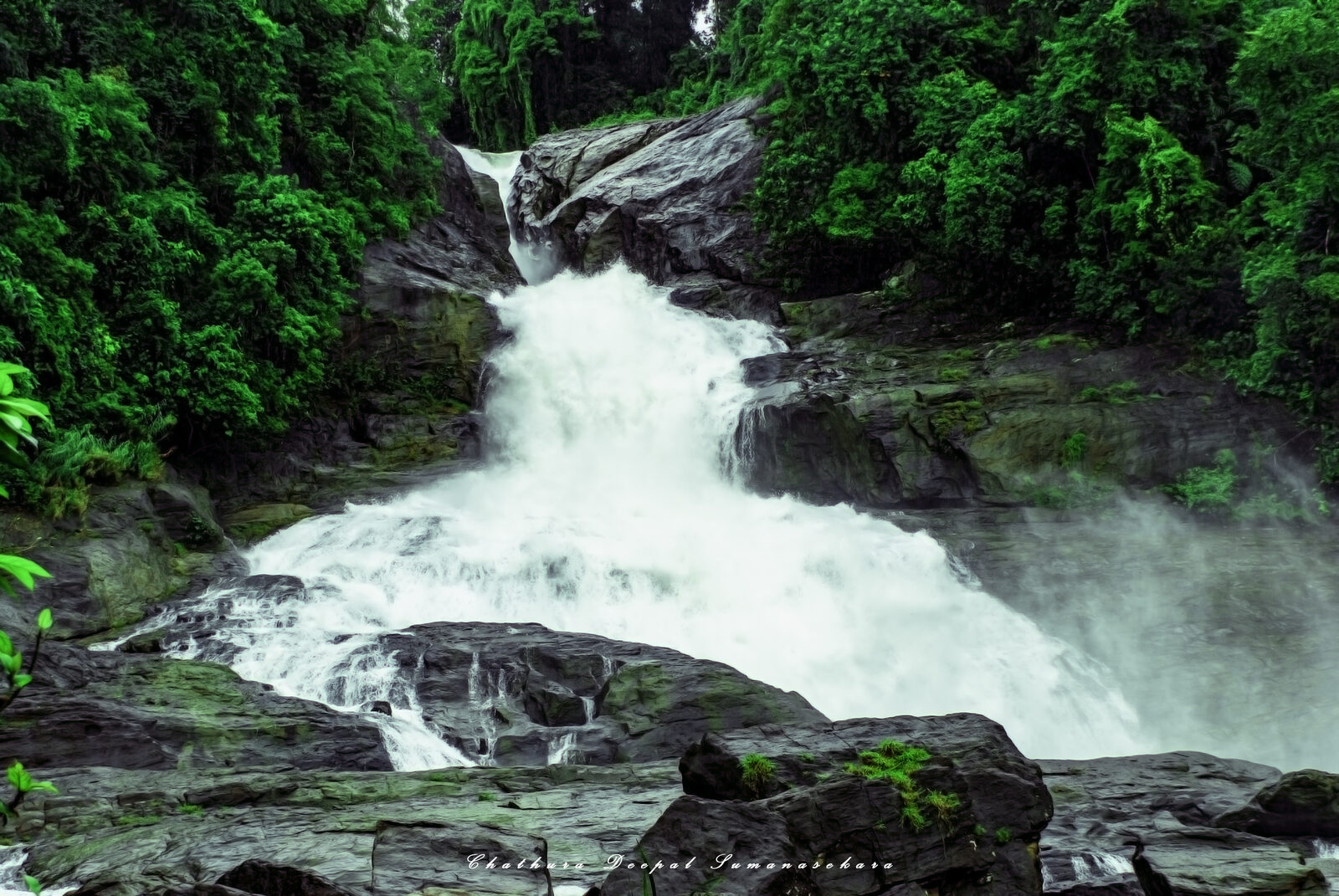
- Bopath Ella — the postcard waterfall. About 13 km from town at Kuruwita, and reachable from Colombo as a day trip, Bopath Ella is the waterfall people photograph: a roughly 30-metre single-drop fall shaped almost exactly like a cobra’s spread hood, named for the bo (banyan) leaf. There is a natural pool at the base and a short, easy walk in. It is a popular local weekend spot, so come on a weekday morning for quiet. Entry is a small ticket in the low hundreds of rupees for foreign visitors — bring cash, and check the current sign at the gate rather than trusting any figure online.
- The gem pits and the gem trade. Rathnapura is synonymous with sapphires, rubies, cat’s eyes and the “star” stones, and the traditional mining is shallow and startlingly manual: pits dug into old river gravels, then gravel washed and panned in a woven basket. Several operators run short, safe visits to a working pit and a gem wash, often paired with a look at a cutting and polishing workshop. This is the single most Rathnapura thing you can do, and it is genuinely interesting if you take a proper guide and ask questions. Do not buy a “bargain” stone on the street afterwards — see WATCH OUT FOR below.
- Adam’s Peak from Palabaddala — the long route. Almost everyone climbs Sri Pada from Dalhousie (Nallathanniya). The Rathnapura side, starting at Palabaddala, is the older pilgrim trail: steeper, quieter, longer and much more of an undertaking. If you are fit and want the historic route, base in Rathnapura for a night and start very early. If you want the standard, better-supported climb, stay nearer Dalhousie instead — the guesthouses there are the ones guests actually rave about for the climb. Our guide to the Rathnapura to Adam’s Peak route sets out the stages honestly, and if you are weighing up whether the climb is worth it at all, start with is Adam’s Peak worth climbing.
- Waterfalls and the wet-zone drive. Sabaragamuwa is waterfall country. Beyond Bopath Ella, the drive toward Adam’s Peak passes Katugas Ella and others, and the surrounding tea estates and rubber smallholdings make easy, low-stakes walks. If you have half a day spare, a tuk-tuk loop of two or three falls is a cheap, genuinely pleasant way to spend it — and our guide to which Sri Lanka waterfalls are actually worth visiting helps you choose the right ones.
- The market and the river. The town’s produce market early in the morning is loud, real and worth twenty minutes, and the Kalu Ganga runs alongside the town with riverside paths and the odd riverside café. It is not a destination on its own, but it is the texture that makes the base feel like a place rather than a stopover.
Getting around
Rathnapura sits about 100 km from Colombo, on the A4 main road through Avissawella, and the drive is roughly 2.5 to 3.5 hours depending on traffic leaving the capital.
- Public bus from Colombo. The cheapest option by far — a few hundred rupees, under USD 2 — on the frequent buses from the Colombo/Pettah bus stands. It is slow, basic and completely normal; buy your ticket on board and keep small notes.
- Private car or taxi. Roughly USD 45–80 each way door-to-door from Colombo depending on vehicle and how you book. A private driver for a full day of waterfall-hopping plus the Sinharaja transfer is the realistic way to cover the ring around the town; expect USD 55–90 for a full day, higher if the day includes a long Sinharaja transfer.
- Tuk-tuk. Within town a short hop is under USD 1. A half-day tuk-tuk loop to Bopath Ella and back, with waiting, should cost roughly USD 15–25; agree this in advance and in full, including waiting time, before you set off.
- Sinharaja. This is where transport costs bite. The reserve entrance and the licensed guide are separate from the vehicle, and the drive from Rathnapura adds up. Budget for a full-day private vehicle; do not try to reach Sinharaja by public bus and expect to also do a proper forest walk in the same day — you will spend the whole day on connections.
- Train. There is a slow rail line from Colombo toward Avissawella and on into the hills, but it is not the practical way to reach Rathnapura, and it is not the scenic hill-country line travellers imagine. Use the bus or a car.
What to avoid: don’t plan Rathnapura as a same-day return from Colombo to “see Sinharaja” — the distances look small on the map and take far longer than they look. Don’t accept an unlicensed “guide” to the forest or the gem pits; the legitimate ones are licensed for a reason. And don’t let a driver talk you out of the early start; the rainforest and the falls are both twice as good before the crowds and the afternoon heat.
What to budget
Rathnapura is one of the better-value bases in Sri Lanka. A realistic day for one traveller:
- Accommodation: a genuinely good guesthouse or small hotel here runs roughly USD 25–55 for a double with breakfast — the same standard that costs considerably more in Kandy or Ella. Budget hostels are cheaper still.
- Meals: USD 6–12 a day is easy — rice-and-curry lunch around USD 2–4, and almost all the best-rated properties cook excellent home food, so many guests simply eat dinner in.
- Activities: Bopath Ella entry a dollar or two; a gem-pit and wash visit roughly USD 10–20 with a guide; Sinharaja entry, guide and transport the big-ticket item at roughly USD 40–70 per person all-in, depending on group size and how you split the vehicle.
- Transport: shared bus under USD 2 from Colombo; a private day vehicle USD 55–90; local tuk-tuks a few dollars.
A comfortable two-night stay, including one Sinharaja day and a waterfall loop, comes to roughly USD 120–190 per person on a private-vehicle basis, less if you share the car or use buses. Prices rise fast with inflation in Sri Lanka, so treat every figure here as a close estimate, not a fixed tariff. Last updated: September 2026.
WATCH OUT FOR
- The gem-table pitch. This is the single most common way visitors lose money here. A friendly “friend of a friend” offering you the deal of a lifetime on a sapphire or a “ruby” is not a deal. If you genuinely want a stone, buy from an established, licensed dealer, insist on an independent certificate for anything expensive, and never buy under time pressure or on a street corner. Treat an unsolicited bargain as a warning, not good luck.
- Rain, at almost any time of year. Sabaragamuwa is one of the wettest parts of the island. The wet-zone monsoons are heavier and longer than on the coasts, and a blue-sky morning can turn into a downpour by noon. Pack for rain regardless of the season, and keep a dry bag for the rainforest day — the point of a rainforest is that it is wet.
- Leeches and lowland forest conditions. In the wet months especially, Sinharaja means mud, damp and leeches. Long socks, closed shoes and a bit of salt or repellent go further than worrying about it. This is normal, not a sign anything is wrong.
- Waterfall safety. Bopath Ella’s pool looks inviting and is not patrol ed; heavy rain upstream can turn a calm pool dangerous quickly. Watch the water colour and volume before getting in, and keep well clear of wet rocks at the top. The same applies to every falls in the area.
- Distances that look tiny on the map. Roads here are slow and winding, and a “20 km” side trip can take well over an hour. Build slack into any day that combines Sinharaja with anything else.
- Cash and ATMs. Card acceptance is patchy outside the town’s larger businesses, and small vendors, tuk-tuks and gate tickets all want rupees. Carry enough cash, and know that not every ATM works.
GOOD TO KNOW
- Timing. The best window for Rathnapura and the surrounding rainforest and waterfalls is broadly the drier months into early spring, and the season around Adam’s Peak pilgrimage (roughly December to May for the standard climb) is the busiest. The town itself is a year-round base; just expect rain whenever you come.
- How long. Two nights, one full day, is the sweet spot: one rainforest or waterfall day, one gem-and-town morning, then onward. A single night feels rushed; more than two asks a lot of a town with a limited centre.
- Booking. The best-rated guesthouses here are small and book out around pilgrimage season and long weekends, so reserve ahead in those windows. Most activities — gem visits, Sinharaja guides, drivers — are arranged on arrival or a day ahead rather than bought as online tickets.
- Bring. Cash, rain gear, closed shoes, leech protection in the wet months, and a willingness to get muddy. Leave the smart shoes and the shopping list at home.
- Combine it well. Rathnapura pairs naturally with the hill country onward to Hatton and Nuwara Eliya, or back down to the coast. It is an easy link in the chain, not a detour — see our coast-by-month comparison for how the rest of the island’s seasons line up around it.
- Plan the whole coast and hills. If you are still choosing between regions, our comparison of the south coast towns is a good place to see how this leg fits a longer trip.
WHERE TO STAY
Rathnapura’s review data is unusually strong — the guesthouses here out-score many better-known destinations. Four properties stand out, each for a specific reason.
- Water Side Residence — 9.51 from 147 reviews. The highest-rated stay in the region, and guests describe it in one breath as the place to be for the Adam’s Peak climb and simply “perfect” otherwise — one reviewer said they would recommend it “100%.” A family-run property praised specifically for being helpful and for a beautiful, peaceful location.
- Vegetable Garden House — 9.38 from 284 reviews. The clearest “food and calm” pick in the data: reviewers repeatedly single out the home-grown food and the serene garden, calling it a “small garden oasis before the big climb.” If you want a quiet, well-fed base, this is the one the reviews point to.
- Kalawathi Retreat Inn — 9.35 from 202 reviews. Consistently described as enchanting and spotless, with the most telling line being a guest who called it the “perfect stay for a few days to explore Ratnapura” — exactly the use this guide recommends. Warm hosts and a natural setting.
- Hugging Clouds — 9.08 from 205 reviews. The most enthusiastic reviews of the set (“simply the best experience in Sri Lanka”), and especially suited to the Nallathanniya/Adam’s Peak side rather than the town centre. A cosy guesthouse with the best “walk-to-the-climb” position among the highly-rated properties.
None of these is a chain hotel, which is part of the appeal — you are getting a family-run stay at a price the coasts no longer offer. Book direct where you can, and read the room descriptions carefully; several properties here have bathrooms outside the room, which is fine once you know it and jarring if you do not.
The bottom line
Rathnapura will not be the highlight of your Sri Lanka trip, and it does not need to be. It is the honest, green, inexpensive hinge between the low country and the hills — a rainforest one morning, a cobra-hood waterfall one afternoon, a real look at how gems come out of the ground, and some of the best-run, best-value guesthouses on the island. Give it two nights on the way through, come with rain gear and an early alarm, and it quietly over-performs. Then let the hills take it from here.
Have a specific question about your Sri Lanka trip?
Ask BYC at byc.lk — free, honest, no upsell. Ever.
Ask BYC Your Question →